Early January always has the same energy. New plans. New priorities. New pressure to ‘get everyone aligned’. And for a lot of marketing and comms leads, that last bit is the hardest part.
Because change isn’t the problem. Confusion is.
A restructure, a new strategy, a product shift, a refreshed brand, a different way of working. On paper, it’s clear. In real life, it lands in busy inboxes, half-listened-to town halls and Teams calls where everyone’s still thinking about their next meeting. The message gets diluted, people fill in the gaps themselves and momentum slips.
That’s where we come in.
We’re a creative agency, yes. But our job isn’t ‘pretty pictures’ or a nicer set. It’s taking a communication need and turning it into something people actually understand, feel and act on. We join the dots from the first conversation to the final output, so the message stays intact wherever it shows up. That can mean strategy and messaging first, then the right mix of Design, Digital, Film or Live moments, all delivered as one connected story.
The trick is to start with the outcome, then choose the deliverables that make it real.
When a client says, ‘We need an event’, they rarely mean an event. They often mean they need leaders to believe in this change. Or teams to stop interpreting the strategy in ten different ways. Or customers to see us differently now.
So we turn that into reality.
We find the theme that holds everything together (not a list of topics). We break content into segments people can absorb, not monologues they sit through. We design with real cognitive limits in mind, because nobody retains a sixty-slide download. And we make it socially digestible so the story travels beyond the room—because we engage, rather than present.
A recent example: a major global healthcare client brought us in to help communicate a significant shift to their senior leaders. The ask wasn’t ‘make it look good’. It was ‘make this make sense’. We created a shared narrative and built the full experience around it, from the visual identity and films to staging, presentation storytelling and on-the-ground delivery. The goal was simple: replace uncertainty with clarity and confidence.
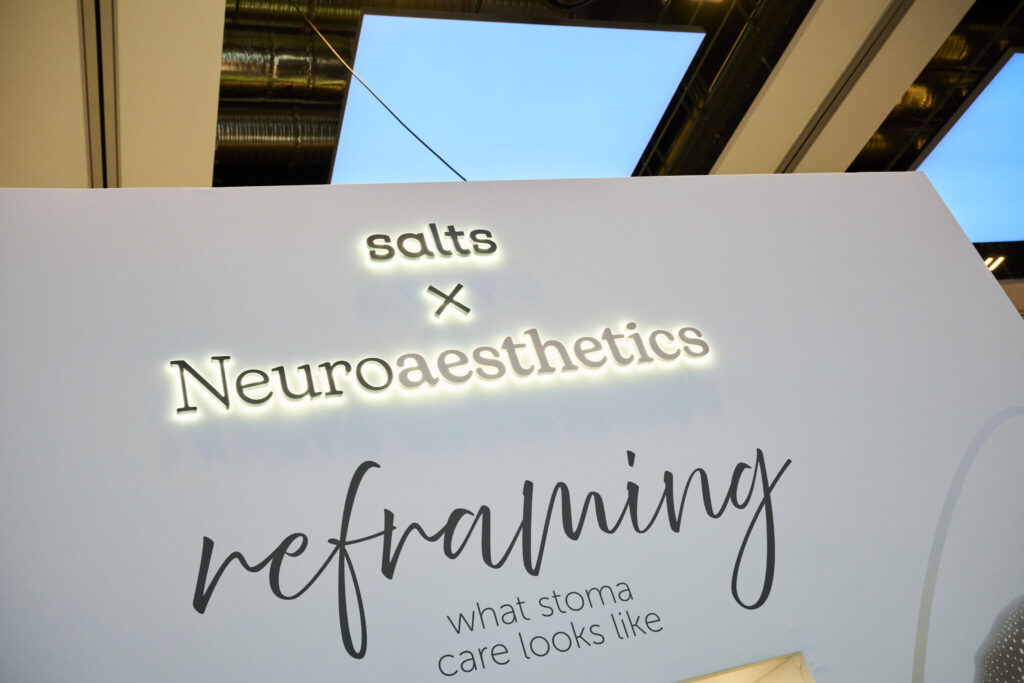
Then there’s Salts Healthcare. We built an exhibition stand designed to communicate their ethos around stoma care in a way that felt human, modern and very un-clinical. Neuroaesthetics. Sensory cues. A deliberately different look and feel. Because the message wasn’t ‘here’s our product range’. It was ‘here’s how we see people, and how we show up for them’.
If your 2026 involves change—which let’s be honest, it will—your comms can’t afford to be generic. They need to land. Transforming Creative into Reality starts with knowing the shift you need from your audience, not what needs to be made.
 Related thoughts