How testimonials build trust in a way that doesn’t feel like marketing
In complex sectors like healthcare and medtech, trust is hard-earned—and rightfully so. One of the biggest challenges is getting people to believe in something they may not yet fully understand or have never experienced themselves.
Yes, you can explain product benefits, outline a service and present the data, but none of that really gets to the core of what people want to know: what difference will this actually make to my life?
Whether it’s a patient considering a potentially life-changing therapy or a clinician evaluating the latest innovation, there’s often a gap between information and belief. What’s missing is that uniquely human story—the relatable moment where someone can say, ‘Because of X, I can now do Y, and my life is significantly better because of it.’
Closing that gap is where the most effective marketing happens.
Why testimonials are the ultimate connector
Now, this isn’t the first time we’ve spoken about human-to-human (H2H) marketing. And there’s a reason for that. Experience has shown us that testimonial storytelling occupies that space between information and belief with a specific kind of power.
The most impactful work feels personal, not promotional. Crucially, it doesn’t feel like marketing at all. That’s why authentic stories can do something most messaging can’t: translating complexity into lived experience. They show impact, rather than simply describing it.
And the same goes across the board, whatever the audience demographic or subject matter—as these projects highlight.
‘Ordinary’ people doing extraordinary things
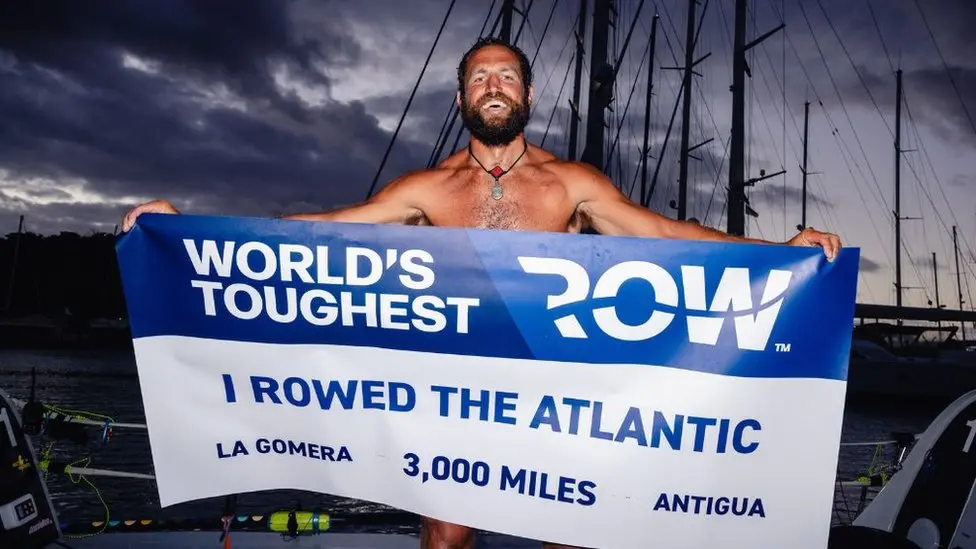
In 2023, Elliot Awin became the first person with a pacemaker to row solo and unsupported across the Atlantic Ocean.
We met Elliot as part of a project for a leading healthcare client to help share the story of how his own experience of living with heart arrhythmia has inspired him to support others.
Hearing Elliot telling his own story, in his own words, made all the difference. It’s the kind of story that doesn’t just inform but shifts perception in ways that a brochure or product booklet never could.
Stories that transcend language
In other instances, the challenge isn’t just building trust, but doing it across languages, cultures and markets.
On a recent European campaign, we captured a patient’s personal experience of living with pelvic health issues, and how a tiny device had changed her life.
The interview was conducted in her native Portuguese, which meant taking a slightly different approach—especially when it came to editing a story we couldn’t fully understand ourselves.
Working closely with our Portuguese crew for translation and context, we were still able to craft a heartfelt film that captured both our interviewee’s courage and the transformative impact of her treatment.
Proof that when a story is authentic, it transcends language.
Not just for patients
And it’s not just patient testimonials that pack a powerful punch. Clinician stories can be just as impactful, especially when you’re speaking to other clinicians.
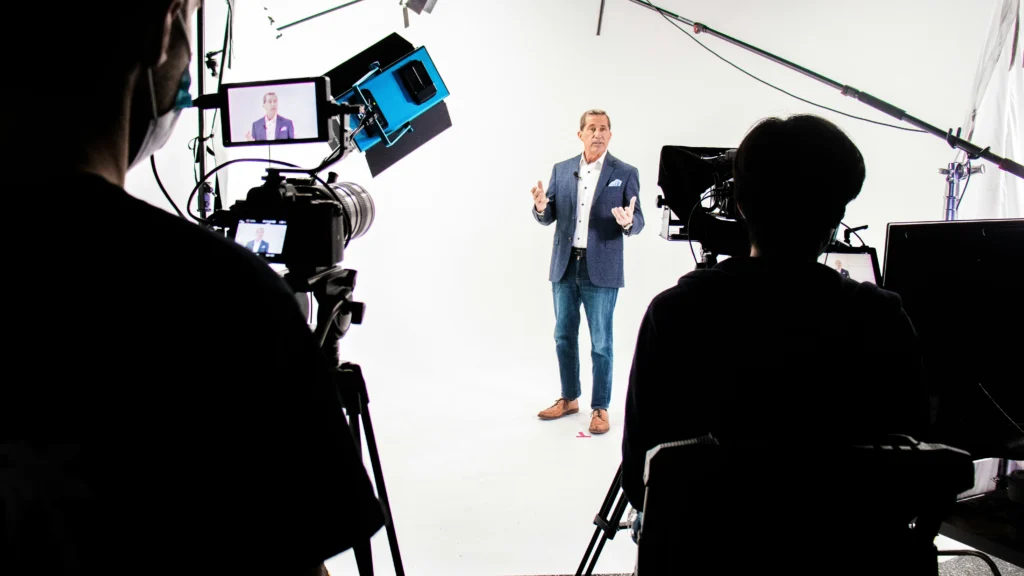
For example, we recently delivered a project where our objective was to capture healthcare professionals (HCPs) sharing their experiences of using cardiac devices in real clinical settings.
There were no scripts and no over-polishing, just people talking about what works, how it enhances their day-to-day practice and why it supports better patient care.
That’s what gave it weight. Because when insight comes from peers, it carries a level of credibility that traditional messaging simply can’t match.
More than marketing
Testimonial marketing is often described as “the strategic use of positive feedback to build trust and increase sales.” But that feels like it’s missing the point a bit. Actually, a lot.
At its best, it’s about helping people actually understand something by showing what it looks like in real life—the tangible impact that we’d otherwise struggle to grasp.
Through human experience, abstract benefits suddenly feel relatable, technical features start to make more sense, and a message becomes something you genuinely believe.
And that’s why, in a world saturated with content, human stories will always cut through.
 Related thoughts