You’re already putting a lot into your next congress. But are you getting everything you could out of it?
The experts you want to interview. The demonstrations that show what your products can actually do. The presentations and symposia you’ve spent months preparing.
At a congress, they’re all in one place. For anyone with a content calendar to fill, it’s an opportunity that would be verging on criminal to miss.
That very thought, coupled with seeing too many great stands fly under the radar on his travels, prompted our Joint MD, John, to recently make the case for content that works as hard as your stand.
It’s an observation that’s built on an irrefutable premise: with the right approach, your congress can become one of the hardest-working investments in your calendar.
So, in that very same vein, here are five effective ways of revving that engine.
1. Your experts are already there. Let’s get their thoughts
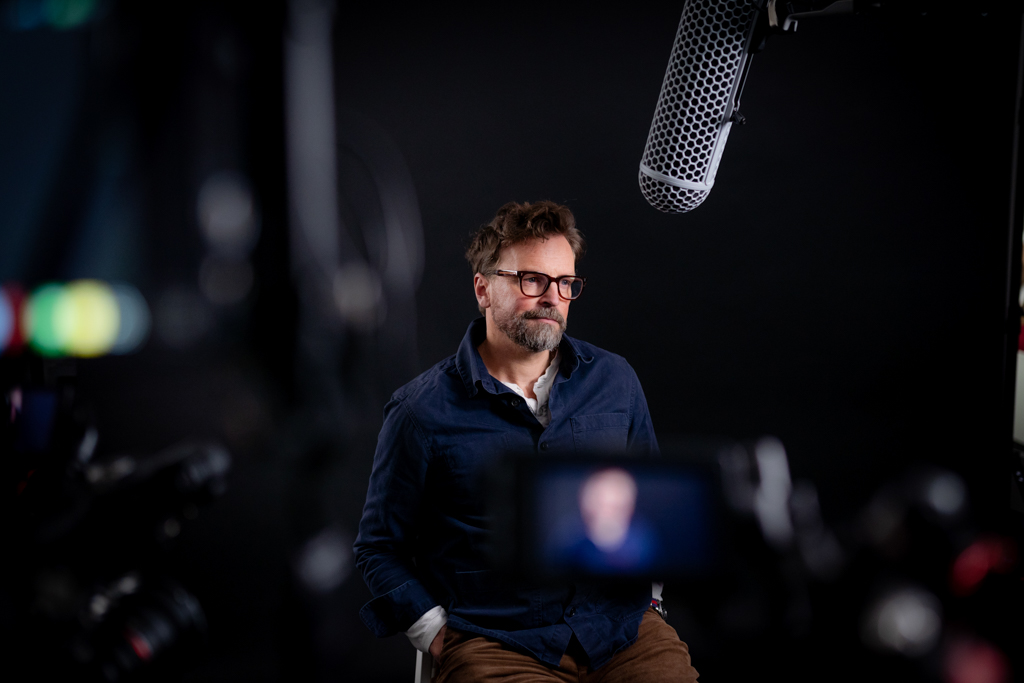
A congress naturally brings together the people your audience wants to hear from. With our crew on the ground already, you have everything you need to capture their thinking while you’ve got them.
With a bit of agility, a few well-planned conversations can give you a whole bank of thought leadership resources. We’re talking:
Importantly, the congress gives you access to thought leaders, but it doesn’t have to set the agenda. The floor is yours to ask about the topics your audience cares about, whether that’s an industry challenge or an emerging trend. The setting is simply the facilitator.
There you have it, weeks or even months of content just from one interaction.
2. Let key opinion leaders do the talking
You can explain what your products offer until the cows come home, but nothing hits quite as hard as hearing first-hand from the people who’re using them in real-world scenarios.
Those people are also notoriously tricky to get in front of a camera. Handy, then, that they’re already coming to you.
Crucially, this is your chance to get beyond an endorsement and into the detail. That could mean:
All of which give you a wealth of experienced voices sharing the practical details their peers want to hear, plus plenty of content to repurpose across everything from social campaigns and websites to internal comms and future product launches.
3. Don’t let the learning leave with your audience
A lot of time and effort go into your product demonstrations, workshops, presentations, symposia and expert sessions. Once they’re delivered, why leave all that knowledge in the congress hall?
Record those sessions and you’ve got the foundations for:
And viewers don’t have to sit through the whole session. We can turn longer recordings into shorter, focused edits, making it easier for different audiences to pinpoint what’s useful for them.
4. Get your leaders in front of the camera, too
A congress often brings your senior team together in one place. If you’ve ever tried to find a filming slot in their diaries, you’ll know how fleeting those opportunities can be.
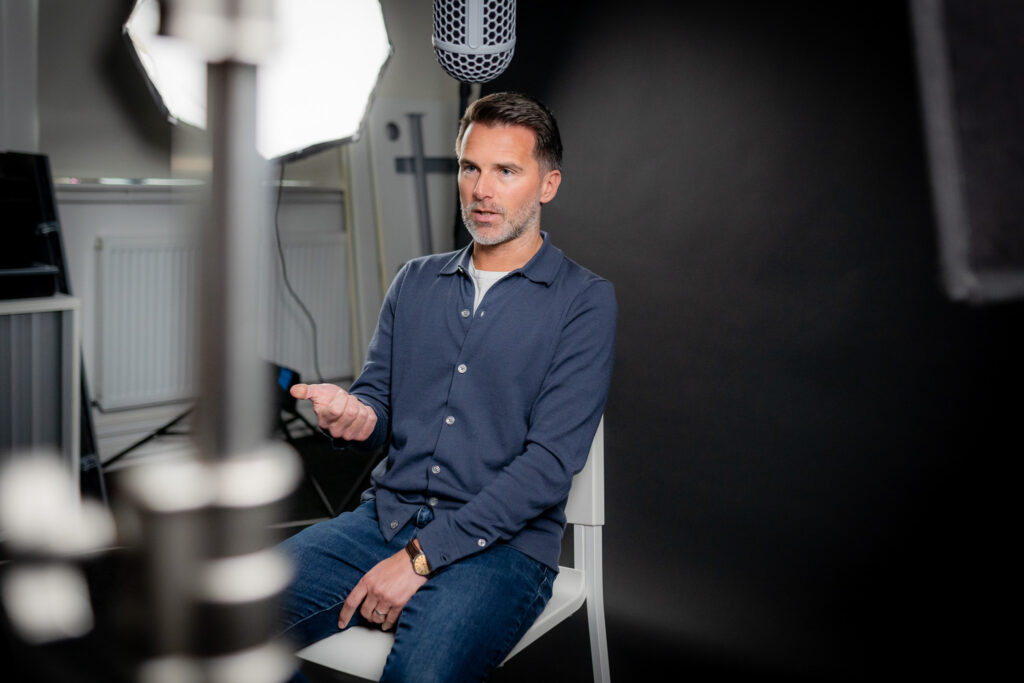
With the crew already there, a little time set aside could give you:
Think about what your colleagues need to hear over the coming months and get those conversations in the diary.
They don’t necessarily have to be polished; sometimes that’s actually part of the charm. A relaxed, off-the-cuff conversation can feel far more personal than a carefully rehearsed script.
5. Make the most of the moment
Up until now, we’ve looked at how your congress can keep your content calendar ticking over for months. But let’s not forget there’s plenty to make the most of while it’s happening, too.
As John explores in his piece, the benefits of capturing what’s happening on your stand and getting it out into the world while the things are still in full swing can be huge.
It’s not just anecdotal. With an on-site filming and live edit team, we’ve recorded:
Every single client who’s used this service has also chosen to repeat it the following year.
The immediate response is part of a bigger picture. By giving people a reason to care in the moment, your next video, article or training module has something to build on. Less starting from scratch, more carrying on the conversation.
Turn the ignition
The best time to start your content engine is well before your next congress gets underway. Get in touch and let’s discuss how those on-stand opportunities could fuel your content calendar for months to come.
Author: Adam Sherlock
In case you didn’t know, I spend a lot of time at events. And I mean a lot. International congresses, exhibitions, product launches, conferences, brand activations, roadshows, awards nights, and on it goes.
Different audiences, different objectives, different budgets and many (many) different definitions of success. What’s not different is what happens afterwards. Or more accurately, what doesn’t happen.
One way we describe our role is helping organisations be seen, heard and remembered by the people who matter most. After enough of these, you start to notice that “remembered” is the word that resonates most and maybe the one we spend the least amount of time on.
People rarely talk about the things we’ve spent months planning. They don’t mention the theme, the app almost never comes up, and I’ve yet to hear anyone reminisce about a floorplan (maybe when we have gone in the round!). Don’t get me wrong, these things are vital and getting them right matters enormously. But getting them right is the baseline. An expectation.
What a delegate recalls is the conversation they had with someone they didn’t expect to meet. Or the speaker who challenged their thinking and gave them a fresh perspective to put into action the following week.
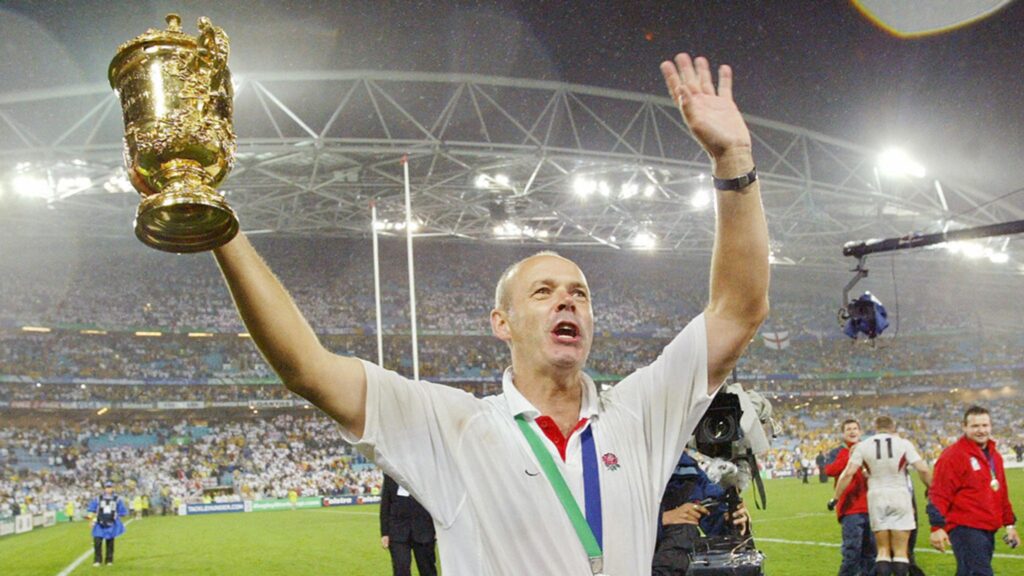
I still fondly recall a keynote speech from Sir Clive Woodward around ‘Teamship’ at a recent conference we planned. Having such an inspirational figure talk about what makes a great team stuck with me and still helps form my leadership style daily.
Have we as an industry become so focused on creating experiences that we’ve forgotten what we’re really trying to achieve? Memories. And should we, as the partners our clients brought in to help, be pushing this further up the agenda?
Creating something memorable isn’t about adding more content, more technology or more features. Some of the most memorable events I’ve been part of have been surprisingly simple. The teams behind them knew exactly who the event was for and what they wanted people to leave with, and everything else flowed from that.
Think about the events you’ve attended over the years. The ones that stayed with you probably didn’t have the biggest screen or the newest tech. Something clicked, and that’s what you remembered way after the doors closed.
The irony is that as events have become more sophisticated, a lot of them have become more similar. Often, it’s the same formats and same ideas presented slightly differently. Which is a strange place for an industry built on creativity to end up.
So I think one question matters more than almost any other when we start planning. What do we want people to remember?
It sounds deceptively easy, but it changes every decision that follows. The conversation stops being about what else we can add and starts being about what’s really needed. This could mean that in the next KO meeting the first question on the brief is why will this be memorable for our delegates? What are we doing to encourage that?
Because once the presentations have finished and the stands have been packed away, what people take away is rarely the branded mints and absurdly large LED screens.
It’s the impression that stayed with them. Being seen and heard is the straightforward part. Being remembered is what needs work.
If there’s an event you still talk about years later, I’d like to know what made it stick.
Great creative rarely begins with a great idea. It begins with a better question.
At Outlook Creative, we’ve never believed that inspiration is the hard part. Discipline is. Knowing when creative can do the heavy lifting versus when it just sounds good in a friendly room. Knowing when to push further and when to stop tinkering. Knowing the difference between interesting and right. Strategy and rationale aren’t just as important as the creative—they’re critical elements, baked into everything we do.
Here’s how we get there.
1. Diagnose before you prescribe
We start by interrogating the brief, not executing it. What’s the real problem underneath the stated one? Who and what needs to be moved and from where to where? The obvious answer usually has a better one hiding just behind it. Great creative finds exceptional solutions, so you’d better ask the right questions up front.
2. Discover what’s actually interesting
Every project has a detail, a tension or an angle that makes the whole thing suddenly click. It’s rarely on page one of the brief. Our job is to find it, recognise it for what it is and resist the temptation to sand off its edges to make it feel safer.
3. Pressure-test. Repeat
We don’t fall in love with concepts too early. We push them, argue with them and ask the questions that might break them. The ideas that survive aren’t just clever. They’re durable. And they have an outcome that can be measured.
4. Build the system, tell the whole story
A great idea has to work everywhere: not just in the showpiece execution, but in every format, channel and context it will actually live in. We design creative that holds together as a system, consistent enough to be recognisable and flexible enough to travel.
5. Craft it until it earns attention
Execution is where most ideas are won or lost. The right word over the almost-right word. The visual that clarifies rather than decorates. The detail that makes someone stop and look twice. This is where rigour and imagination have to occupy the same space, and where we do our best work.
6. Ship it. Stay with it. Measure it.
Making it isn’t finishing it. We stay with the work from delivery and care what happens after it lands. Did it move the right people? Did it do the job? Do we need to adjust? Great creative isn’t just made well—it’s followed through on.
In the end, a creative process only matters if it changes something. Whether that’s what people understand, what they feel or what they do next. That’s why discipline sits at the centre of everything we make. It’s how we turn ambition into structure or ideas into systems and, finally, execution into impact.
At Outlook Creative, we’re not interested in work that simply looks finished; we’re interested in work that performs in the real world and holds its shape under pressure. We want work to earn its place every single time it’s seen. Because great creative isn’t defined at the point of launch, but in everything it goes on to change afterwards.
Live events are a high-pressure environment.
You’ve invested months in planning the stand, aligning the messaging, getting the team there, building something you’re proud of. Then the doors open… and suddenly everything is happening at once: overlapping conversations, competitors playing who can shout the loudest—all whilst attention is short and everything’s moving on fast forward.
And in that reality, the brands that come out on top aren’t always the ones with the biggest presence; they’re the ones that can respond in real time. Those that can capture what’s happening and share it while it’s still fresh.
The real advantage here isn’t size, it’s agility—on-site congress content that’s filmed, edited and live before the day is even done.

The problem: great stands can still get missed
Even the best exhibition experience can get swallowed up if it isn’t captured and shared as it’s actually happening.
Your team might be delivering brilliant demos, hosting meaningful discussions, running symposia… but if nobody outside that immediate moment sees it, the impact is always going to be limited.
And nope, it’s not enough to post a polished recap two weeks later. By then, the moment has passed.
Congress content needs to work both on the floor and off it. It needs to be built for speed, quality and brand control in a live setting.
Quick-turnaround content drives footfall while the event is underway
One of the biggest missed opportunities at congress is waiting too long to communicate what’s happening on your stand.
Fast, professionally edited on-site video captures activity as it unfolds, turning live moments into real-time invitations.
At EASD, for example, we created a same-day video for mylife Diabetes Care that invited delegates to experience their stand first-hand. Showcasing live demos, hands-on interaction and the energy around their evolving diabetes management solutions, it was posted while the congress was still in full swing, prompting attendees to come and see it for themselves!
Short-form video, optimised for platforms like LinkedIn, Instagram, X and TikTok, creates momentum and visibility while the event is still in motion.
Content that flexes
Live environments need modular content that can work across the event lifecycle.
That might look like:
Built as a system rather than a one-off, this approach keeps your message relevant from the first rig day to long after the stand is packed away.
Maximising the value of your exhibition investment
A congress is a serious investment, where all the different elements (not to mention the coffee!) really add up. So the question becomes: are you getting the full return?
On-site content transforms stand activity into marketing assets that continue working long after the event ends, extending the value of what you’ve already built.
Instead of one intense week of activity, you gain weeks or months of content supporting brand presence, follow-up campaigns, internal comms and future planning.
How do we know? At ESICM, we supported a global medtech leader with live congress content that brought their presence to life. Filmed and edited on-site, the videos showcased the expertise behind the brand and the diversity of the team delivering it, even engaging audiences in their native languages. Shared while the event was still underway, they extended the reach of their stand beyond the congress hall.
Built for the pace and pressure you’re under
We understand the pace organisations like yours work under. Live congress environments demand agility, consistency and creative that’s informed by what’s possible in the moment.
That’s why we create congress content designed for real-time impact—driving footfall, capturing authenticity and making your stand unmissable. Because at a congress, the brands that stand out aren’t just present. They’re impossible to ignore.