You’re already putting a lot into your next congress. But are you getting everything you could out of it?
The experts you want to interview. The demonstrations that show what your products can actually do. The presentations and symposia you’ve spent months preparing.
At a congress, they’re all in one place. For anyone with a content calendar to fill, it’s an opportunity that would be verging on criminal to miss.
That very thought, coupled with seeing too many great stands fly under the radar on his travels, prompted our Joint MD, John, to recently make the case for content that works as hard as your stand.
It’s an observation that’s built on an irrefutable premise: with the right approach, your congress can become one of the hardest-working investments in your calendar.
So, in that very same vein, here are five effective ways of revving that engine.
1. Your experts are already there. Let’s get their thoughts
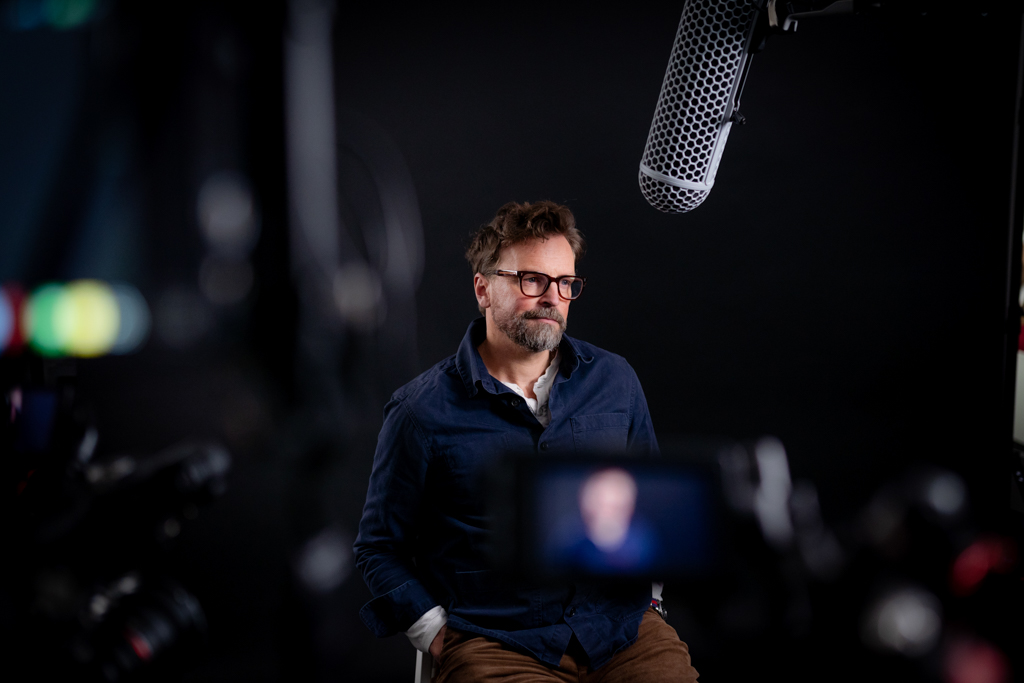
A congress naturally brings together the people your audience wants to hear from. With our crew on the ground already, you have everything you need to capture their thinking while you’ve got them.
With a bit of agility, a few well-planned conversations can give you a whole bank of thought leadership resources. We’re talking:
Importantly, the congress gives you access to thought leaders, but it doesn’t have to set the agenda. The floor is yours to ask about the topics your audience cares about, whether that’s an industry challenge or an emerging trend. The setting is simply the facilitator.
There you have it, weeks or even months of content just from one interaction.
2. Let key opinion leaders do the talking
You can explain what your products offer until the cows come home, but nothing hits quite as hard as hearing first-hand from the people who’re using them in real-world scenarios.
Those people are also notoriously tricky to get in front of a camera. Handy, then, that they’re already coming to you.
Crucially, this is your chance to get beyond an endorsement and into the detail. That could mean:
All of which give you a wealth of experienced voices sharing the practical details their peers want to hear, plus plenty of content to repurpose across everything from social campaigns and websites to internal comms and future product launches.
3. Don’t let the learning leave with your audience
A lot of time and effort go into your product demonstrations, workshops, presentations, symposia and expert sessions. Once they’re delivered, why leave all that knowledge in the congress hall?
Record those sessions and you’ve got the foundations for:
And viewers don’t have to sit through the whole session. We can turn longer recordings into shorter, focused edits, making it easier for different audiences to pinpoint what’s useful for them.
4. Get your leaders in front of the camera, too
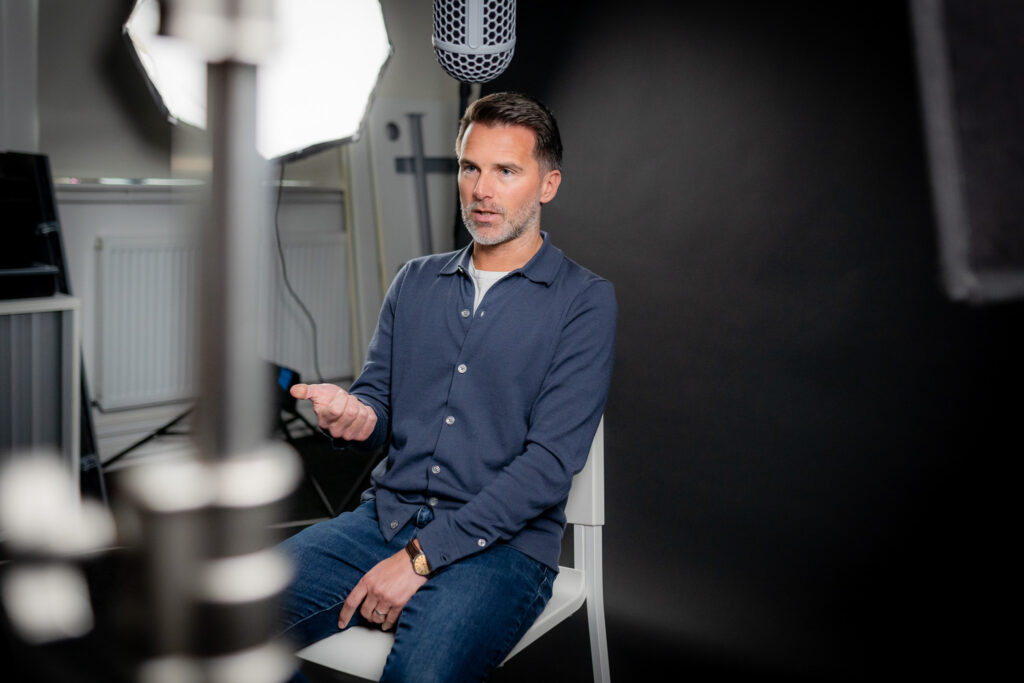
A congress often brings your senior team together in one place. If you’ve ever tried to find a filming slot in their diaries, you’ll know how fleeting those opportunities can be.
With the crew already there, a little time set aside could give you:
Think about what your colleagues need to hear over the coming months and get those conversations in the diary.
They don’t necessarily have to be polished; sometimes that’s actually part of the charm. A relaxed, off-the-cuff conversation can feel far more personal than a carefully rehearsed script.
5. Make the most of the moment
Up until now, we’ve looked at how your congress can keep your content calendar ticking over for months. But let’s not forget there’s plenty to make the most of while it’s happening, too.
As John explores in his piece, the benefits of capturing what’s happening on your stand and getting it out into the world while the things are still in full swing can be huge.
It’s not just anecdotal. With an on-site filming and live edit team, we’ve recorded:
Every single client who’s used this service has also chosen to repeat it the following year.
The immediate response is part of a bigger picture. By giving people a reason to care in the moment, your next video, article or training module has something to build on. Less starting from scratch, more carrying on the conversation.
Turn the ignition
The best time to start your content engine is well before your next congress gets underway. Get in touch and let’s discuss how those on-stand opportunities could fuel your content calendar for months to come.
When an Executive Leadership team event stretches across three days, dozens of sessions and hundreds of touchpoints, the challenge isn’t necessarily volume. It’s coherence. You need everything to belong in the same world, especially when timelines are tight, expectations are high and most of the audience were there last year.
From the outside, this kind of project can look effortless: cinematic, confident and clean. Up close, however, it’s layered and deeply human. Which basically means a small group of very skilled people holding a lot of moving parts at once.
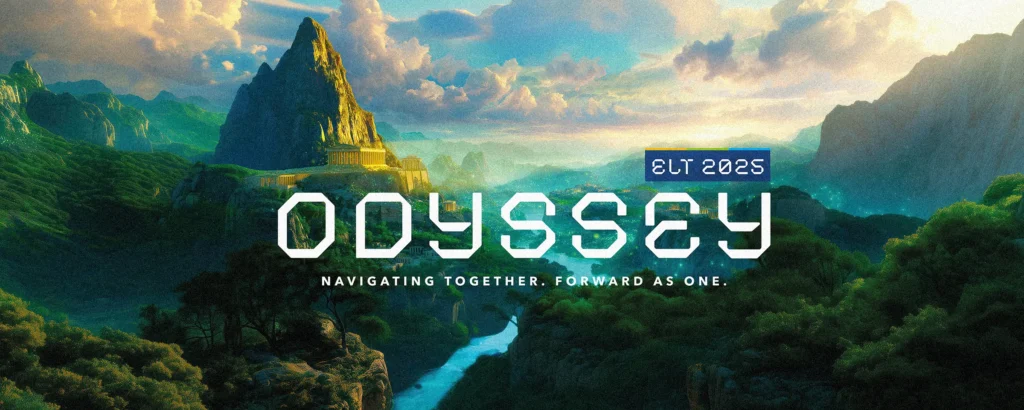
We saw this first-hand on a recent Odyssey-themed Executive Leadership event for a long-standing client of ours. This time, that coherence came from two inseparable forces: a strong, enabling theme, and the way we used AI to expand creative exploration and build at scale.
Granted, AI didn’t make Odyssey happen overnight, but it helped us explore faster, go further and keep the whole three-day experience feeling like one joined-up world.
Turning scale into story
The brief was to deliver a consistent experience across three days that felt intentional, connected and genuinely different for a returning audience. Less your typical conference, more stepping into another world.
Sure enough, world building emerged as a defining idea. Design soon moved beyond individual assets and began to imagine a complete, coherent world that unfolded over the three days. AI stepped up as a creative tool to support that narrative and scale.
That concept then evolved into a journey, or Odyssey, spanning three distinct environments. Early visual thinking drew loosely from fantasy world maps (think Lord of the Rings), where colour, terrain and geography signal progression. It established spatial storytelling from the start and clarified the three stages, helping the audience instinctively understand where they were in the story without over-explaining.

AI as a sketchbook, craft as the finish
When it came to mapping the narrative and distinct environments for each day, generative image exploration became our sketchbook. What started as vast landscapes, dramatic light and architecture emerging from rock progressed into a metaphorical acropolis for day one, dense green mountains for day two and an open water horizon for day three.
This is the bit that can sound magical when you summarise it. In reality, it’s iterative. You explore, refine, test… and then go again. Small prompts don’t always translate to small changes, so creative judgement is a must every step of the way.
Once we had strong direction, we shifted from exploration to build. That meant retouching, rebuilding, extending canvases, correcting light and adjusting perspective, sometimes merging multiple outputs to achieve a workable result. This is the unseen part that requires making the right call: do we regenerate or rebuild? Does that particular imperfection add character, or break the illusion?
An early stylistic decision shaped everything. Rather than aiming for photorealism, we leaned into a stylised, gamified aesthetic, closer to Avatar or a high-end video game world. That choice freed us from being hyper-real and made every design element feel intentional.

Continuity is where it counts
For Odyssey to feel truly immersive, each of our environments had to feel distinct yet undeniably part of the same universe. Otherwise, you don’t have a world; you have three separate backdrops.
The navigators were central to that consistency. As guides through the journey, they had to feel like they belonged inside it. Built as hybrids, we used real client imagery to anchor each character, while generative visuals pushed the world and wardrobe. Here, AI captured the Jumanji-esque vibe we were going for… just not the person. Turns out, ‘generic adventurer’ is easy; ‘recognisable speaker’ less so. Human design skills were very much key to rebuilding and refining each profile until the team was unmistakably themselves.
While AI supported scripting and visuals, the voiceover was intentionally human. A trusted voice actor anchored the story inside those otherworldly environments. Music was selected early with different tracks for each day, so the voiceover was recorded to music. That meant pacing and emotional rhythm were locked in from the outset.
Essentially, the tools helped us explore a bigger playground. The craft is what allowed us to piece it all together into a story with staying power.
So… does AI make it quicker and cheaper?
Onto the golden question: if you’re using AI, doesn’t that automatically mean faster and cheaper? Well, not necessarily.
On Odyssey, it became clear early on that AI wouldn’t reduce the work, but it could raise the ceiling of possibility. The real difference was how much we could build within the time we had, and how quickly we could test ambitious ideas before committing to a final route.
And that’s not to say that the process was seamless. Like any large-scale event, the journey to fruition was still intensive and iterative, with a constant need for creative judgement and control.
That’s the big win with AI. Not speed for its own sake, but what it unlocks: ideas you wouldn’t reach as quickly otherwise, and a broader creative horizon to explore. The output still depends on those talented humans you’ve always trusted making the calls.
If you’re looking for the people who can shape the work, keep it coherent at scale and bring the best ideas to life, let’s talk.
Live events are a high-pressure environment.
You’ve invested months in planning the stand, aligning the messaging, getting the team there, building something you’re proud of. Then the doors open… and suddenly everything is happening at once: overlapping conversations, competitors playing who can shout the loudest—all whilst attention is short and everything’s moving on fast forward.
And in that reality, the brands that come out on top aren’t always the ones with the biggest presence; they’re the ones that can respond in real time. Those that can capture what’s happening and share it while it’s still fresh.
The real advantage here isn’t size, it’s agility—on-site congress content that’s filmed, edited and live before the day is even done.
The problem: great stands can still get missed
Even the best exhibition experience can get swallowed up if it isn’t captured and shared as it’s actually happening.
Your team might be delivering brilliant demos, hosting meaningful discussions, running symposia… but if nobody outside that immediate moment sees it, the impact is always going to be limited.
And nope, it’s not enough to post a polished recap two weeks later. By then, the moment has passed.
Congress content needs to work both on the floor and off it. It needs to be built for speed, quality and brand control in a live setting.
Quick-turnaround content drives footfall while the event is underway
One of the biggest missed opportunities at congress is waiting too long to communicate what’s happening on your stand.
Fast, professionally edited on-site video captures activity as it unfolds, turning live moments into real-time invitations.
At EASD, for example, we created a same-day video for mylife Diabetes Care that invited delegates to experience their stand first-hand. Showcasing live demos, hands-on interaction and the energy around their evolving diabetes management solutions, it was posted while the congress was still in full swing, prompting attendees to come and see it for themselves!
Short-form video, optimised for platforms like LinkedIn, Instagram, X and TikTok, creates momentum and visibility while the event is still in motion.
Content that flexes
Live environments need modular content that can work across the event lifecycle.
That might look like:
Built as a system rather than a one-off, this approach keeps your message relevant from the first rig day to long after the stand is packed away.
Maximising the value of your exhibition investment
A congress is a serious investment, where all the different elements (not to mention the coffee!) really add up. So the question becomes: are you getting the full return?
On-site content transforms stand activity into marketing assets that continue working long after the event ends, extending the value of what you’ve already built.
Instead of one intense week of activity, you gain weeks or months of content supporting brand presence, follow-up campaigns, internal comms and future planning.
How do we know? At ESICM, we supported a global medtech leader with live congress content that brought their presence to life. Filmed and edited on-site, the videos showcased the expertise behind the brand and the diversity of the team delivering it, even engaging audiences in their native languages. Shared while the event was still underway, they extended the reach of their stand beyond the congress hall.
Built for the pace and pressure you’re under
We understand the pace organisations like yours work under. Live congress environments demand agility, consistency and creative that’s informed by what’s possible in the moment.
That’s why we create congress content designed for real-time impact—driving footfall, capturing authenticity and making your stand unmissable. Because at a congress, the brands that stand out aren’t just present. They’re impossible to ignore.