Author: Andy Upton, Art Director
I arrived in Berlin with plenty of recommendations ringing in my ears from friends and colleagues: ‘It’s really arty’, ‘It’s right up your street’ and so on, and they weren’t wrong.
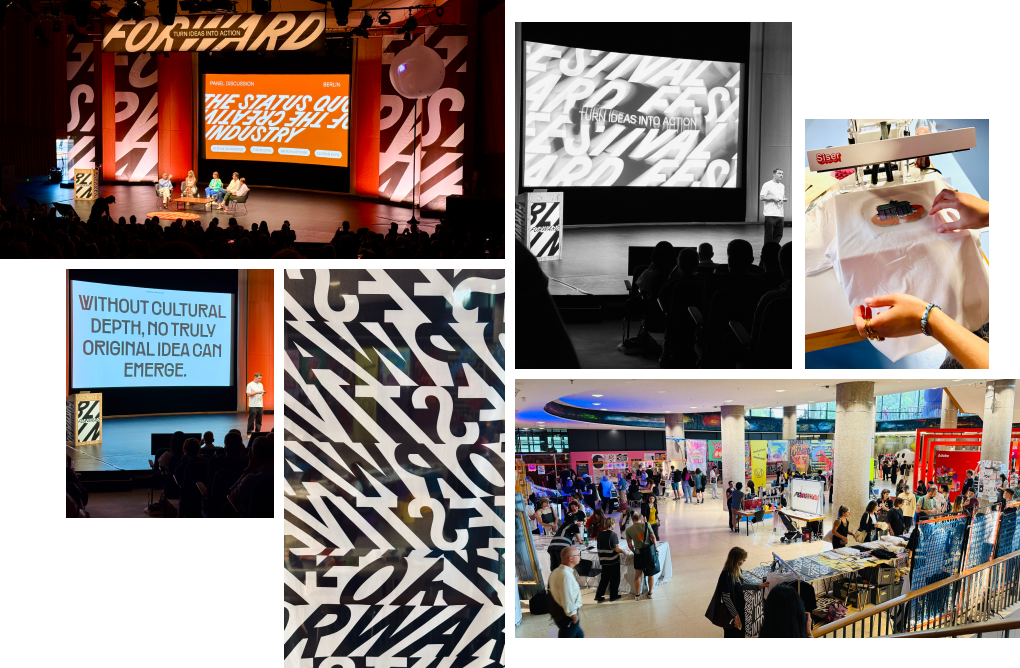
The main reason for the trip was Forward Festival—two packed days of creativity, design and enough inspiration to keep my camera roll busy for quite some time. But if you followed my trip to the Vienna edition a couple of years ago, you’ll know I’m not very good at simply travelling from hotel to conference venue and back again. After all, that was partly the point of coming here.
Before the trip, I wrote about the importance of getting away from the screen every now and then and experiencing creativity out in the real world. Berlin turned out to be a pretty good place to practise what I preach.
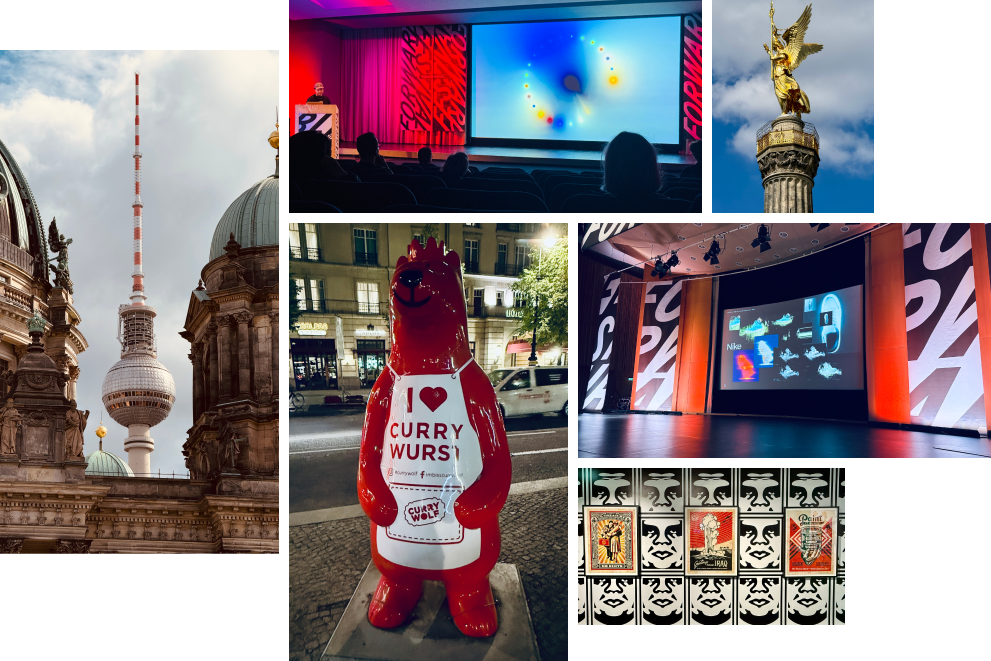
Between conference sessions, I squeezed in as much wandering as possible, taking in the architecture, buildings and street art along the way. It’s a city with an incredible visual energy. There always seemed to be something worth stopping for, looking at and (inevitably) photographing.
Forward Berlin was on a much bigger scale than the Vienna edition I’d previously experienced. The line-up alone featured more than 50 speakers across three stages, alongside workshops and a packed expo area, which unexpectedly became one of my favourite parts of the whole event.
Artists and independent magazines were selling their work alongside product demonstrations, but more importantly, there were opportunities to actually make things. Screen printing, sticker making, risograph collaging and tufting. Rather than simply walking around looking at other people’s work, you could get involved, have a go and probably come away with something you hadn’t planned on making.
Looking back, that hands-on side of the festival feels quite important. It created a space where people weren’t simply consuming creativity. They were making, talking, sharing, learning alongside one another, and connecting—which was a refrain that continued to repeat.
With so many speakers and three stages running across the two days, deciding who to see became something of an art form in itself.
Day one jumped between all kinds of creative disciplines, from code-based visual expression to creative journalism, but one idea stayed with me in particular: our analogue and digital worlds don’t have to sit in opposition.
The talk from Supersense captured that brilliantly, exploring work that combines the two and touching on the renewed appetite for formats such as Polaroid photography and vinyl records.
It was a nice reminder that adopting new technology doesn’t necessarily mean abandoning what came before. The interesting bit often happens when you find new ways of putting the two together. Which brings me to day two.
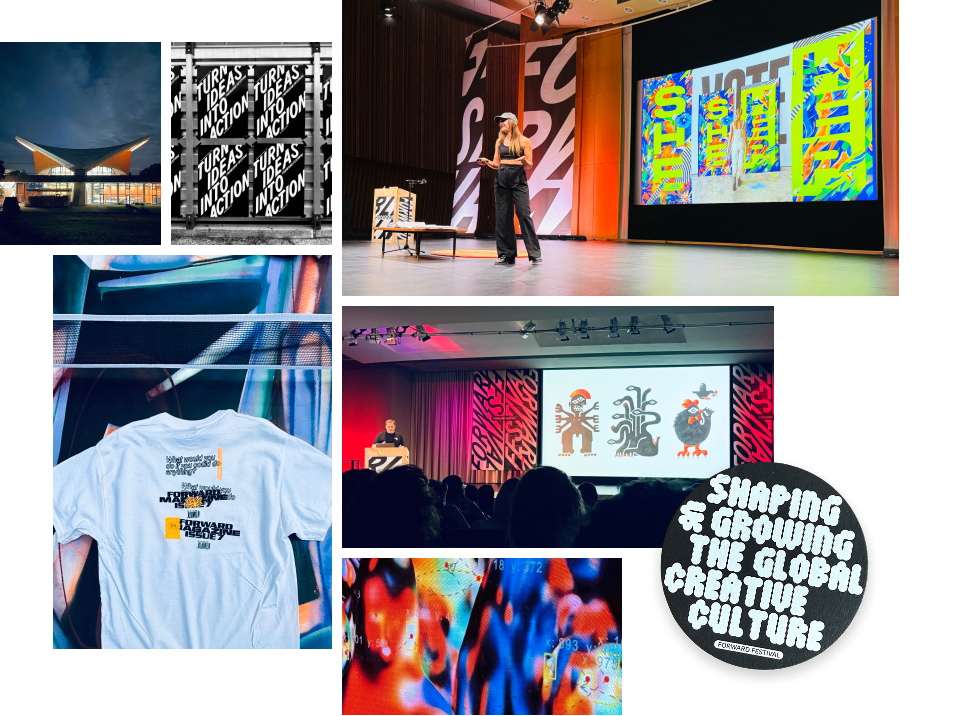
Day two somehow managed to dial the energy up again. It started, for me at least, with another visit to the printing area. This time I actually managed to get my hands on a blank T-shirt and make something of my own.
Then it was back into the talks.
Future Deluxe, Gemma O’Brien and Greek design studio Beetroot were particular standouts for me, each with beautiful work but very different creative journeys.
Beetroot’s talk especially stuck with me. Their work showed how creativity can be rooted in the culture and heritage immediately around us, rather than always looking elsewhere for inspiration. Just as interesting was the way they talked about their own studio as something that could connect with the community around it, incorporating a café, shop and event space rather than simply being somewhere people disappeared into to work.
Suddenly, a theme that had been bubbling away across the two days became much clearer.
Before arriving in Berlin, I’d half-expected an AI onslaught. And it would have been understandable. We’re living through a period when seemingly every conversation about creativity eventually finds its way to AI, emerging technology and what either might mean for the future of our industry.
But the thing I found most interesting about Forward Festival was almost the opposite. Again and again, the conversations seemed to come back to people: making things together, learning from one another, connecting with our local communities, rediscovering physical processes and using our creativity to contribute to something beyond ourselves.
That doesn’t mean rejecting AI or the digital world. Far from it. One of my biggest takeaways from the first day was precisely how exciting digital and analogue can be when they work together.
But perhaps as technology becomes more capable, the human side of creativity becomes more important, not less. Two days at a design festival reminded me that creativity is still, fundamentally, a very human thing. Maybe I shouldn’t have been quite so surprised by that.
I went to Berlin looking for inspiration. I found plenty of it in the work, the city, the talks and the things people were making. But the bit I’ve come home thinking about most is the people themselves, and what can happen when we make the effort to get out there, share ideas and make things together.
Turns out you can’t bookmark that.
Berlin and Forward Festival, you did not disappoint.
Author: Andy Upton, Art Director
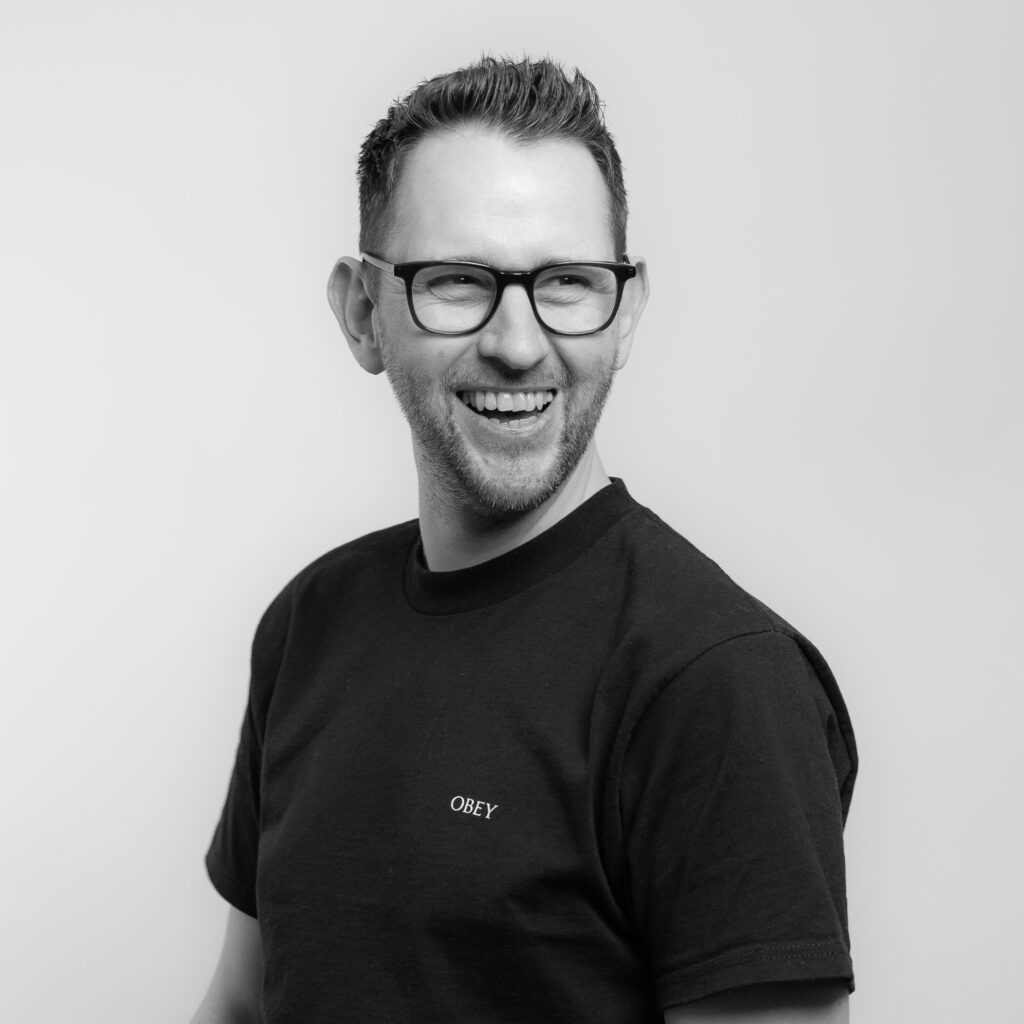
One of my favourite parts of being an Art Director is the hunt for inspiration. Honestly, I’m something of a hoarder: pins, bookmarks, likes, the works. I even put out an internal monthly newsletter just to give all that collecting some purpose, and to justify the habit.
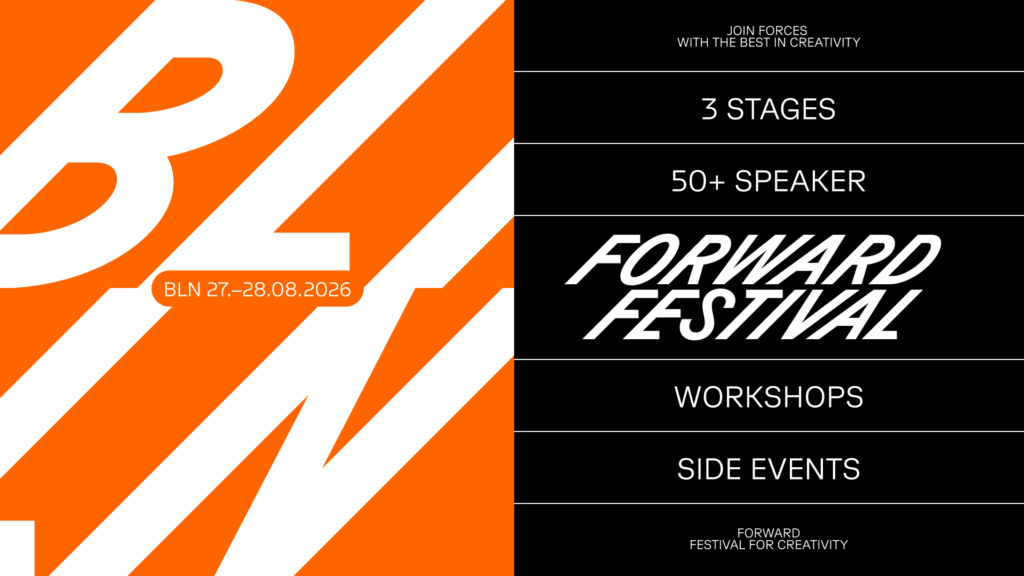
But collecting from behind a screen only gets you so far. I’m a firm believer that creatives need to get out into the world and see design in the flesh, and not just design, but art, architecture, sounds, smells, the full sensory brief. Our digital lives give us plenty, but nothing quite replaces standing in a new city, letting a different culture rearrange your perspective a little.
Which is exactly what I’ll be doing later this week: heading to Forward Festival, this time in Berlin, for my first proper look at the city. I caught the Vienna edition a couple of years back and came away buzzing with ideas, so I’m hoping Berlin delivers a similar hit of fresh thinking from designers and artists from around the globe. New city, familiar festival, and hopefully a decent excuse to see more of it than the venue and the nearest coffee shop.
So watch this space, or better yet, the Outlook socials, for daily dispatches straight from Berlin, followed by a full wrap-up once I’m back (Currywurst reviews included).
Go get out there.
If you’re weighing up a new agency, the thing worth buying isn’t a project. It’s a relationship that gets better the longer it runs.
In the early days, a lot of any partnership goes on context rather than the work itself. That’s unavoidable at the start. But it should shrink fast. As understanding builds, less of the conversation goes on catching up and more of it goes on what’s next. The warm-ups get shorter and the thinking starts further along. Briefs that used to need a full background session can begin halfway down the page.
That’s what compounding looks like in practice.
The part most agencies don’t reach
Plenty of agencies can deliver one great project. And sometimes, that may be all you need. But far fewer are still doing top-level work for the same clients year in, year out.
That’s the harder thing, and it doesn’t happen by default. It takes both sides staying invested, still pushing each other, still expecting more next time than last. Consistency only counts when it doesn’t slide into complacency. Stay with a partner long enough and the risk isn’t that the work gets worse, it’s that it gets comfortable. The relationships that keep paying off are the ones where nobody lets that happen.
What we mean when we say we stick around
We’re not pointing to that to boast about the number. We’re pointing to it because of what it takes to get there. Two decades of still being useful, still being challenged, still earning the next brief. You don’t last that long by coasting, and you don’t last that long if the work stops being good.
So when we say we stick around, that’s the proof. Not a line in a pitch, but a track record of being the kind of partner worth keeping. And we only get to stay that long because we keep earning it.
A different way to look at it
A fresh start has its place. Sometimes it’s exactly what a piece of work needs, and bringing in someone new is the right call. The question worth asking is whether the agency you choose is built to become a partner who already gets it, or just another supplier you’ll be briefing from scratch in a year’s time.
We’d back the first kind. Because twenty years in, the value isn’t in any single project.
It’s in everything you no longer have to go back over again…
and again… and again.
Great creative rarely begins with a great idea. It begins with a better question.
At Outlook Creative, we’ve never believed that inspiration is the hard part. Discipline is. Knowing when creative can do the heavy lifting versus when it just sounds good in a friendly room. Knowing when to push further and when to stop tinkering. Knowing the difference between interesting and right. Strategy and rationale aren’t just as important as the creative—they’re critical elements, baked into everything we do.
Here’s how we get there.
1. Diagnose before you prescribe
We start by interrogating the brief, not executing it. What’s the real problem underneath the stated one? Who and what needs to be moved and from where to where? The obvious answer usually has a better one hiding just behind it. Great creative finds exceptional solutions, so you’d better ask the right questions up front.
2. Discover what’s actually interesting
Every project has a detail, a tension or an angle that makes the whole thing suddenly click. It’s rarely on page one of the brief. Our job is to find it, recognise it for what it is and resist the temptation to sand off its edges to make it feel safer.
3. Pressure-test. Repeat
We don’t fall in love with concepts too early. We push them, argue with them and ask the questions that might break them. The ideas that survive aren’t just clever. They’re durable. And they have an outcome that can be measured.
4. Build the system, tell the whole story
A great idea has to work everywhere: not just in the showpiece execution, but in every format, channel and context it will actually live in. We design creative that holds together as a system, consistent enough to be recognisable and flexible enough to travel.
5. Craft it until it earns attention
Execution is where most ideas are won or lost. The right word over the almost-right word. The visual that clarifies rather than decorates. The detail that makes someone stop and look twice. This is where rigour and imagination have to occupy the same space, and where we do our best work.
6. Ship it. Stay with it. Measure it.
Making it isn’t finishing it. We stay with the work from delivery and care what happens after it lands. Did it move the right people? Did it do the job? Do we need to adjust? Great creative isn’t just made well—it’s followed through on.
In the end, a creative process only matters if it changes something. Whether that’s what people understand, what they feel or what they do next. That’s why discipline sits at the centre of everything we make. It’s how we turn ambition into structure or ideas into systems and, finally, execution into impact.
At Outlook Creative, we’re not interested in work that simply looks finished; we’re interested in work that performs in the real world and holds its shape under pressure. We want work to earn its place every single time it’s seen. Because great creative isn’t defined at the point of launch, but in everything it goes on to change afterwards.
How testimonials build trust in a way that doesn’t feel like marketing
In complex sectors like healthcare and medtech, trust is hard-earned—and rightfully so. One of the biggest challenges is getting people to believe in something they may not yet fully understand or have never experienced themselves.
Yes, you can explain product benefits, outline a service and present the data, but none of that really gets to the core of what people want to know: what difference will this actually make to my life?
Whether it’s a patient considering a potentially life-changing therapy or a clinician evaluating the latest innovation, there’s often a gap between information and belief. What’s missing is that uniquely human story—the relatable moment where someone can say, ‘Because of X, I can now do Y, and my life is significantly better because of it.’
Closing that gap is where the most effective marketing happens.
Why testimonials are the ultimate connector
Now, this isn’t the first time we’ve spoken about human-to-human (H2H) marketing. And there’s a reason for that. Experience has shown us that testimonial storytelling occupies that space between information and belief with a specific kind of power.
The most impactful work feels personal, not promotional. Crucially, it doesn’t feel like marketing at all. That’s why authentic stories can do something most messaging can’t: translating complexity into lived experience. They show impact, rather than simply describing it.
And the same goes across the board, whatever the audience demographic or subject matter—as these projects highlight.
‘Ordinary’ people doing extraordinary things
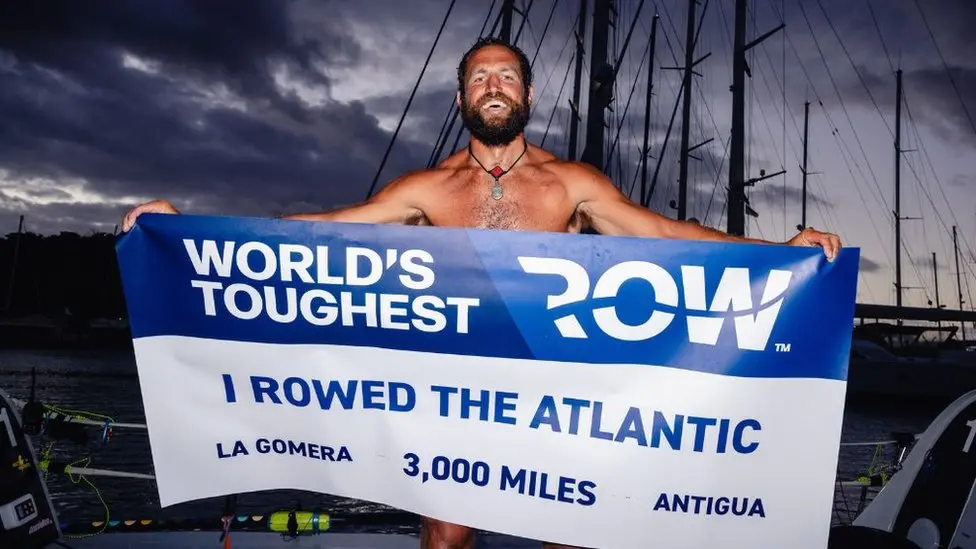
In 2023, Elliot Awin became the first person with a pacemaker to row solo and unsupported across the Atlantic Ocean.
We met Elliot as part of a project for a leading healthcare client to help share the story of how his own experience of living with heart arrhythmia has inspired him to support others.
Hearing Elliot telling his own story, in his own words, made all the difference. It’s the kind of story that doesn’t just inform but shifts perception in ways that a brochure or product booklet never could.
Stories that transcend language
In other instances, the challenge isn’t just building trust, but doing it across languages, cultures and markets.
On a recent European campaign, we captured a patient’s personal experience of living with pelvic health issues, and how a tiny device had changed her life.
The interview was conducted in her native Portuguese, which meant taking a slightly different approach—especially when it came to editing a story we couldn’t fully understand ourselves.
Working closely with our Portuguese crew for translation and context, we were still able to craft a heartfelt film that captured both our interviewee’s courage and the transformative impact of her treatment.
Proof that when a story is authentic, it transcends language.
Not just for patients
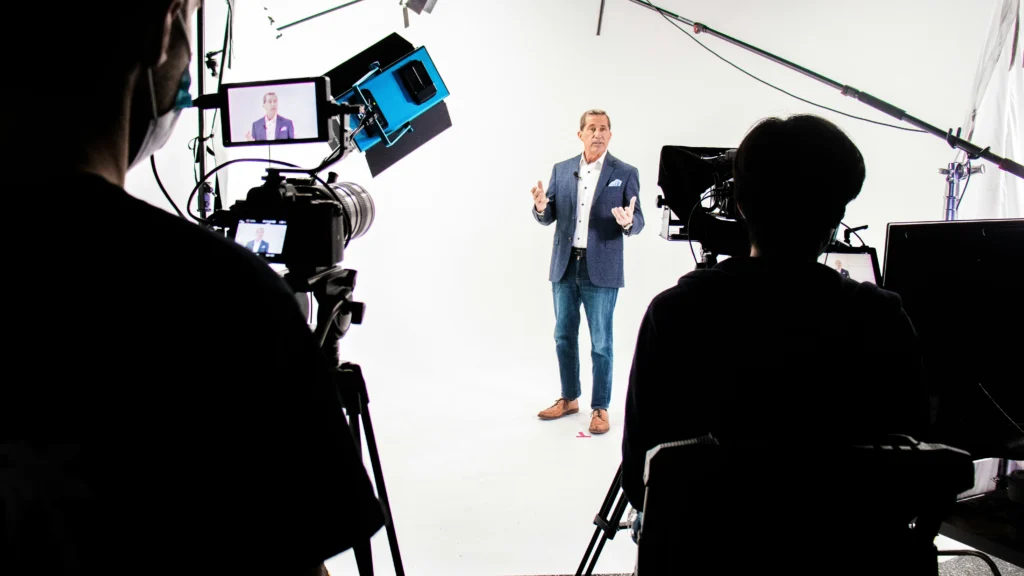
And it’s not just patient testimonials that pack a powerful punch. Clinician stories can be just as impactful, especially when you’re speaking to other clinicians.
For example, we recently delivered a project where our objective was to capture healthcare professionals (HCPs) sharing their experiences of using cardiac devices in real clinical settings.
There were no scripts and no over-polishing, just people talking about what works, how it enhances their day-to-day practice and why it supports better patient care.
That’s what gave it weight. Because when insight comes from peers, it carries a level of credibility that traditional messaging simply can’t match.
More than marketing
Testimonial marketing is often described as “the strategic use of positive feedback to build trust and increase sales.” But that feels like it’s missing the point a bit. Actually, a lot.
At its best, it’s about helping people actually understand something by showing what it looks like in real life—the tangible impact that we’d otherwise struggle to grasp.
Through human experience, abstract benefits suddenly feel relatable, technical features start to make more sense, and a message becomes something you genuinely believe.
And that’s why, in a world saturated with content, human stories will always cut through.
For twenty years, a global medtech leader has trusted us with their highest-profile events.
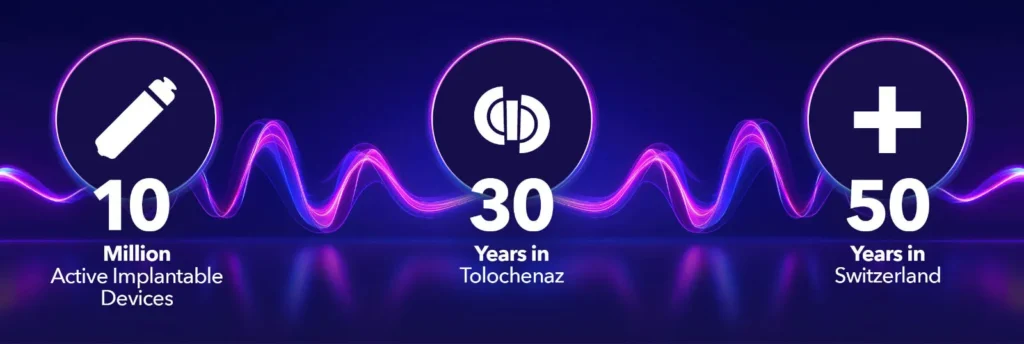
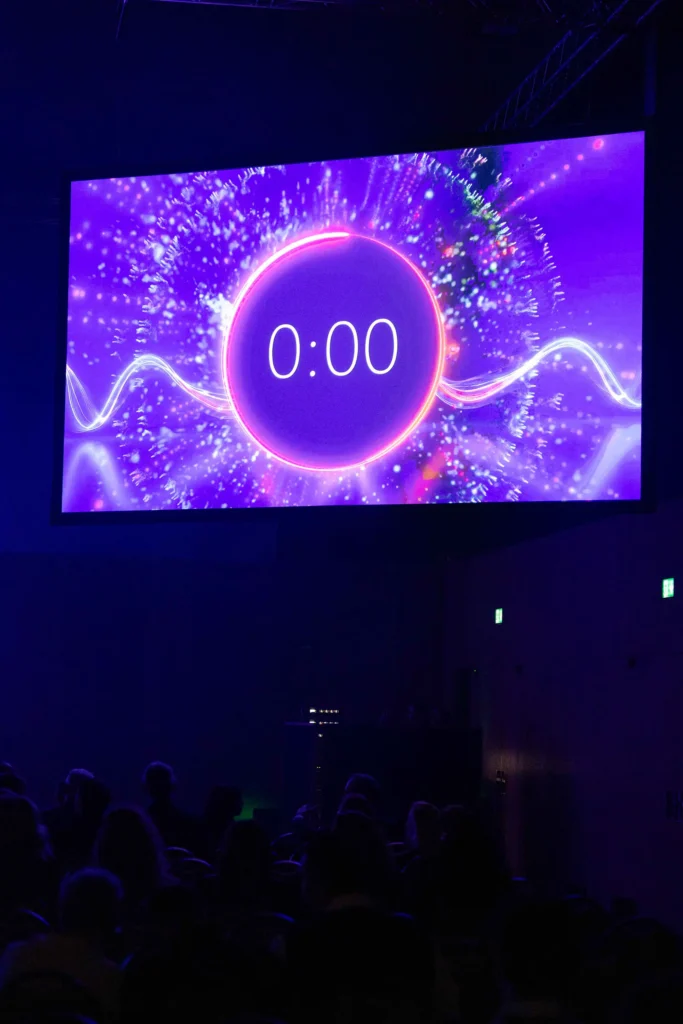
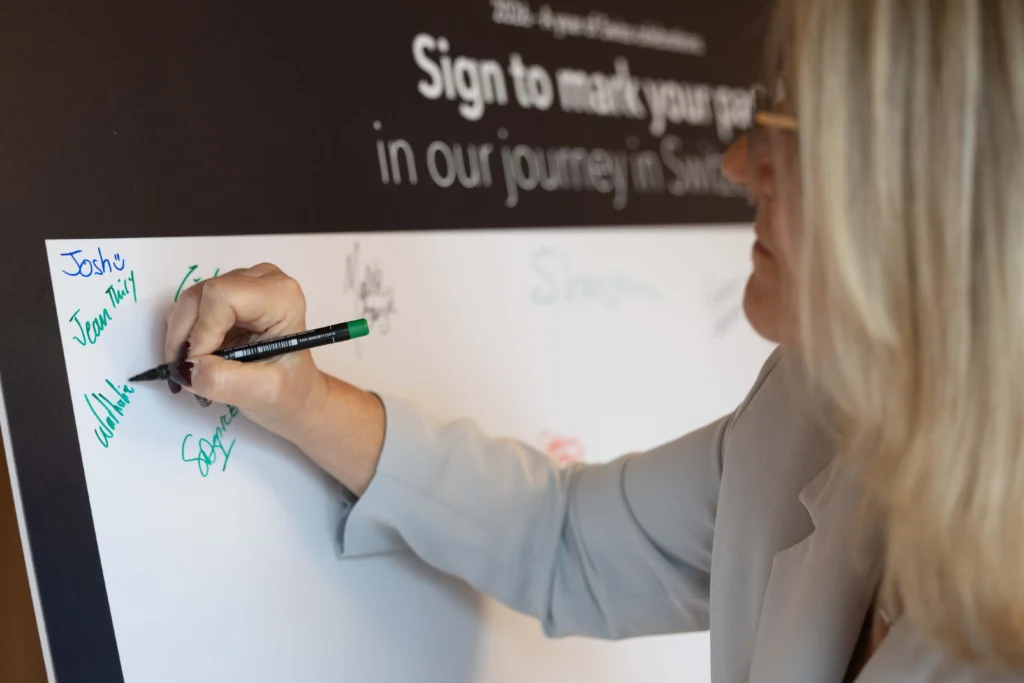
So when they approached us to help launch their 2026 milestone celebrations, we knew that it would be a standout project. The year marks three major milestones, each representing decades of innovation, growth and impact in healthcare:
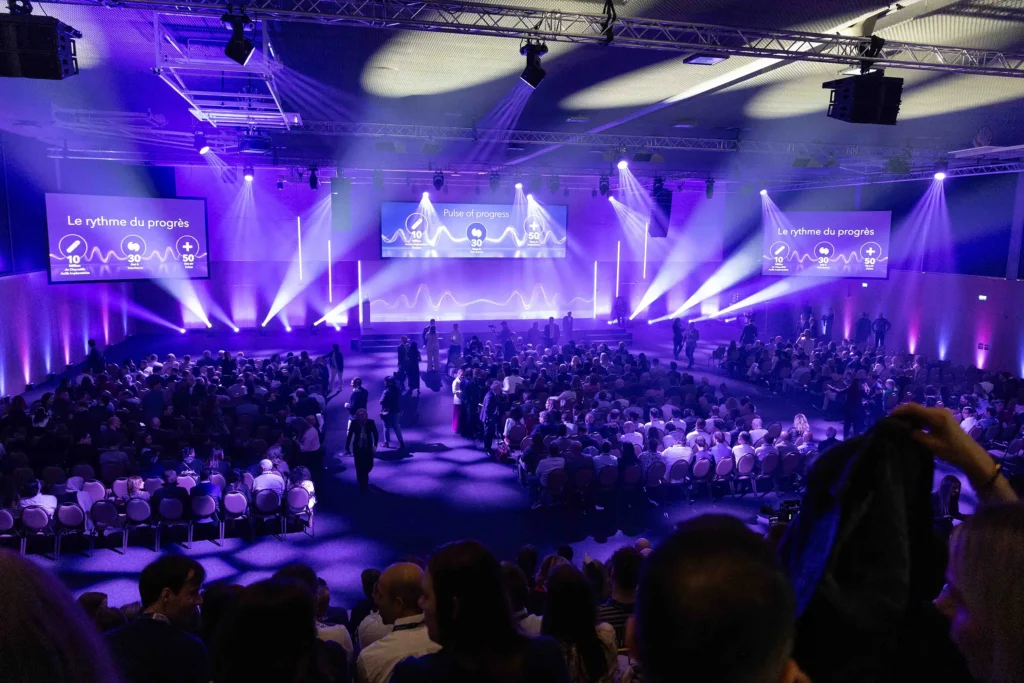
To bring those moments together, we looked to create an identity for a two-day celebration involving more than 800 employees alongside senior and executive leadership. The original brief sounded simple: one visual for one event. But as we explored the project, it became clear that this was something far bigger. A milestone year that demanded an identity capable of carrying the story.
Finding the pulse
These anniversaries were about more than numbers. They needed to resonate with the people behind them. They were a powerful reminder that lives have been changed and clinicians and caregivers have been supported, all made possible by their employees’ hard work and innovation to shape the future of healthcare.
So with the stakes this high, the creative process had to start with the right question: what does this moment actually represent?
We came up with the idea: the Pulse of Progress.
A pulse is a simple but powerful signal of life, capturing movement and momentum. And progress, whether in healthcare, technology or patient outcomes, is rarely linear. The concept felt right immediately.
Collaborative creative
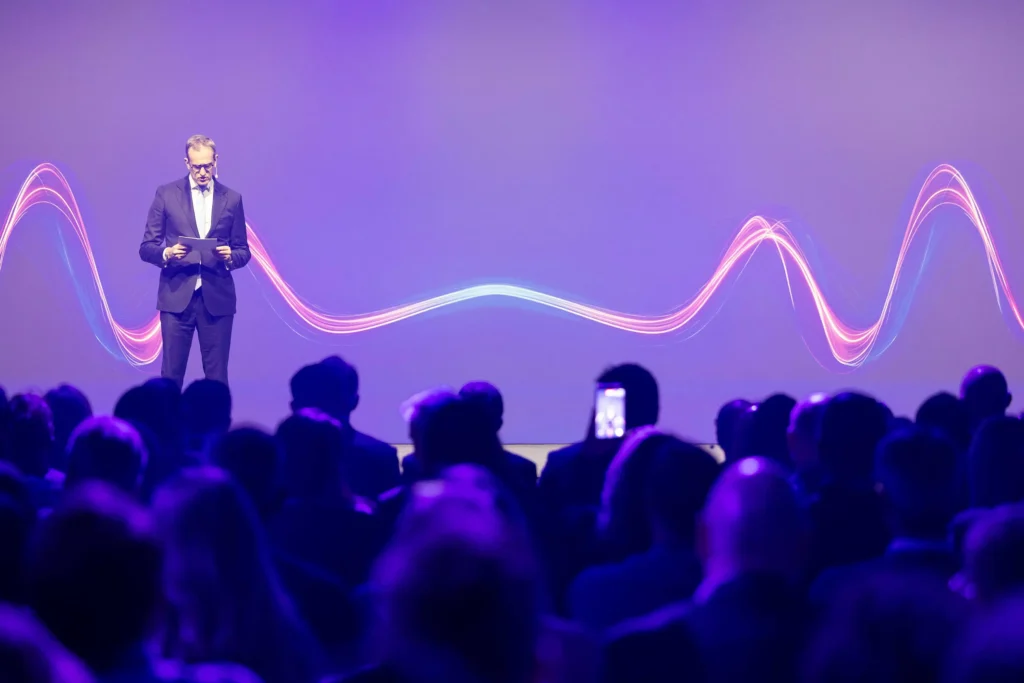
To bring it to life visually, the team developed a distinctive ‘wave’ identity. This took the form of a rhythmic pulse that could move across various formats, screens and spaces. This visual language that felt both dynamic and meaningful, as well as connected the client’s role at the heart of healthcare.
Projects like this only work when different disciplines work in harmony: creative direction, art direction, design, copywriting and moving image all came together holistically, ensuring every piece of the campaign told the same story.
Bringing the story to life
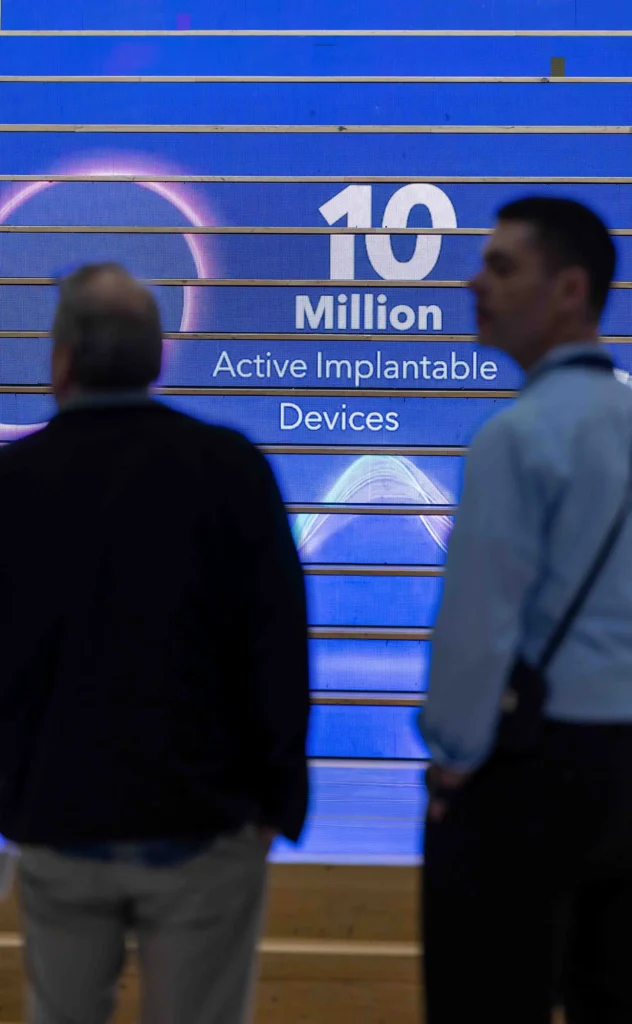
Once the identity was established, the campaign quickly expanded across multiple formats. The team designed and produced a wide range of materials, including presentations, event branding, environmental graphics and video content.
In the weeks leading up to the celebrations, our video team spent multiple filming days capturing additional content to support the narrative. One of the most powerful moments came in Bern, where our crew documented the implantation of a landmark implantable device at one of the country’s leading hospitals. A milestone that brought the scale of the achievement into sharp focus.
The two-day event itself marked just the beginning. Even weeks after the launch, internal teams continued to reference the work, and external audiences noticed its reach. Short-form social edits, long-form storytelling and internal communications all carried the Pulse of Progress identity forward. With more than 100 creative assets produced, including over 25 video outputs spanning internal and external channels, the campaign wasn’t just visually consistent, but genuinely connecting with people in a meaningful way.
“From concept to execution, the team delivered an identity that was as meaningful as it was scalable. Pulse of Progress united multiple milestones under a single, powerful story, carrying our message seamlessly across events, content and channels. It didn’t just celebrate our history; it brought our people together, reinforced the real impact our work has on lives, and became a shared language for what we’ve achieved and where we’re going.”
– Sr. Director, International Brand, Digital & Corporate Marketing
A partnership built over time
There’s another reason this project feels particularly special for us. 2026 also marks 20 years of collaboration between Outlook Creative and our client.
As our Co-Managing Director, John Lloyd puts it:
‘In the 12 and a half years I’ve personally worked with this client, we’ve delivered thousands of projects together. But this one stands out as one of the highest-profile pieces of work we’ve ever done. The level of content and engagement that came out of this project was incredible.’
Moments like this, where creativity, trust and shared purpose all come together, remind us why long-term partnerships matter. There’s real value in working with people who understand the story you’re trying to tell. And for this incredible milestone year, that story is only just getting started.
Every piece of work has a story behind it. Not just what was made, but how and why it came to be. So we asked our Creative Director, Pete Michels, to share a different kind of perspective—one that steps back from the finished work and into the thinking behind it, offering an insightful glimpse behind the curtain of creativity.
Recently we tried something a little different.
Nothing revolutionary—pretty simple actually. But after going through it, I don’t think we can live without it.
Creative work has a beautifully strange rhythm. You spend an inconsistent amount of time thinking about something. Exploring it. Questioning it. Pushing it forward. Questioning it again.
Then eventually you commit.
And eventually you let it go.
One day it’s ‘finished’. The files are sent. The project moves on. And the work begins to take on a life of its own.
(They grow up so fast.)
And like most things we release into the world, we rarely sit down with it again.
Most designers don’t get the chance to stop and talk about the work once it’s done. Of course there are conversations during the process. Rationales. Check-ins. Presentations.
But that’s still the process.
What’s often missing is the story after the work has been set free.
The hesitations.
The instincts.
The micro-decisions that quietly changed everything.
So, we asked the designers to bring the work back.
Client work. Personal work. The things they’re proud of. Sometimes the things they’re still figuring out.
And then we sit down and talk. Just three of us.
Over the past few weeks each designer has been sitting down with Andy, our therapeutically calm Art Director, and myself (nothing therapeutic about me) to share what we’ve been calling a ‘personal lookbook’.
It’s not a presentation.
It’s not a critique session.
When it works well, it’s closer to a one-sided conversation.
This is their time to talk about the work. We mostly listen. Occasionally scribble something down. Andy radiates a calming presence.
Creative wellness at its finest.
Designers bring together projects and personal work they’re proud of, and sometimes work they’re still processing.
And they talk.
The thinking behind it.
The decisions that shaped it.
The instincts that pushed it one direction instead of another.
They’re using a muscle that, for many designers, doesn’t get exercised often enough.
The muscle of explaining how their creative mind actually works.
These sessions are intentionally small. Just three people in the room.
That intimacy matters.
Sometimes the conversations get unexpectedly personal.
Because creativity, whether we admit it or not, is something we all take a little personally.
Finished design can feel inevitable.
Once something exists in the world, it looks like it was always meant to be that way.
But anyone who has made something knows the truth is usually much messier.
There are moments of uncertainty.
Ideas that almost worked.
Decisions made on instinct, skill, taste and confidence.
Details that need unpacking. Debate. Occasionally, a high-five.
The lookbook sessions open the doors on all of this.
And what emerges isn’t just a collection of projects.
It’s something much more interesting.
A map of how a creative brain works.
Something interesting happens when designers talk about their work like this.
They start by sharing what they’re proud of. The projects that meant something to them. The ideas that pushed a little further. The details that quietly hold everything together.
And often it’s not the projects you’d expect.
But as the conversation unfolds, something shifts.
Not toward critique. Toward understanding.
Why this idea felt right.
Why that decision mattered.
Why certain instincts led the work in a particular direction.
What emerges isn’t a defence of the work.
It’s clarity.
Because real creative confidence doesn’t come from believing you’re always right.
It comes from understanding why you made the decisions you did, and being able to stand behind them.
Here’s the part we didn’t fully anticipate.
Andy and I learn just as much in these sessions as the designers do.
Sometimes we discover strengths we hadn’t fully seen yet.
An interest we haven’t tapped into.
An instinct that deserves more room.
A perspective we should be leaning into far more often.
You start to realise that reviewing the work isn’t really the point.
Understanding the person behind the work is.
These conversations help us see not just what someone has made, but the kind of designer they’re becoming.
Design, after all, is a profession built on judgement.
And judgement only develops through experience, reflection and conversation.
(take a few of them, actually)
In an industry that moves quickly, taking time to step back and talk about the work can feel almost radical.
There’s always another brief.
Another deadline.
Another project waiting to begin.
But pausing to reflect, even briefly, reminds us that creative growth doesn’t just happen through making more work.
Sometimes it happens through understanding the work we’ve already made.
Because the fastest way to grow as a designer is to understand how you already think.
And occasionally, through laughing at the decisions we thought were brilliant at the time.
Great studios talk about the work.
Great designers talk about why the work exists at all.
The lookbook sessions are quiet conversations.
No presentations.
No audience.
No performance.
Just designers reflecting on the work that matters to them, and the thinking behind it.
And in those conversations, something important becomes visible.
Not just what someone has made.
But the designer they’re becoming.
And, hopefully, the studio we’re becoming together.
When an Executive Leadership team event stretches across three days, dozens of sessions and hundreds of touchpoints, the challenge isn’t necessarily volume. It’s coherence. You need everything to belong in the same world, especially when timelines are tight, expectations are high and most of the audience were there last year.
From the outside, this kind of project can look effortless: cinematic, confident and clean. Up close, however, it’s layered and deeply human. Which basically means a small group of very skilled people holding a lot of moving parts at once.
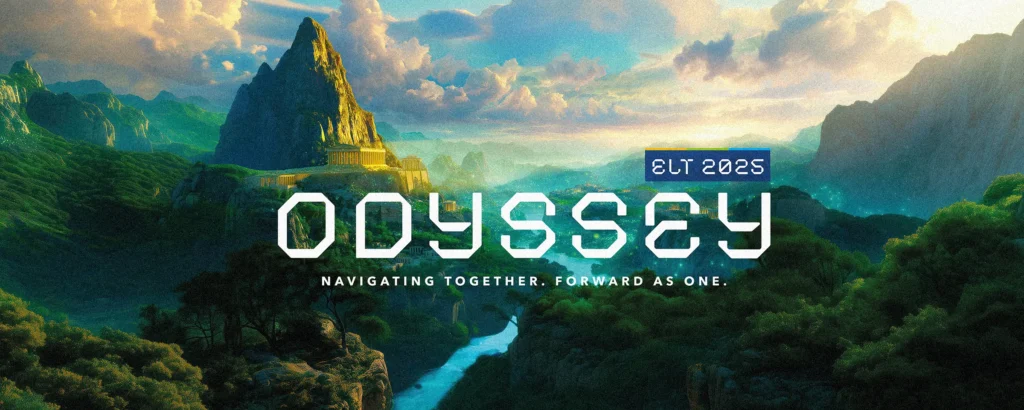
We saw this first-hand on a recent Odyssey-themed Executive Leadership event for a long-standing client of ours. This time, that coherence came from two inseparable forces: a strong, enabling theme, and the way we used AI to expand creative exploration and build at scale.
Granted, AI didn’t make Odyssey happen overnight, but it helped us explore faster, go further and keep the whole three-day experience feeling like one joined-up world.
Turning scale into story
The brief was to deliver a consistent experience across three days that felt intentional, connected and genuinely different for a returning audience. Less your typical conference, more stepping into another world.
Sure enough, world building emerged as a defining idea. Design soon moved beyond individual assets and began to imagine a complete, coherent world that unfolded over the three days. AI stepped up as a creative tool to support that narrative and scale.
That concept then evolved into a journey, or Odyssey, spanning three distinct environments. Early visual thinking drew loosely from fantasy world maps (think Lord of the Rings), where colour, terrain and geography signal progression. It established spatial storytelling from the start and clarified the three stages, helping the audience instinctively understand where they were in the story without over-explaining.

AI as a sketchbook, craft as the finish
When it came to mapping the narrative and distinct environments for each day, generative image exploration became our sketchbook. What started as vast landscapes, dramatic light and architecture emerging from rock progressed into a metaphorical acropolis for day one, dense green mountains for day two and an open water horizon for day three.
This is the bit that can sound magical when you summarise it. In reality, it’s iterative. You explore, refine, test… and then go again. Small prompts don’t always translate to small changes, so creative judgement is a must every step of the way.
Once we had strong direction, we shifted from exploration to build. That meant retouching, rebuilding, extending canvases, correcting light and adjusting perspective, sometimes merging multiple outputs to achieve a workable result. This is the unseen part that requires making the right call: do we regenerate or rebuild? Does that particular imperfection add character, or break the illusion?
An early stylistic decision shaped everything. Rather than aiming for photorealism, we leaned into a stylised, gamified aesthetic, closer to Avatar or a high-end video game world. That choice freed us from being hyper-real and made every design element feel intentional.

Continuity is where it counts
For Odyssey to feel truly immersive, each of our environments had to feel distinct yet undeniably part of the same universe. Otherwise, you don’t have a world; you have three separate backdrops.
The navigators were central to that consistency. As guides through the journey, they had to feel like they belonged inside it. Built as hybrids, we used real client imagery to anchor each character, while generative visuals pushed the world and wardrobe. Here, AI captured the Jumanji-esque vibe we were going for… just not the person. Turns out, ‘generic adventurer’ is easy; ‘recognisable speaker’ less so. Human design skills were very much key to rebuilding and refining each profile until the team was unmistakably themselves.
While AI supported scripting and visuals, the voiceover was intentionally human. A trusted voice actor anchored the story inside those otherworldly environments. Music was selected early with different tracks for each day, so the voiceover was recorded to music. That meant pacing and emotional rhythm were locked in from the outset.
Essentially, the tools helped us explore a bigger playground. The craft is what allowed us to piece it all together into a story with staying power.
So… does AI make it quicker and cheaper?
Onto the golden question: if you’re using AI, doesn’t that automatically mean faster and cheaper? Well, not necessarily.
On Odyssey, it became clear early on that AI wouldn’t reduce the work, but it could raise the ceiling of possibility. The real difference was how much we could build within the time we had, and how quickly we could test ambitious ideas before committing to a final route.
And that’s not to say that the process was seamless. Like any large-scale event, the journey to fruition was still intensive and iterative, with a constant need for creative judgement and control.
That’s the big win with AI. Not speed for its own sake, but what it unlocks: ideas you wouldn’t reach as quickly otherwise, and a broader creative horizon to explore. The output still depends on those talented humans you’ve always trusted making the calls.
If you’re looking for the people who can shape the work, keep it coherent at scale and bring the best ideas to life, let’s talk.
Early January always has the same energy. New plans. New priorities. New pressure to ‘get everyone aligned’. And for a lot of marketing and comms leads, that last bit is the hardest part.
Because change isn’t the problem. Confusion is.
A restructure, a new strategy, a product shift, a refreshed brand, a different way of working. On paper, it’s clear. In real life, it lands in busy inboxes, half-listened-to town halls and Teams calls where everyone’s still thinking about their next meeting. The message gets diluted, people fill in the gaps themselves and momentum slips.
That’s where we come in.
We’re a creative agency, yes. But our job isn’t ‘pretty pictures’ or a nicer set. It’s taking a communication need and turning it into something people actually understand, feel and act on. We join the dots from the first conversation to the final output, so the message stays intact wherever it shows up. That can mean strategy and messaging first, then the right mix of Design, Digital, Film or Live moments, all delivered as one connected story.
The trick is to start with the outcome, then choose the deliverables that make it real.
When a client says, ‘We need an event’, they rarely mean an event. They often mean they need leaders to believe in this change. Or teams to stop interpreting the strategy in ten different ways. Or customers to see us differently now.
So we turn that into reality.
We find the theme that holds everything together (not a list of topics). We break content into segments people can absorb, not monologues they sit through. We design with real cognitive limits in mind, because nobody retains a sixty-slide download. And we make it socially digestible so the story travels beyond the room—because we engage, rather than present.
A recent example: a major global healthcare client brought us in to help communicate a significant shift to their senior leaders. The ask wasn’t ‘make it look good’. It was ‘make this make sense’. We created a shared narrative and built the full experience around it, from the visual identity and films to staging, presentation storytelling and on-the-ground delivery. The goal was simple: replace uncertainty with clarity and confidence.
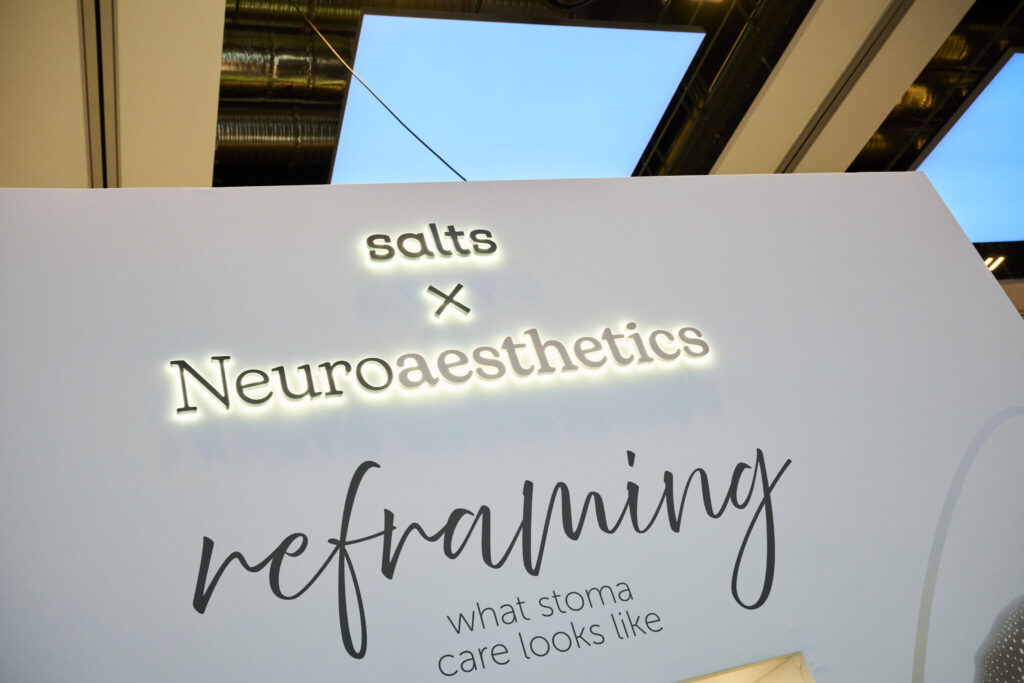
Then there’s Salts Healthcare. We built an exhibition stand designed to communicate their ethos around stoma care in a way that felt human, modern and very un-clinical. Neuroaesthetics. Sensory cues. A deliberately different look and feel. Because the message wasn’t ‘here’s our product range’. It was ‘here’s how we see people, and how we show up for them’.
If your 2026 involves change—which let’s be honest, it will—your comms can’t afford to be generic. They need to land. Transforming Creative into Reality starts with knowing the shift you need from your audience, not what needs to be made.
“Have we become too comfortable with convenience?”
Our Joint MD, John, recently took a trip to Switzerland to catch up with some of our clients (read about it here). It was a valuable visit for lots of reasons—not least because of his now expert-level knowledge of Swiss public transport—and it got us thinking.
With hybrid and remote working becoming more commonplace as a result of the COVID-19 pandemic, is the ease of virtual communication actually just moving the dial too far in the wrong direction?
Like everything in life, it’s all about balance—and Teams and Zoom have undeniably brought huge benefits, especially in a more eco-conscious world. But many of us have seemingly convinced ourselves that virtual catchups are more effective.
John’s week in Switzerland gave us a timely reminder that this isn’t always true. But more importantly, it led to two vital conclusions:
The science stuff
Our discussion about the impact of our boosted screen time set the cogs whirring; surely there’s something scientific in all this? As it turns out, there very much is.
We know that the timeline of human existence on Earth stretches back around 200,000 years. Up until March 2020, the majority of this time has been spent almost exclusively in person.
So, face-to-face interaction is deeply rooted in our biological evolution. More recent findings also show that our behaviour, brain processes, and cognition work differently when we interact in the same physical space.
It’s a chemistry thing. In-person conversations, along with physical gestures like handshakes and hugs, have been proven to release oxytocin—a feel-good hormone that builds trust and fosters social connections.
Which makes sense. It’s much harder to read things like body language and social cues through a screen; we lose the subtlety that’s so key to shaping our dynamics and strengthening our relationships. The task-oriented nature of our virtual meetings also leaves little space for the small talk that helps us feel more connected with one another.
“You can’t truly add value and elevate a project with creativity until you know your client. And you’ll never fully know your client until you’ve spent time with them in person.”
How do we reconcile this with modern-day agency life?
Ours is a people industry. It’s also creative and fast-paced with tight deadlines. Sometimes, we just need to get shit done, pronto, and in these instances, it absolutely makes sense to jump on a Teams call.
But the thing is, it’s not always about productivity or efficiency. Building trust and rapport with our clients is essential for us to do what we do best (transforming creative into reality). And you have to put the work in to make this happen.
We’ve never been an agency to just churn out what our clients ask for without a second thought; we pride ourselves on going above and beyond. But you fundamentally can’t do that well without knowing the person behind the brief.
So, to answer our own question, we think convenience is overrated—and we challenge you to change our minds. Let’s chat about it in person; coffees are on us.
Let’s make ideas happen—together. Visit us in person and experience how collaboration sparks creativity.