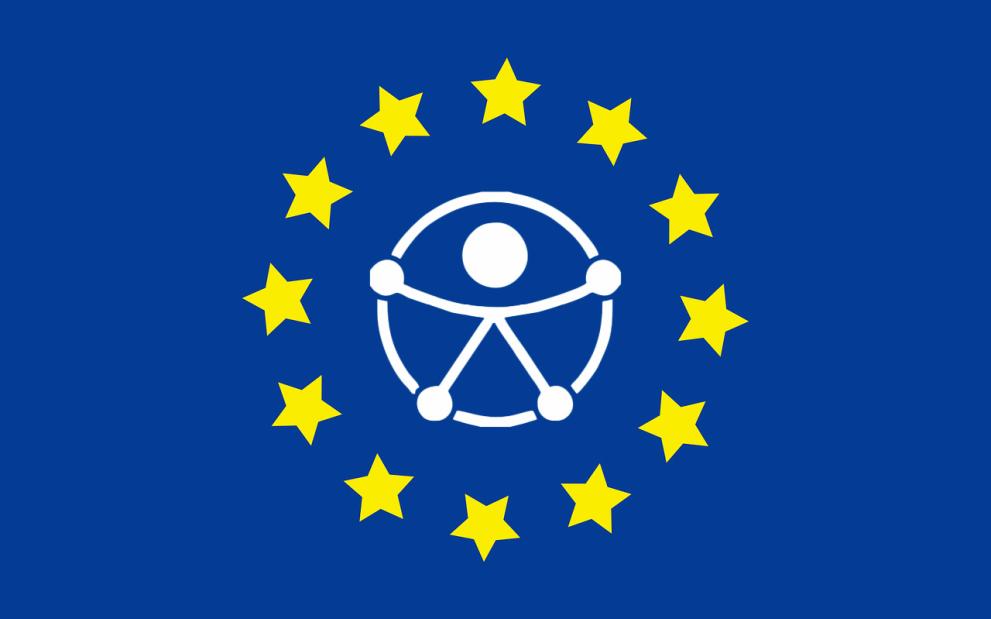
The European Accessibility Act (EAA) will become law in all EU member states on 28 June 2025. This landmark piece of legislation aims to ensure equal access to digital products and services across all 27 countries in the European Union.
The EAA also applies to any organisation that trades with the EU—which includes us here at Outlook Creative.
As a creative agency, we proudly work with a number of clients across Europe. We’re also an organisation that’s committed to inclusivity; we strongly believe that transforming creative into reality—the ‘thing’ we hang our hat on—is only successful if everyone can enjoy our solutions.
So let’s dig a little deeper into what the European Accessibility Act is, why it matters and what we’ve been doing at Outlook Creative to make sure we’re part of a more inclusive future.
The EAA is a directive of the European Union which was initially passed in April 2019. Its purpose is to improve the accessibility of products and services across all Member States by removing barriers created by divergent rules.
The legislation covers areas that have been identified as ‘most important’ to people with disabilities, including computers and operating systems, smartphones, audio-visual media, e-commerce, banking and more.
There are four core principles that underpin the EAA’s accessibility criteria, known as the POUR model (perceivable, operable, understandable and robust).
Organisations have until 28 June 2025 to audit their existing materials and fix any identified issues in order to become compliant.
Put simply, it’s about inclusion. In our increasingly digital world, access to information and services is not a luxury: it’s essential for being able to fully participate in society.
It’s soon to be a legal requirement, but it’s always been an ethical one. Accessible websites and digital tools help make sure that people with visual, auditory, motor or cognitive impairments can move through the world without added barriers.
It’s also about universality. Accessible design practices benefit everyone. Think about the last time you watched a video with subtitles, used a voice assistant or adjusted the font size to make something easier to read. Many of us rely on accessibility features on a daily basis—they make our lives easier. What the EAA does is make improved user experience for everyone a legal requirement. And that can only be a good thing.
Well, first and foremost, we’re not waiting until June. We’ve been busy behind the scenes reviewing, discussing and reviewing again to make sure we’re continuing to deliver accessible solutions for our clients.
Our preparations have taken three main tacks:
Internal training
Natalie from our UI team delivered a super-informative training session to our internal colleagues last autumn. We discussed the EAA, what it means for us at Outlook Creative and key things to look out for when creating accessible digital solutions.
Updates to systems & processes
To hold ourselves accountable, we’ve made an addition to our internal briefing tool. Now, any Seeker returning a piece of work must confirm that their designs comply with European accessibility standards.
Open conversations
Accessibility—digital or otherwise—is our shared responsibility. It’s also an ongoing process. By having conversations with our clients around inclusive design and making it an intrinsic part of how we measure the success of our work, we all contribute to making our world a fairer, more inclusive space.
Here’s to a future of digital design that can be enjoyed by everyone.
Need help getting your materials EAA-ready before June? We’re here to make sure your digital presence is compliant and inclusive. Get in touch and let’s chat.
In case you missed it, we recently launched Inside Outlook—our first ever outward-facing digital magazine. And we’re really proud of it! It’s the first time we’ve truly flung open the door to our world of creative problem-solving and invited everyone in for a hearty dose of all things Outlook Creative.*
Have a flick-through while you’re here. It’s full of honest conversations, stories of fulfilling client partnerships, and insights into the thought processes behind our work—essentially, all the things that get the cogs turning.
But the process of getting here sparked a wider debate. Isn’t a digital magazine a bit of a rogue move? We all have busier lives, shorter attention spans, and more content to digest than ever. It’s a short-form world. Surely no one’s going to read a 60-page magazine?
We’re going to go out on a limb and say…We think they will.
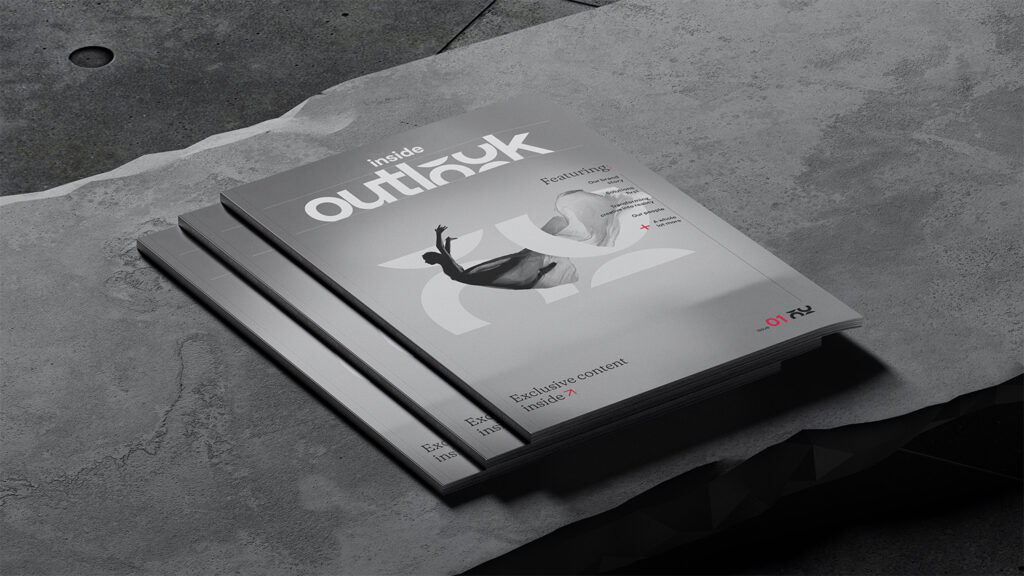
This isn’t just us blowing smoke up our proverbial. Digital magazines aren’t a new thing at Outlook Creative—our internal magazine, The Outlook, publishes three times a year and receives consistently high engagement rates. In fact, its popularity is what inspired a host of additional longer-form publications (including the one that’s the subject of this article).
We’re also noticing a growing trend towards long-form content among our clients. We recently won a competitive pitch to work with Salts Healthcare on their The Salts Way campaign. Our proposal for this lifestyle-inspired, nurse-led movement is centred around a campaign linchpin of—you guessed it—a carefully curated magazine.
Now, these examples may be anecdotal, but the broader point we’re making is echoed by the wider industry and consumer behaviour.
It’s not news that AI is transforming marketing at a rate of knots. But as a direct reaction to the saturation of uniform and often impersonal AI-generated content, experts predict that human-centric content, storytelling, and making an emotional connection will become more important than ever throughout 2025 and beyond.
In other words, people are craving authenticity and human stories. Digital magazines (and other longer-form mediums) provide an ideal platform for delivering the depth and meaningful engagement audiences are looking for.
“People are craving authenticity and human stories. Digital magazines (and other longer-form mediums) provide an ideal platform for delivering the depth and meaningful engagement audiences are looking for.”
We’re not saying that long-form content is the be-all and end-all of answering this need for a genuine, trusted voice. What we are saying is: Don’t write it off as part of a bigger strategic picture.
Because, while a pithy social post, short blog, or video is great for capturing attention, longer-form pieces are where you maintain that interest as part of an integrated cross-channel strategy, meeting your audience further down the funnel with the specifics of how your offering can make their lives easier. It’s also an opportunity to demonstrate thought leadership and authority on a more extensive scale—qualities that build confidence and scratch the authenticity itch.
So, it’s clear that long-form content is far from dead. It’s actually alive and kicking when used strategically—for example, a digital magazine that offers an interactive, multimedia-rich experience that stands the test of time…
That’s why we stand by our assertion that we think people will read Inside Outlook. And we’d hate for you to miss out.
“Long-form content isn’t dead. It’s actually alive and kicking when used strategically—for example, a digital magazine that offers an interactive, multimedia-rich experience that stands the test of time…”
*Everything featured is work our NDAs allow us to talk about. Anything else remains for our respective clients’ eyes only.
So, there you have it. That’s Inside Outlook. Want to feature in the next issue or have a magazine of your own? Get in touch and let’s chat.