A presentation coach I once spoke to told me about two clients he saw in the same week. One arrived having memorised a 16-minute speech and the other came in with a handful of clear points and the confidence to speak around them.
By the end of the session, there was a clear difference. One was focused on getting through it. The other was focused on the room (and the people that matter). Can you guess which was which?
Of course you can.
That’s exactly the difference most PowerPoints miss. They’re built to support the speaker, not the audience.
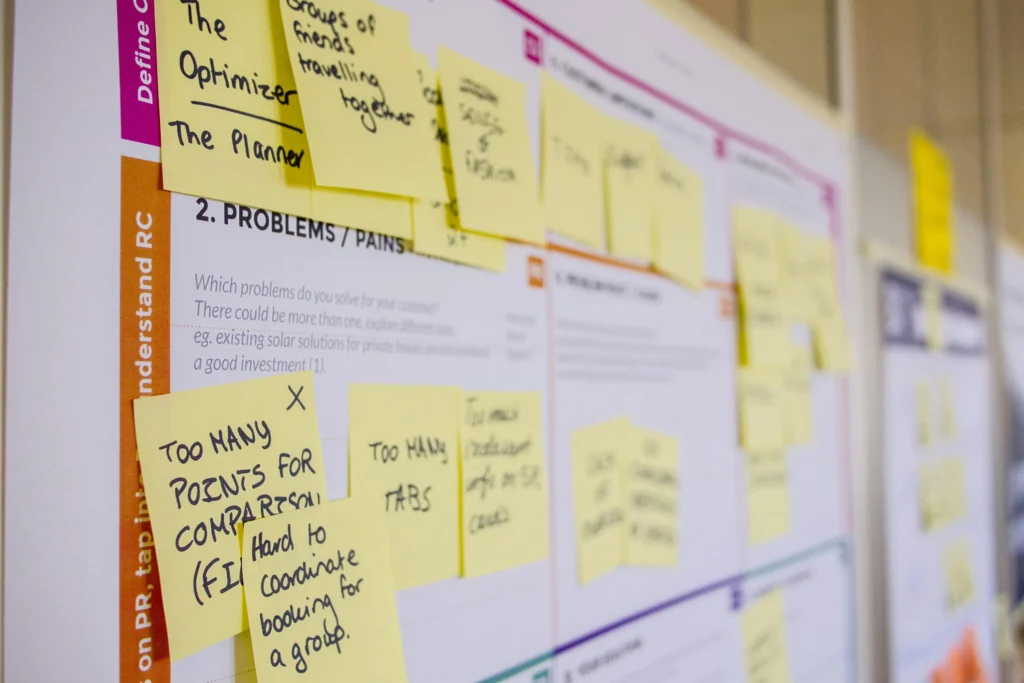
By the time a deck lands on your desk to “tidy up”, it’s already been built the same way. It’s never that the slides look bad, it’s that the deck is trying to do six jobs at once—inform, reassure, document, prompt, cover the speaker’s nerves and survive multiple rounds of feedback—and somewhere along the way it stopped being a presentation.
Earlier in my career as an events designer, I was the guy on site the night before, working alongside clients and speakers that knew something wasn’t right but couldn’t name it. In those situations you learn fast that what’s needed isn’t a tidy-up. It’s a rethink.
The slides are doing the speaker’s job
Most speakers use PowerPoint as a safety net, which is understandable. Nobody (and I mean nobody) wants to forget a key point in front of senior stakeholders. But once that happens, the slides become the script. Every reassurance the speaker needs is now sitting on screen in nine-point font, asking the audience to squint and listen at the same time.
As a marcomms professional, you’re being given a deck built for one person’s confidence and being asked to make it work for a whole room. Usually without enough time, alongside everything else. The deck is one job among twenty, and it’s the one that’s most visible if it goes wrong.
So the task is to work out what belongs on the slides and what belongs in the speaker’s mouth.
Words do more work than slides
It’s easy to assume good presentation design is about making slides look pretty. It isn’t.
Copy carries more weight than it gets credit for—as our creative copywriter and proofreader reviewing this article will no doubt agree (hi Becky and Josie). The strongest decks have clear, purposeful statements running through them. Not headings that label a topic, but lines that tell the audience the point straight away. A strong opening statement can frame a slide in seconds, which means people aren’t picking through the detail trying to work out what matters.
That’s where the real improvements start. Not making everything shorter for the sake of it, but being more deliberate. Say the right thing clearly and give the audience a way in.
The same goes for imagery. Used well, it sharpens a message or sets the pace. Used badly, it becomes filler.
Complex doesn’t have to mean cluttered
You’ll get pushback on this, especially in regulated sectors—”it needs to all be there”. And often, it does.
A lot of the decks crossing your desk are complex for good reason: real data, detailed graphs and technical nuance that really matters. In healthcare, medtech and similar spaces, that detail is often the point.
The work is in how you shape it:
That’s a better conversation to have with stakeholders than “we need to make it look better”. It’s also often easier and more cost-effective. Win-win.
The decks that work are collaborative
The presentations that get it right are almost always the ones built together. Not the ones tidied up at the last minute, but the ones where there’s space for a real conversation.
If you’re the person managing this from the comms side, that conversation is yours to push for. The speakers who lean into it get more out of the process. And so do their audiences.
Once that’s sorted, designers can work their magic and creatives can carve the copy so the deck comes to life and nothing gets missed.
With that in place, the audience will remember what you said.
Which is the whole point of doing this in the first place.
Reading this and thinking “I need someone who can actually do all of this”? Good news, you’ve found them. Get in touch.
Early January always has the same energy. New plans. New priorities. New pressure to ‘get everyone aligned’. And for a lot of marketing and comms leads, that last bit is the hardest part.
Because change isn’t the problem. Confusion is.
A restructure, a new strategy, a product shift, a refreshed brand, a different way of working. On paper, it’s clear. In real life, it lands in busy inboxes, half-listened-to town halls and Teams calls where everyone’s still thinking about their next meeting. The message gets diluted, people fill in the gaps themselves and momentum slips.
That’s where we come in.
We’re a creative agency, yes. But our job isn’t ‘pretty pictures’ or a nicer set. It’s taking a communication need and turning it into something people actually understand, feel and act on. We join the dots from the first conversation to the final output, so the message stays intact wherever it shows up. That can mean strategy and messaging first, then the right mix of Design, Digital, Film or Live moments, all delivered as one connected story.
The trick is to start with the outcome, then choose the deliverables that make it real.
When a client says, ‘We need an event’, they rarely mean an event. They often mean they need leaders to believe in this change. Or teams to stop interpreting the strategy in ten different ways. Or customers to see us differently now.
So we turn that into reality.
We find the theme that holds everything together (not a list of topics). We break content into segments people can absorb, not monologues they sit through. We design with real cognitive limits in mind, because nobody retains a sixty-slide download. And we make it socially digestible so the story travels beyond the room—because we engage, rather than present.
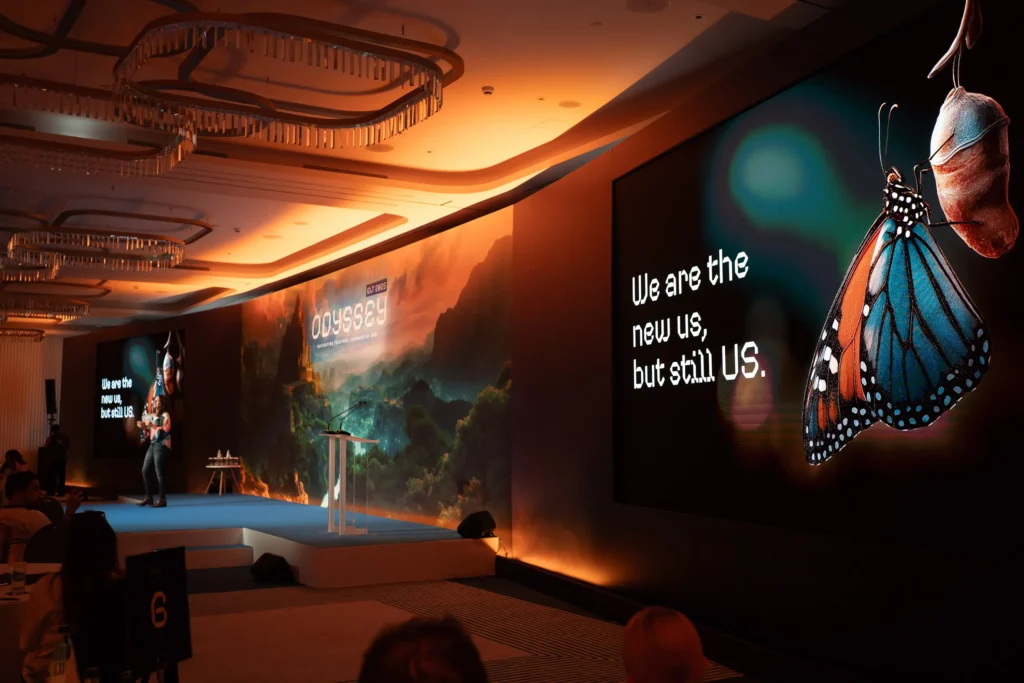
A recent example: a major global healthcare client brought us in to help communicate a significant shift to their senior leaders. The ask wasn’t ‘make it look good’. It was ‘make this make sense’. We created a shared narrative and built the full experience around it, from the visual identity and films to staging, presentation storytelling and on-the-ground delivery. The goal was simple: replace uncertainty with clarity and confidence.
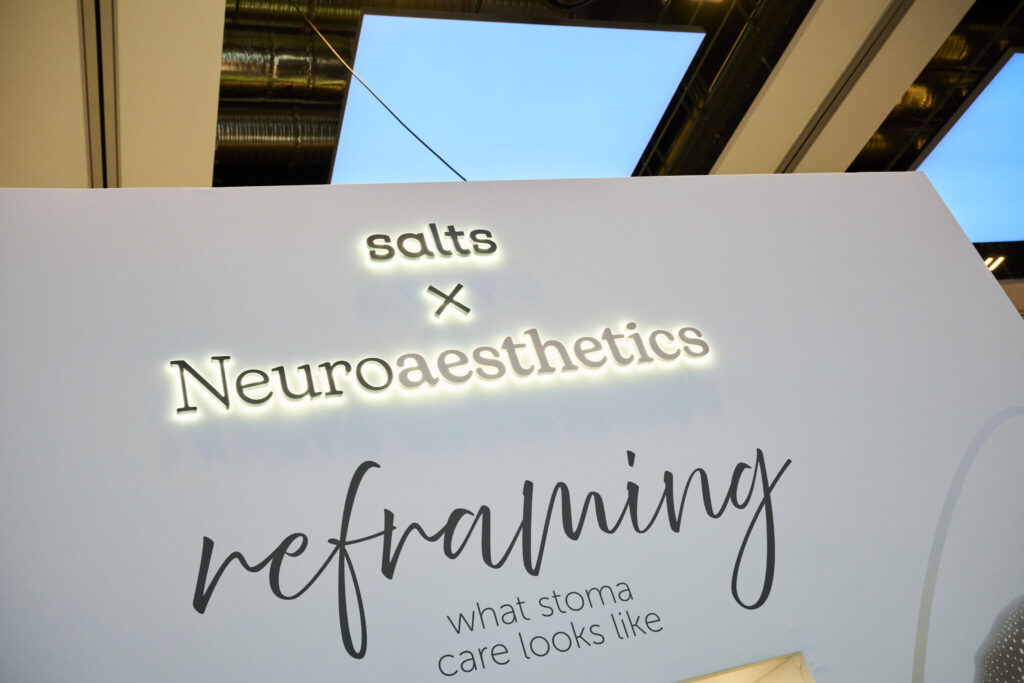
Then there’s Salts Healthcare. We built an exhibition stand designed to communicate their ethos around stoma care in a way that felt human, modern and very un-clinical. Neuroaesthetics. Sensory cues. A deliberately different look and feel. Because the message wasn’t ‘here’s our product range’. It was ‘here’s how we see people, and how we show up for them’.
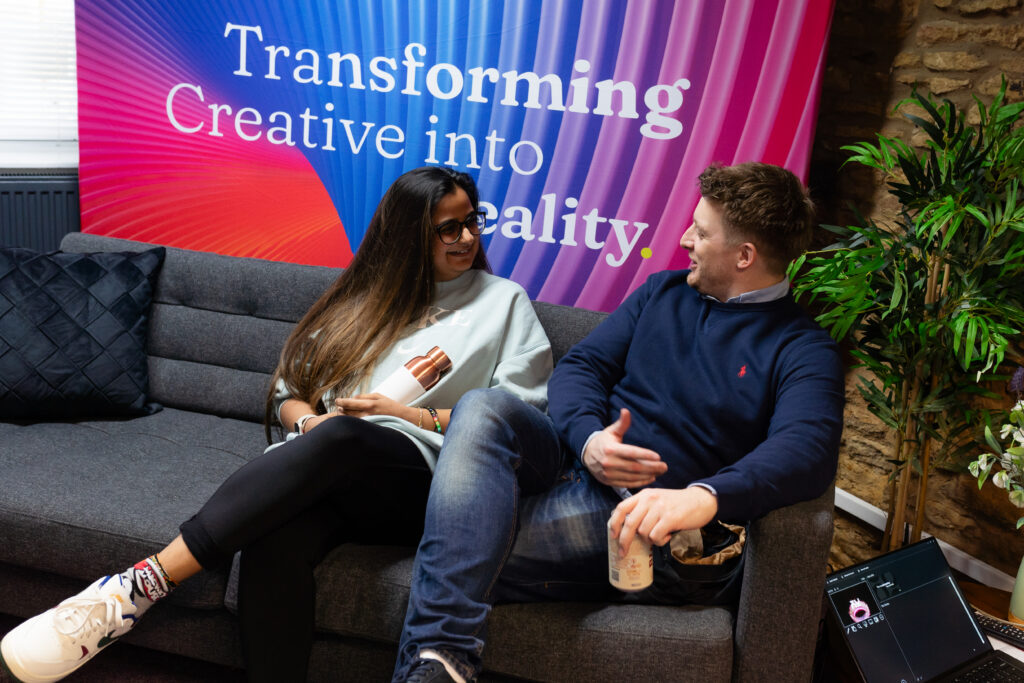
If your 2026 involves change—which let’s be honest, it will—your comms can’t afford to be generic. They need to land. Transforming Creative into Reality starts with knowing the shift you need from your audience, not what needs to be made.
Recently, our very own Adam Sherlock, Corey R., and Rebecca Darley shared why the secret sauce to unforgettable events isn’t found in algorithms alone—but in human imagination, playfulness, and creativity.
When you try to narrow down what makes a great event, words like connection, excitement and creativity spring to mind.
But what about fun? When we really gave it some thought, it seemed to us that fun—or more specifically, playfulness—is a crucial yet often overlooked element of what makes an event memorable for all the right reasons. When used well, it has transformative potential, turning a run-of-the-mill experience into something truly unforgettable.
Playfulness can be a powerful tool. But, speaking of powerful tools, how does it fit in with the biggest buzzword on everyone’s lips right now?
We’re talking, of course, about AI.
As a word, ‘play’ is difficult to neatly define precisely because it encompasses so many different activities, contexts and purposes. So, rather than us sit here and try, we’ll go straight to the experts.
Peter Gray, Professor of Psychology at Boston College, argues that ‘play’ has four defining characteristics:
It’s easy to see the connections between AI and those first three characteristics in particular:
But it’s that fourth point we really want to home in on. Can AI replicate the creativity and imagination of the human brain when it comes to playfulness?
We’d argue that, no, it can’t.
Back to events—or more specifically, great events. Think back to your last memorable exhibition: Was it the tech alone that made it stand out, or was it something more personal and unexpected? Often, it’s a clever idea dreamed up by someone who understands what genuinely resonates with people.
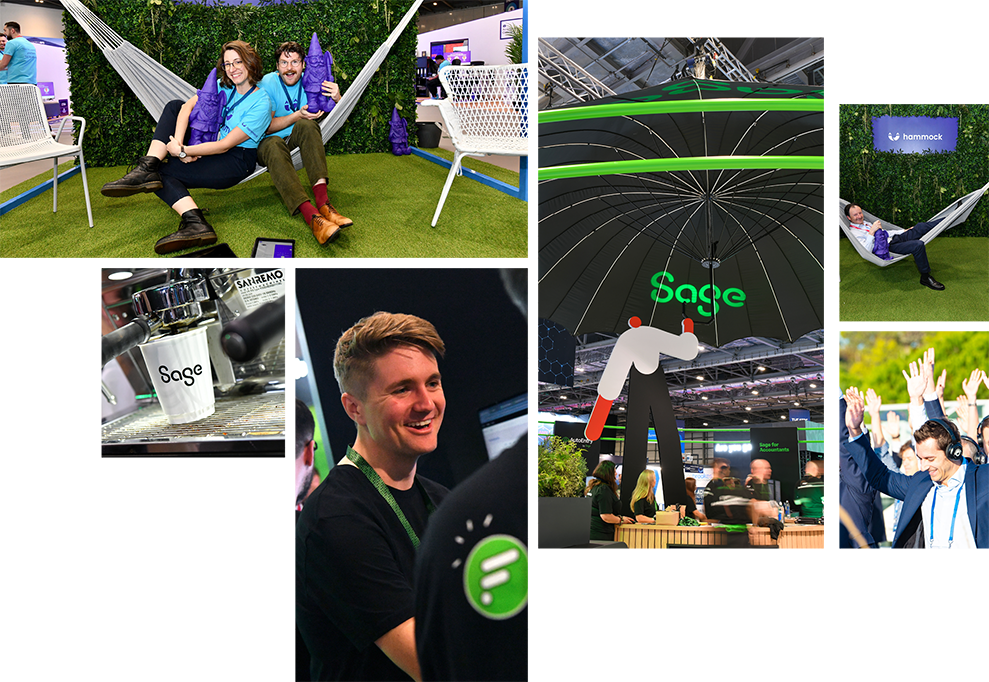
Take our stand for Sage at Accountex. The idea for our centrepiece (a GIANT umbrella, representing the uniting of their brands under one… well, umbrella) came straight from our very own brains. It was human imagination that sparked the idea, and human graft that delivered a quirky, fun and inviting experience that attendees simply couldn’t resist snapping a picture of.
Sure, we could have used AI to help generate a similar concept, but it’d have been nowhere near as good. Aside from the sheer scale of the thing, it was the subtle human understanding of humour, context and emotional connection that made it such a talking point.
That’s the thing with AI. It supports, but it doesn’t create. At least, not in the same way that we do.
What AI does really well is amplify human ideas. It also helps boost efficiency in the planning stages—things like rapid idea generation, fast visualisation, and predictive analytics are invaluable when it comes to streamlining our processes.
Crucially, the more streamlined our processes, the more time we have to push creative boundaries.
It’s a collaborative relationship, not a competitive one. The best event ideas, the ones that spark laughter, delight and connection, will always need a human touch. No amount of algorithmic planning alone can generate the genuine buzz of good, old-fashioned fun.
So, where does this leave us?
AI undoubtedly offers exciting new possibilities for event planning, helping us refine and execute our playful, creative ideas. But it’s authentic, spontaneous human interactions that create the real power of play at events. While AI is a valuable assistant, it’s never the star of the show.
At Outlook Creative, we believe in playful partnerships—human imagination, supported by smart AI. The future belongs to those who can harness AI’s strengths while never losing sight of what makes events truly unforgettable: creativity and human connection.
After all, you can programme AI, but you can’t programme genuine fun.
Now, excuse me while I go and ask ChatGPT how to fix my boiler.
Feeling inspired? Let’s bring some FUN to your next project. Get in touch to see how we can collaborate.
Introducing INSIDE/OUT: a new series offering a unique peek inside Outlook Creative’s extensive capabilities. In a nutshell, it’s all the ways we deliver on our brand promise to make a measurable difference for you.
You won’t find much fancy agency talk here—just pure skills and passion.
We believe design is everywhere. That’s why episode 3 of INSIDE/OUT drops you right into our Design team’s world.
No fluff. No guff. Just a dedicated team of designers making magic happen.
Enjoy the show—and keep an eye out for more episodes coming your way soon. 👀
Want to find out how our designers can sprinkle come magic on your next project? Reach out.
Sarah Skates is stepping up as our Interim Operations Manager, bringing her years of expertise to the role. Not that we’re surprised – she’s been improving us since day one.
As Adam Sherlock our Joint MD put it: “Having Sarah on our team makes it a better place to be.”
Skates considers herself the ultimate connoisseur of life’s finest blend of family, friends, and fermented grapes. When she’s not in the office, you can find her rocking out at live gigs with the sort of enthusiasm she reserves for a well-poured glass of merlot.
“Few people know Outlook Creative better than Sarah, and we value her expertise and knowledge.”
John Lloyd, Joint Managing Director
“Having worked with Sarah for many years, it’s great to see her embracing new challenges with such a positive attitude. There’s no doubt that having Sarah on our team makes it a better place to be! Thank you, Sarah, for everything you do”
Adam Sherlock, Joint Managing Director
Introducing INSIDE/OUT: a new series offering a unique peek inside Outlook Creative’s extensive capabilities. In a nutshell, it’s all the ways we deliver on our brand promise to make a measurable difference for you.
You won’t find much fancy agency talk here—just pure skills and passion.
So, what happens when you blend trust and flexibility with a dash of creative problem-solving? You get Outlook Creative’s Client Services team. Are you curious about how they do it? Tune in to Episode 2 of INSIDE/OUT: All about the client.
Enjoy the show—and keep an eye out for more episodes coming your way soon. 👀
Congratulations Corey Richards on your promotion to: Content Manager
Corey jokes about being the unofficial third member of the Chuckle Brothers—a ‘Chuckle Friend.’ He loves gardening, his fluffy dog, Pickle, and has a soft spot for ankle bashers. An ambivert at heart, he enjoys the idea of being around people.
“Corey is a unique individual who brings humour, collaboration, and a holistic view to each project he works on. Seeing Corey develop and thrive during his time here at Outlook is something we are all very proud of. This next step offers a real opportunity for Corey to stamp his authority on our approach and continue to progress.”
Adam Sherlock, Joint Managing Director
“Corey’s creative skills have grown exponentially since joining the marketing team. This promotion reflects his steadfast commitment to collaborating with everyone in the business to express Outlook Creative’s fantastic work and culture.”
Andrew Dymock, Former Marketing & Communications Director
Congratulations Hema Mistry on your promotion to: Senior Designer
Hema is a huge fan of tigers and travel enthusiast who is constantly looking for the next cheapest city break… If she’s not searching for the next quirky food hall, Hema can be found tattooing herself up with the latest henna tattoos!
“Hema’s positive attitude, approach, and willingness to collaborate along with creating great work has led to this promotion. It is well deserved, and we look forward to the next chapter in Hema’s career here at Outlook.”
Adam Sherlock, Joint Managing Director
“We are delighted to recognise the progression Hema has made over many years working at Outlook and in line with the quality of Hems work and her positive feedback from clients and colleagues, this is a promotion very much deserved!”
Jason Farmer, Director of Design & Digital
Introducing INSIDE/OUT: a new series offering a unique peek inside Outlook Creative’s extensive capabilities. In a nutshell, it’s all the ways we deliver on our brand promise to make a measurable difference for you.
You won’t find much fancy agency talk here—just pure skills and passion.
Episode one: Meet our Film team.
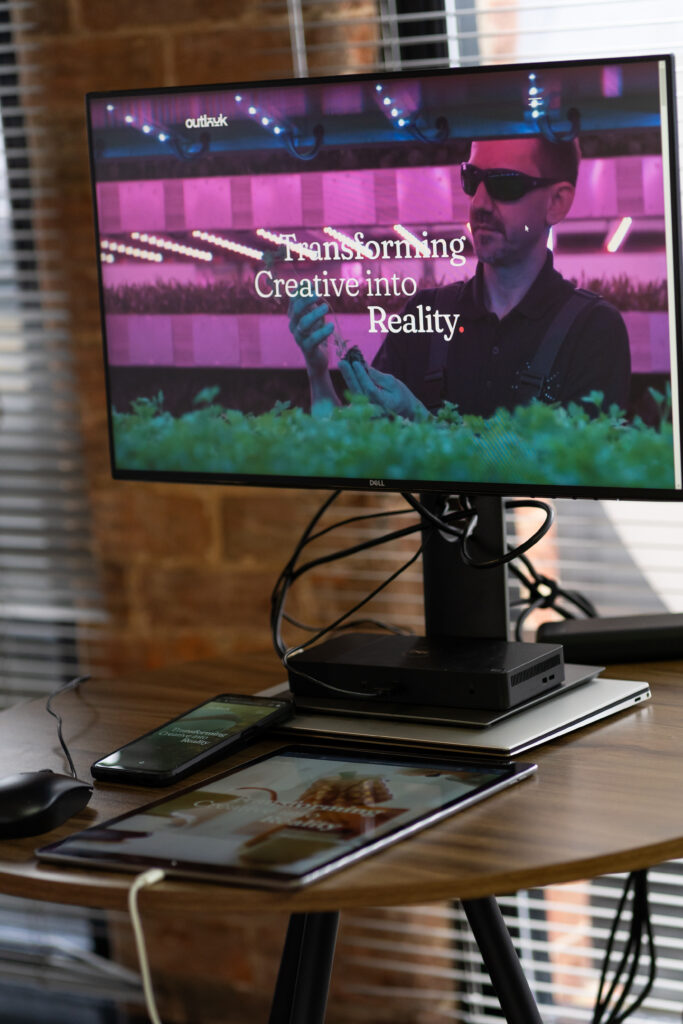
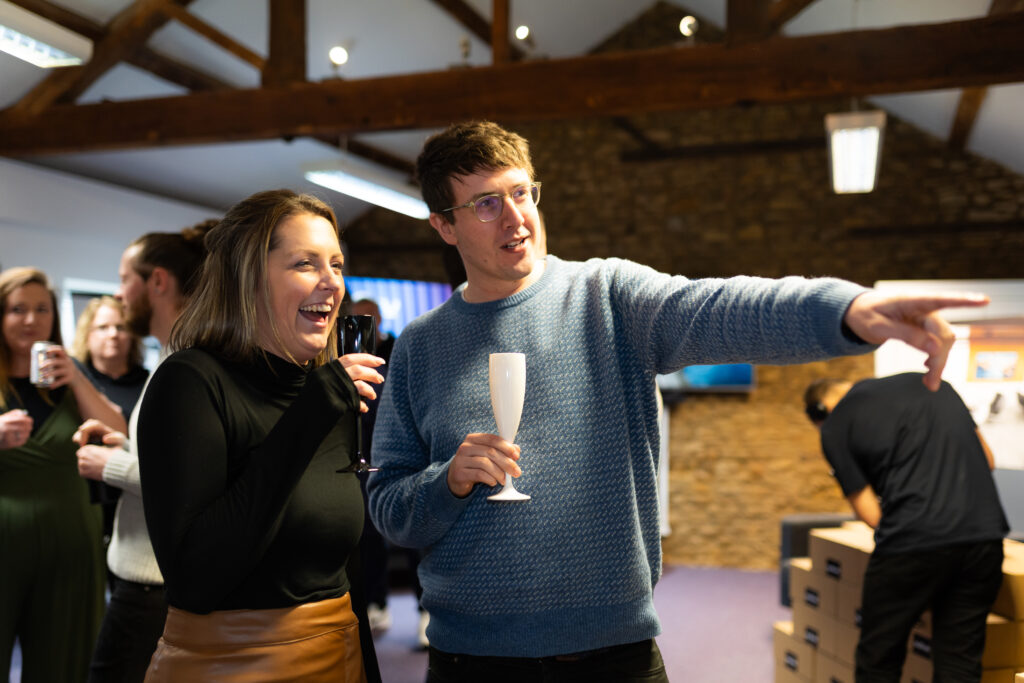
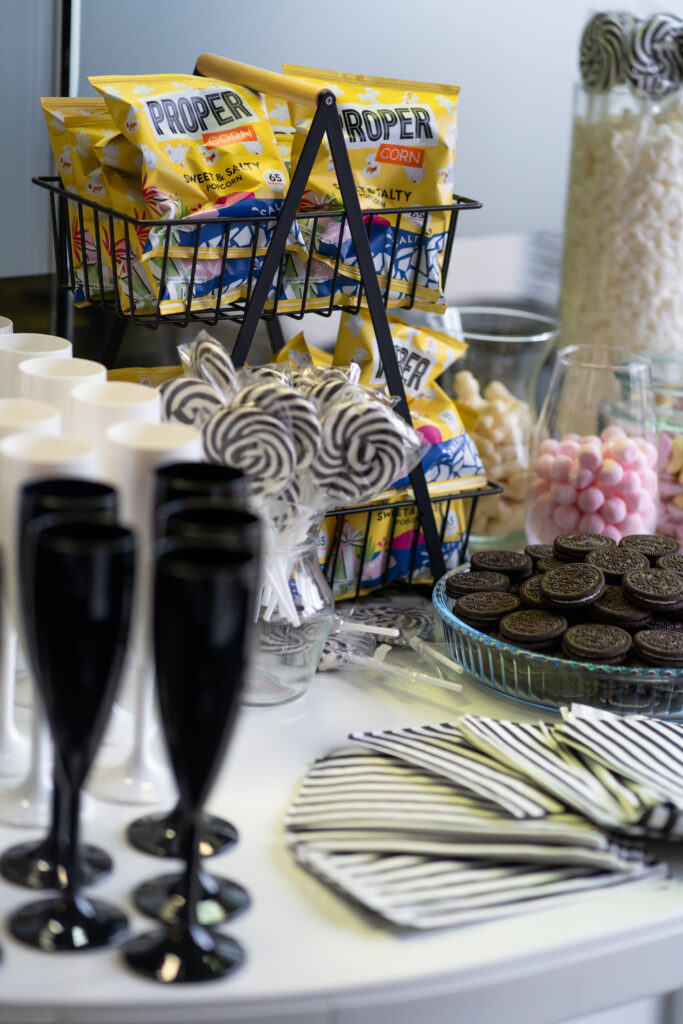
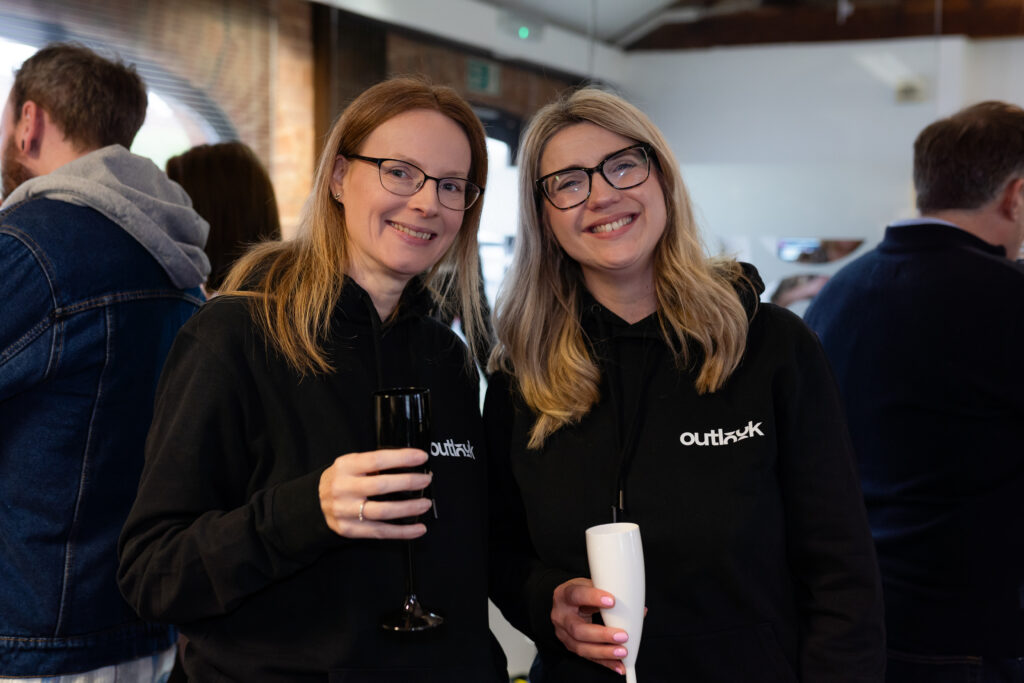
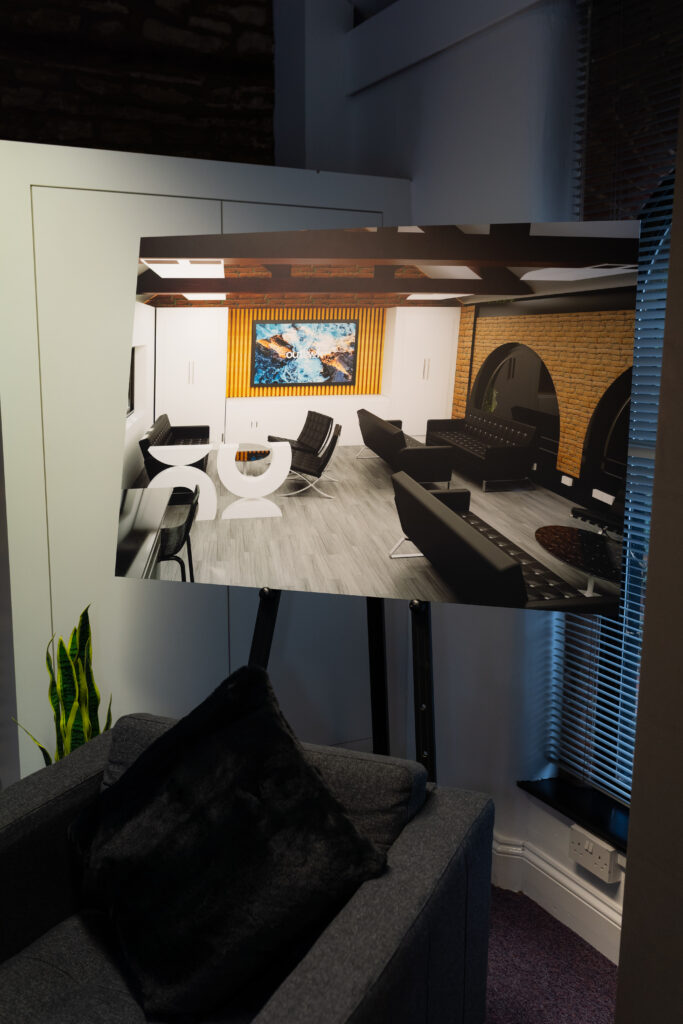
A brand isn’t just a logo—it’s the heartbeat of a company. It’s a promise made, a story told, and a journey embarked. And when it came time to unveil our new brand identity, we didn’t just throw a party—we ignited a spark that lit up the room and set our team on fire with excitement!
Picture this: anticipation buzzing in the air, hearts pounding with excitement, and then…the big reveal! Our brand had undergone a stunning transformation—bold, vibrant, and unmistakably us.
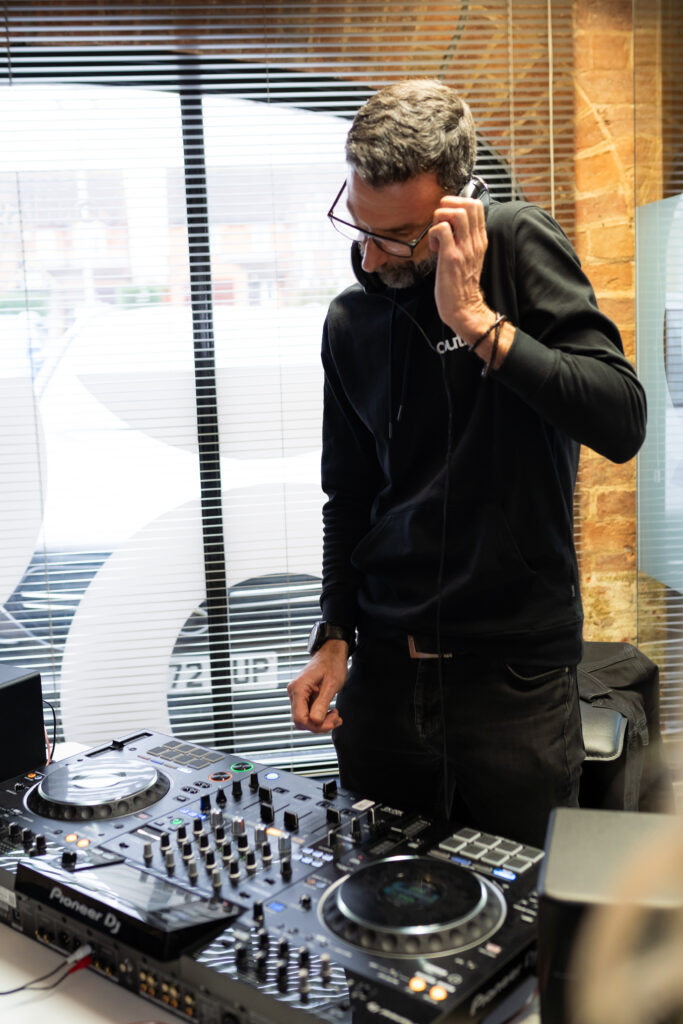
But the magic didn’t stop there. Our event wasn’t just about the visuals or the merch—it was about the people behind the scenes who poured their passion and creativity into every detail. Every team member played a crucial role in making our brand identity launch successful.
Ultimately, our brand identity launch event wasn’t just about unveiling a new look—it was about igniting a spark of excitement and possibility that would fuel us on our journey forward. And as we continue to write the next chapter of our story, we do so with hearts full of passion, purpose, and endless optimism. There are lots of pictures we will be sharing on social media. Here are a few of them.