Most clients don’t come to an agency asking for ‘a theme’.
They come because the event has to do something that really matters, and it can’t afford to wobble. The leadership team needs to leave aligned, the message needs to be clear, and any change needs to feel compelling enough for people to actually buy into it.
And yet, when an event starts to feel messy, it’s rarely because the agenda itself is weak. It’s because everything is pulling in slightly different directions. Sessions make sense in isolation, but not as a whole. Stakeholders add ‘just one more thing’ and the content grows, the room feels busier, and the audience leaves with different versions of the story.
That’s when a theme stops being a creative nicety and becomes a practical tool.
A strong theme gives you one shared frame to hold the message. It helps people take in what they’re hearing—but more importantly, it helps them to carry it forwards.
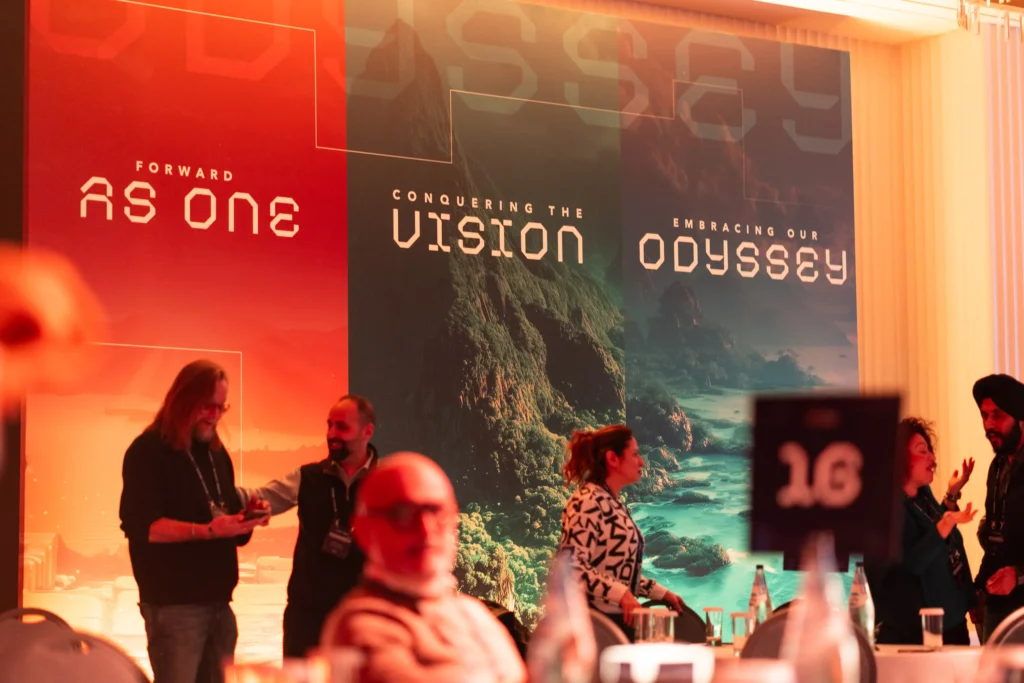
Odyssey—turning three days into one story
We saw this first-hand on a three-day Executive Leadership team event for a global healthcare client in Athens. They’d run a similar event the year before, so expectations were already high. The brief was direct: raise the bar and make sure the message is unmissable.
The stakes were real. Big changes were coming, and if this group didn’t leave aligned, the organisation wouldn’t be either.
We landed on Odyssey. It emerged as a way of thinking about the event as a journey rather than a schedule—a narrative that could hold everything together across the three days. This structure became the story we would take them on.
Here’s what the theme did:
It gave the whole experience coherence at scale. The narrative spine ensured everything worked in the same direction: design built environments, motion moved through them and copy charted the overall progression.
It gave the client a decision-making filter. When new content appeared, we had a way to test it. Does it serve the journey? Does it move us forward? That clarity saved hours of back-and-forth and stopped the event from sprawling.
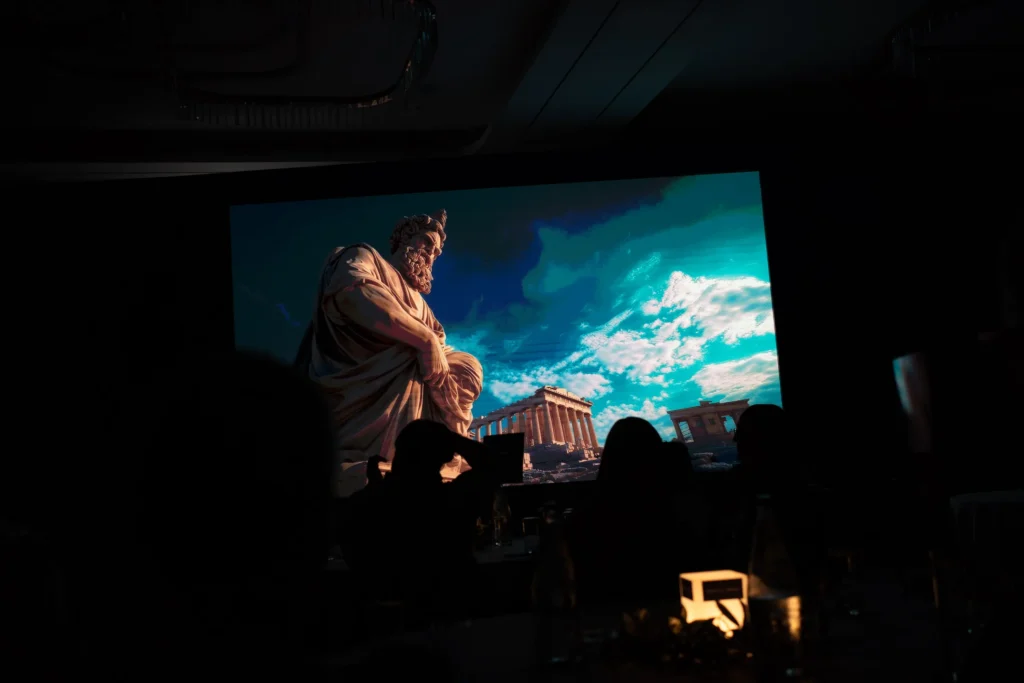
It also gave the audience a thread to follow. Leaders became ‘navigators’ and sessions became ‘waypoints’ in our journey. Transitions reinforced momentum instead of resetting the room. Films played like game-style cutscenes, so the content felt more like chapters than another presentation. Even the heavy stuff—finance, compliance, operational updates—landed differently because of the context. People knew where they were in the story and why it mattered.
If you’re planning a high-stakes event, a strong theme is about so much more than making your event feel more ‘creative’.
When we discover the right theme, a world of opportunity opens up. Because when we move through a story together and emotionally engage in the narrative, our brains release neurotransmitters that enhance our ability to recall memories. We don’t just remember the facts—we remember how we felt, where we were in the journey and what it meant for us. Which is exactly the difference between information and impact.
We help you find the throughline early, shape it into a theme that can fully hold the message, then design the experience so every moment builds on it. That’s Transforming Creative into Reality—and how your audience leaves not just informed, but aligned.
For nearly a decade, we’ve been helping CBRE make its mark at MAPIC, the annual global meeting place for retail and property players. Held each year in Cannes, the 2025 edition marked the event’s 30th anniversary, and it remains the place where big ideas, big deals and even bigger conversations happen.
For CBRE, it’s a real focal point of the retail calendar—an unmissable opportunity to connect with clients and prospects, and to showcase their world-leading expertise.
But what exactly does it take to nurture a partnership that’s spanned nine years (and counting)? Let’s rewind to 2016, when a simple PowerPoint deck turned out to be the spark for something much bigger.
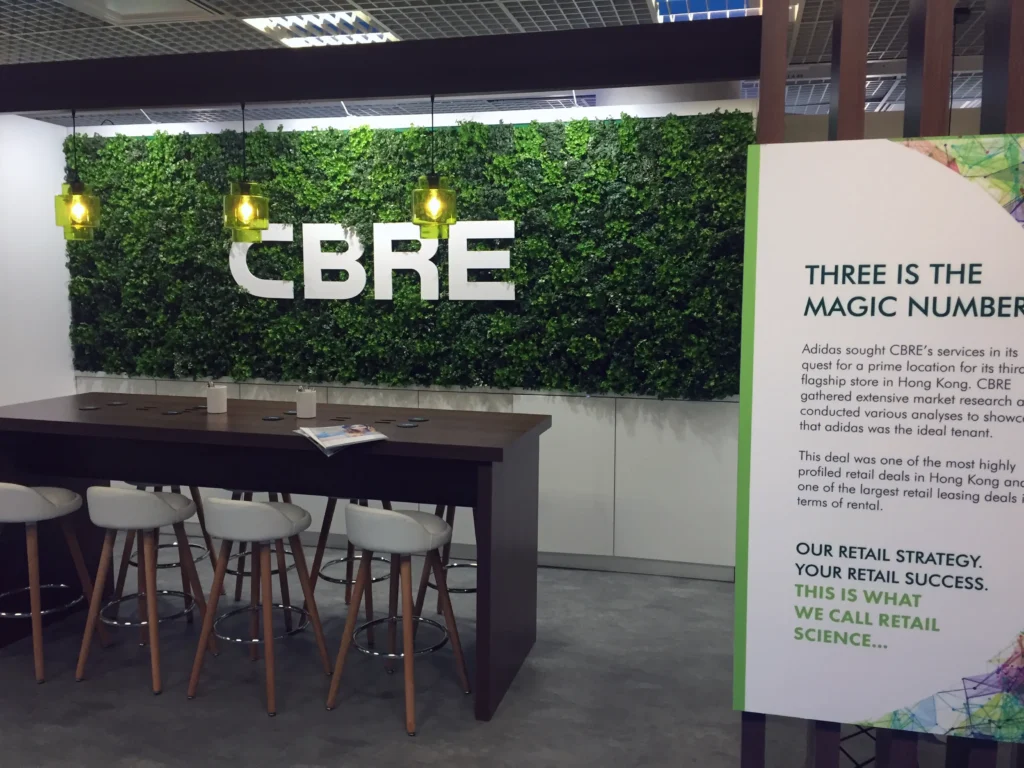
That first project might have been small, but it set something exciting in motion. CBRE saw in us a creative team with a lot more to offer; in particular, the potential to help bring their brand to life in new, imaginative ways.
And as luck would have it, MAPIC—that major event for CBRE—was just around the corner. The team needed a creative partner they could trust with all their exhibition needs, so up we stepped.
And the rest? Well, you know how the saying goes.
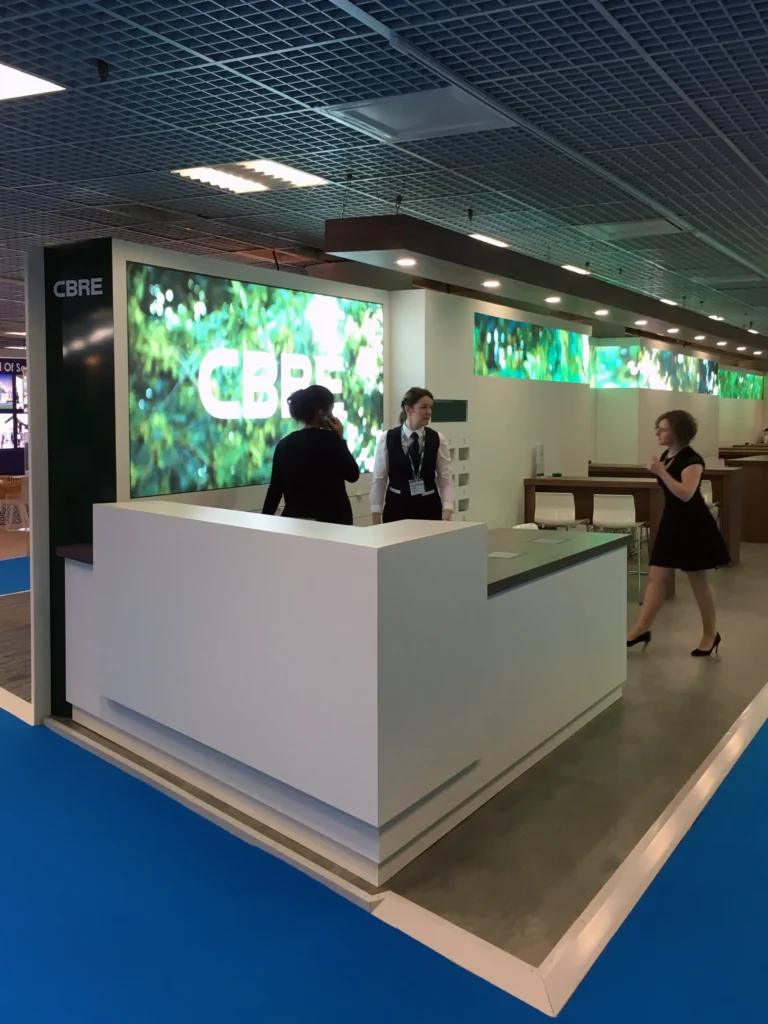
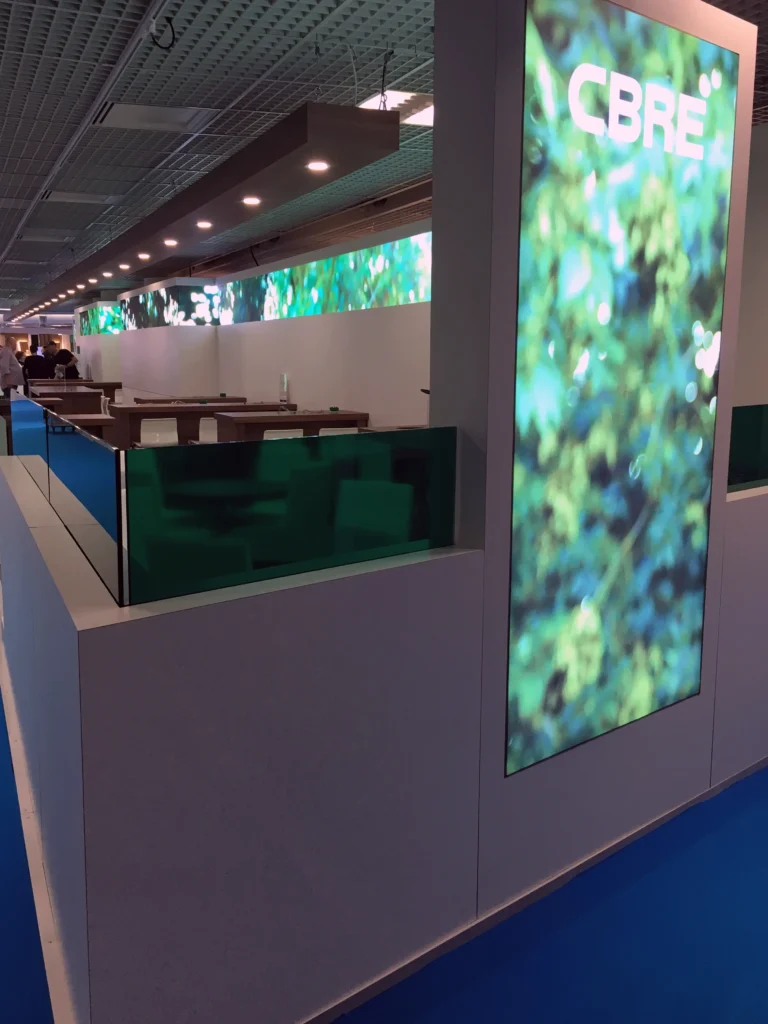
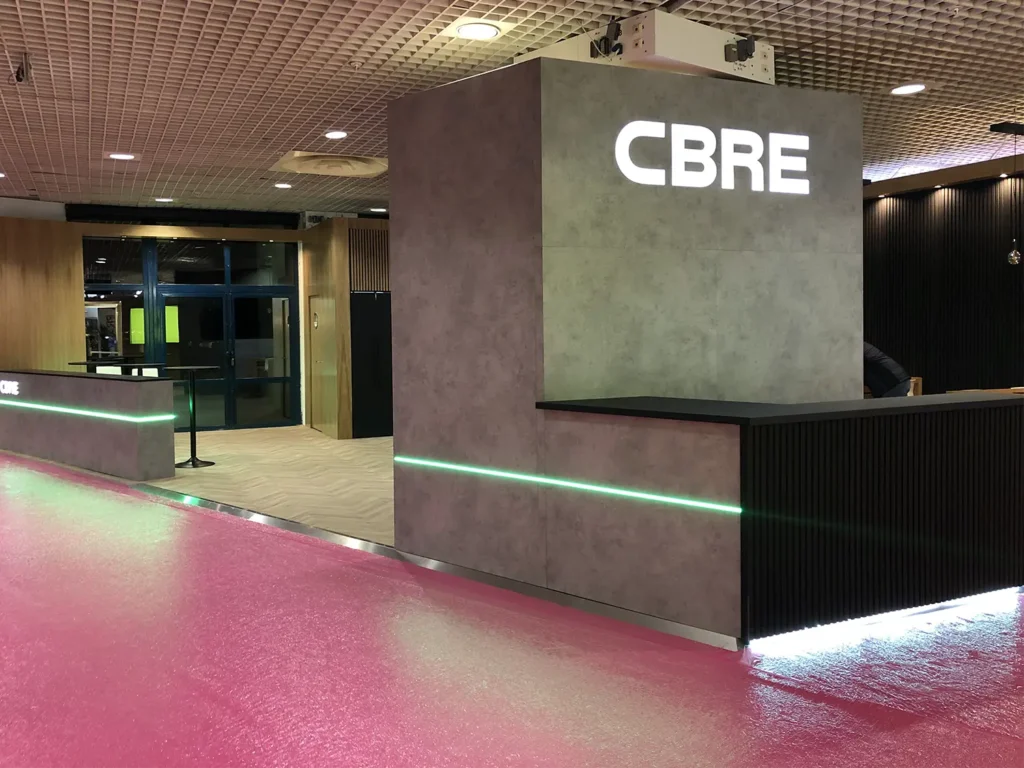
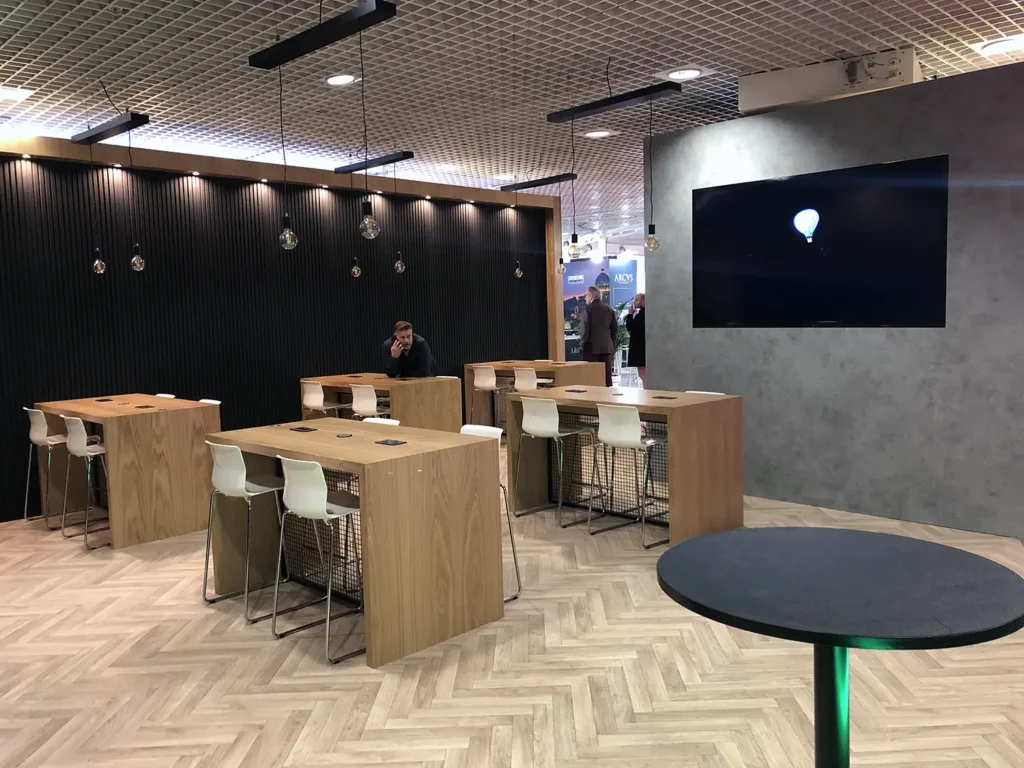
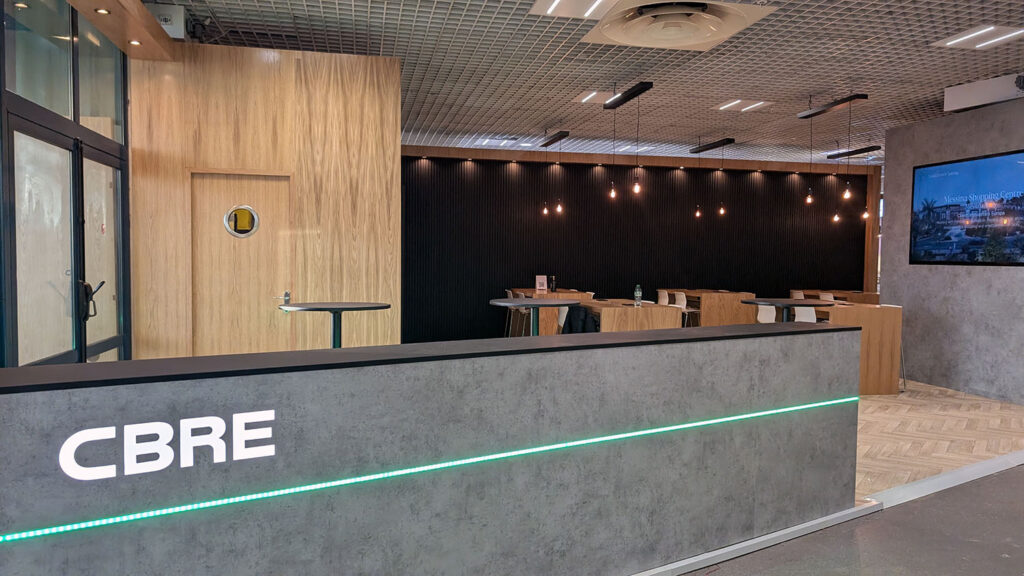
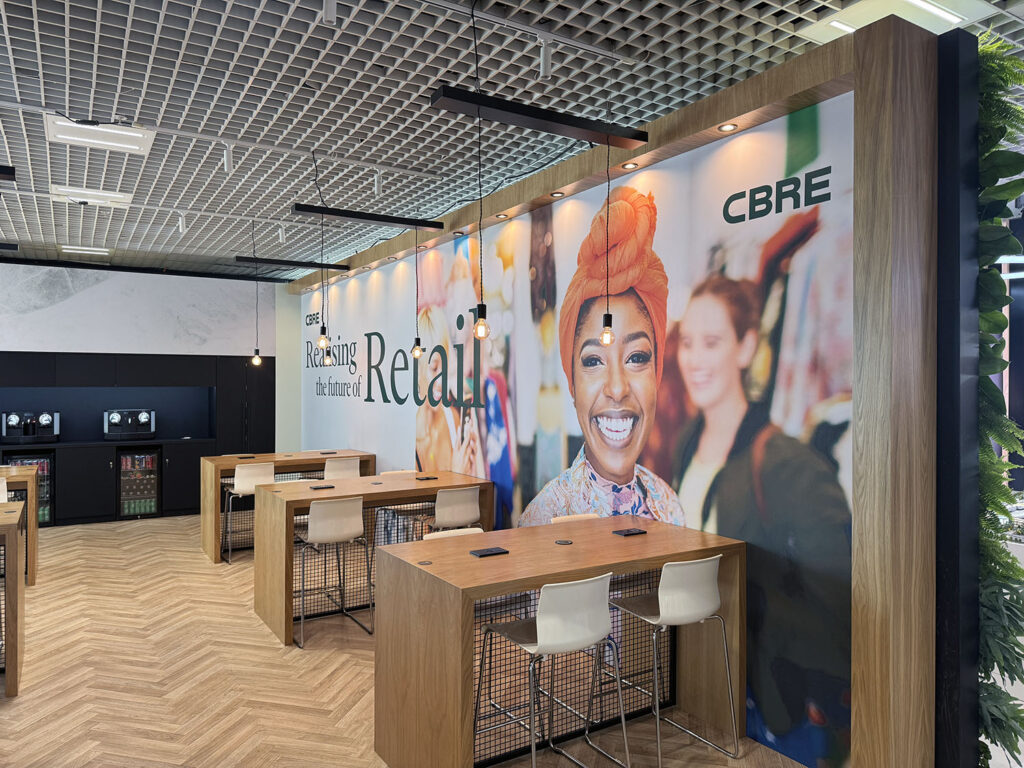
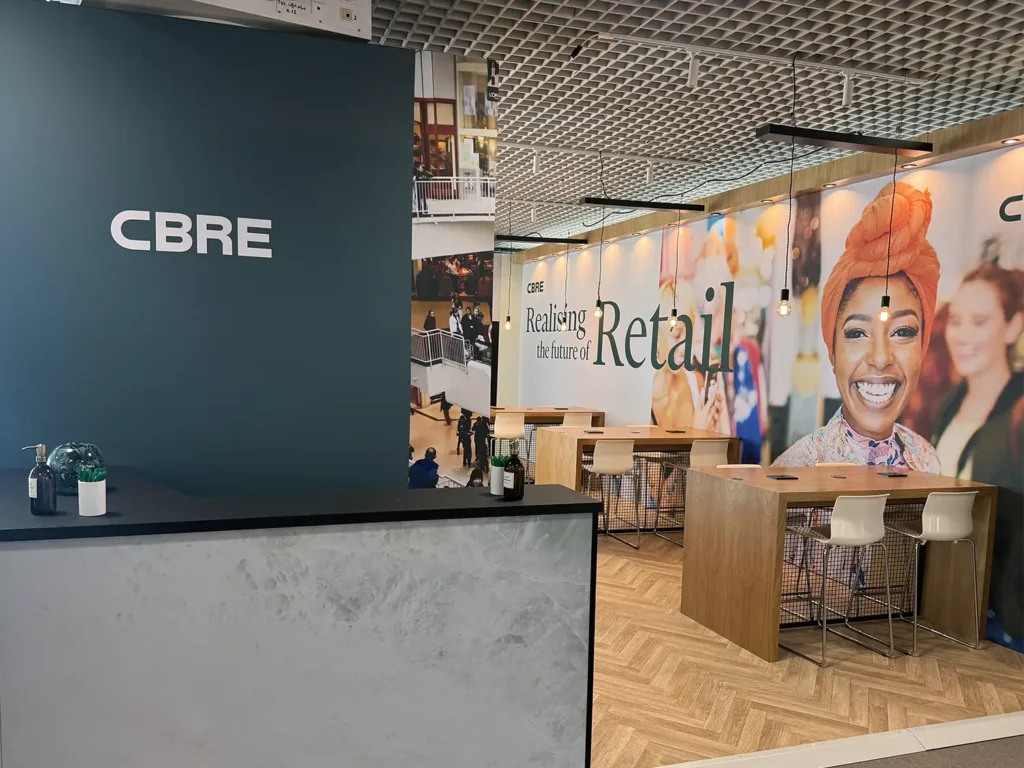
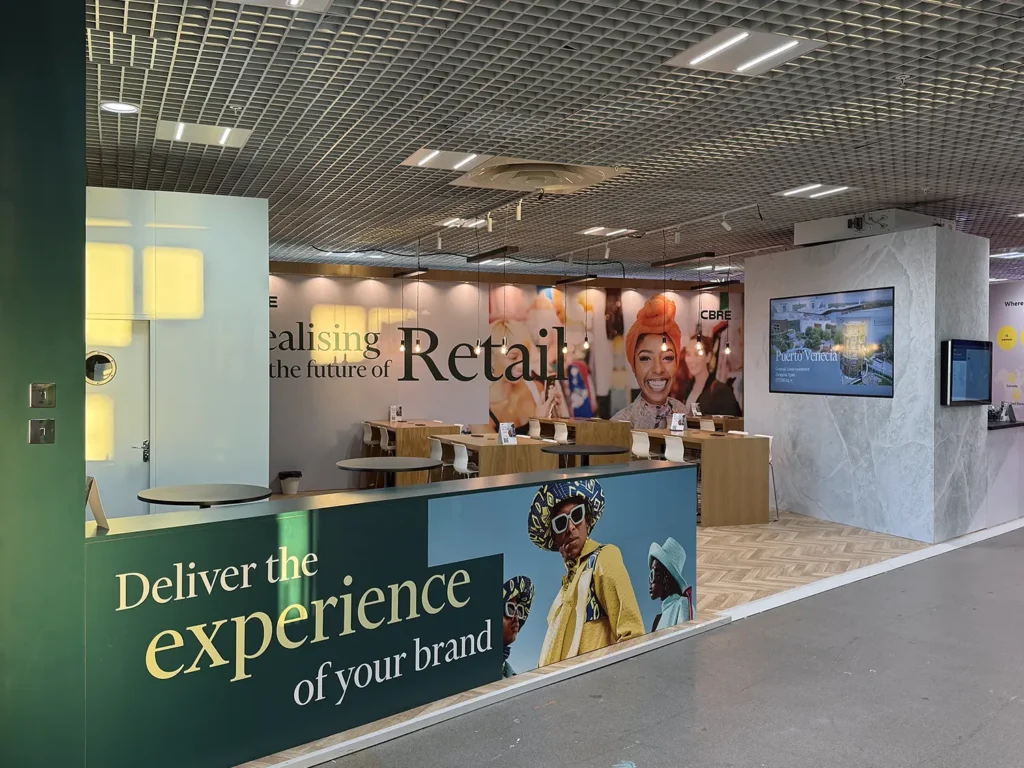
Since that first event, our role at MAPIC has grown and evolved year on year. The brief might stay the same (to design, build and deliver a stand that’s enticing, functional and unmistakably CBRE) but how we transform it into reality is always in motion.
Each year brings a new challenge: how do we make it even better than last time? It’s less about reinventing the wheel and more about evolving it with purpose.
That first year, it was all about striking artwork. The next, we introduced a natural world-inspired theme with lightboxes and LED strips to bring the outside in. Later designs embraced a sleeker, more minimalist look and feel.
As CBRE’s brand has developed, the stand has evolved right alongside it. Each new design captures the story of where the brand is at that moment, creating a space that looks great, feels inviting and, most importantly, functions as a dynamic meeting place.
Over the years, our relationship with CBRE has become about much more than design. We’re not just creating a stand; we’re delivering a complete event experience from start to finish. Each year, we take the brief and run with it, handling everything from initial sketches and specifications to build management and venue logistics.
We even have an event producer on site, working behind the scenes to keep everything running like clockwork. Need a quick fix or a lighting tweak? We’re already on it.
That kind of dependability builds real trust. CBRE know they can count on us to get things done, anticipating challenges before they arise and delivering the same high standard time after time.
Fast-forward to today, and we’ve just wrapped on MAPIC 2025. This year’s design built on everything we’ve created so far, adding a new layer of personality that reflects where the brand is heading.
After eight years (and soon to be nine) of collaboration, it’s more exciting than ever to see what’s next. Because for us, yes, MAPIC is an event, but it’s also proof of what long-term creative partnership can achieve.
So here’s to keeping things fresh, exploring new ideas and getting the job done—reliably, and with just the right amount of flair.
When our client, Vestergaard, came to us with an animation brief, we knew there was potential to do things a bit differently without compromising on production value or creativity.
The challenge was compelling from the get-go: bring to life the powerful impact long-lasting insecticide-treated nets have on the fight against malaria. It was immediately clear that the story needed to be told with impact—something rich in colour, texture and emotion to match the gravity of the message.
But the big question was: what was the best way to get there?
Creative challenges rarely come with just one solution. But by bringing AI on as a partner, we knew we’d be able to dramatically boost production value and creative quality. We’ve chatted before about how AI isn’t about replacing the human touch but rather giving you more choice—and our approach to this project was a case in point.
So we let our curiosity take the reins and ran a little test. Two versions, side by side: one made the traditional way, and another where we let AI lead the way. That way, the Vestergaard team had the freedom to decide which version best fitted their brief.
We started by testing the animation side of an AI platform, quickly finding that the results were inconsistent, mismatched and not up to scratch.
What they did do, though, was give us heaps of inspiration. While the animation was lacking, one of the early outputs sparked a strong visual direction. So we shifted focus, using the AI platform to generate imagery before handing it back to the humans to refine and animate with their irreplaceable flair.
The final workflow was roughly 80% handmade design and animation, with 20% AI input. This hybrid approach wasn’t about speed or budget, but flexibility. By using the best of both worlds, we could test ideas, iterate and respond to the Vestergaard team’s feedback without having to go back to square one each time.
Voiceover-wise, the team went with an AI-generated performance. Capturing an authentic accent, however, proved tricky, but we got there with a bit of finetuning, using voice changing which we then refined with AI. Once again, it came down to finding the right balance: AI kicked things off, and the human touch made it shine.
Many people think working with AI means clicking a button and getting a perfect output. In reality, it’s almost never that simple.
There’s also the idea that AI should automatically make things cheaper because it speeds everything up. While that can sometimes true, it’s not a given. Really, it boils down to cost versus value. AI doesn’t always bring down the price tag, but it can unlock value in ways traditional methods can’t.
It can also give us the chance to be even more creative (more on that here). AI is especially helpful in the early stages of the creative process, giving us more space to explore illustration styles, colour palettes and the like. In this case, it gave us chance to layer in more depth, texture and colour, and move through creative iterations far more quickly than if we’d ploughed on without. And the Vestergaard team thought so too.
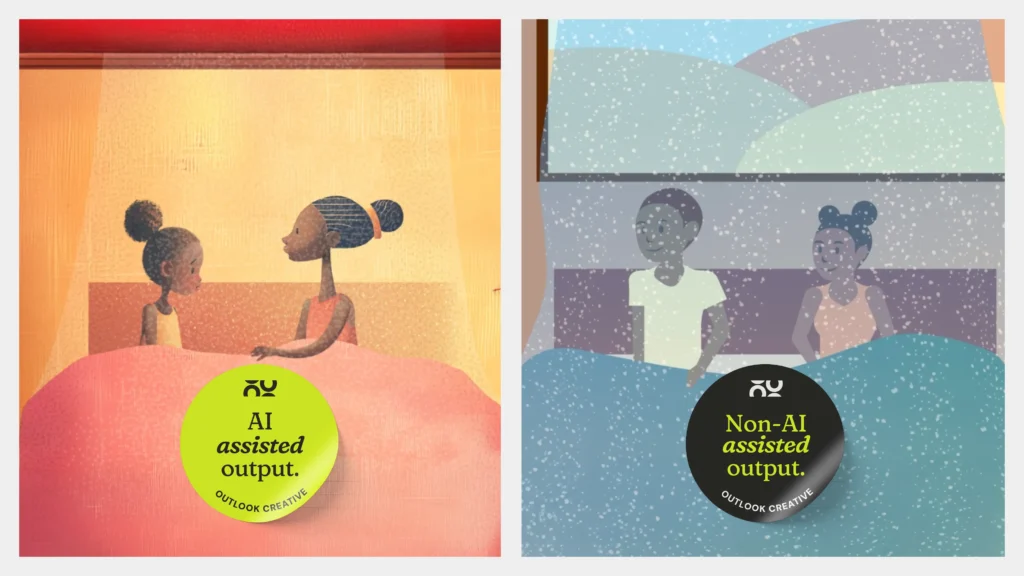
When we presented both versions—one produced traditionally, the other enhanced with AI— Vestergaard chose the latter, and were genuinely delighted with the quality of the finished animation.
But the thing is, there’s no such thing as a one-size-fits-all approach. No two projects are ever the same, and with AI evolving so quickly, every workflow ends up looking a little different too. That’s all part of the fun—tweaking and adjusting until we reach the best solution for each brief.
For us, AI isn’t a shortcut. It’s about balance. We’re still learning, and always will be. But one thing’s certain: the real magic still lies in the balance between human creativity and smart technology.
That’s what makes the work worth watching.
AI voiceovers are advancing at a rate of knots, and it’s easy to see why. They’re practical, efficient and can save serious time, especially when used in the right context.
What’s clear is that they’re a valuable addition to the creative process. An addition that means we have more tools in our toolkit than ever before. But rather than replacing what already works, AI voiceovers simply expand the options available.
For some projects, a human voice will be the natural choice; for others, AI may prove the smarter option—and often, a blend of the two can work marvellously. Our role in all of this is to help you work out which approach delivers the best results for your audience, timeline and budget.
…That’s the theory. Now for the practice.
We wanted to explore just how far AI voice tech has come. So we used our enterprise AI models to build a simple demo using a non-actor’s voice: one script, two reads—first by the human, then by an AI clone of the same voice. The example switches seamlessly between them.
What do you think?
Note: we used a fictional diabetes product script to show how AI handles medical terms. Any likeness to real products is purely coincidental.
This isn’t about replacing human voiceovers or picking sides. It’s about giving you more choice. We audition and sample both human and AI reads on your script so you can hear the difference for yourself.
Sometimes a human voice carries instinct, emotion or nuance that just clicks. Other times, technology can surprise you with speed, consistency and unexpected flow. Often, the magic happens somewhere in between.
Of course, AI isn’t flawless. Longer reads can get tricky, clones can shift between sessions, and technical language or names need a careful touch. Rights and transparency matter too—check out the EU AI Act for more on this.
But that’s where we come in: building glossaries, setting pronunciation guides, running quality checks and making sure that every voice is used with clear consent. By handling these details, we keep AI reliable, consistent and safe to use so you can make the most of what’s possible.
We’re here to remove faff and add value. Great work doesn’t come from tools alone; it comes from the choices we make. Our job is to help you make the right ones for your project, every time.
Michael has been promoted to Junior Producer for the Moving Image team, recognising the organisation, capability and enthusiasm he brings to every project.
Over the past year, he’s taken on more complex and demanding work, consistently stepping up and making his mark. His growth has been clear to see, and his contribution is making a real impact across the team.
As Shauna says, this promotion is a well-earned reflection of the progress Michael has made, and there’s plenty more to come. John agrees, describing his development as “a joy to witness.”
We’re excited to see what he achieves next.
“Michael’s development has been a joy to witness, and I’m certain that every single one of his colleagues will confirm it’s a well-deserved promotion. Well done.”
John Lloyd, Joint Managing Director
“Over the past year, Michael has truly come into his own—consistently stepping up to take on more complex and demanding projects with his trademark organisation and capability. His promotion is a well-earned reflection of the growth we’ve seen, and I’m genuinely excited to watch him continue to evolve and stretch his producing muscles even further.”
Shauna Swift, Senior Production Manager – Moving Image
We’re in the business of ideas, and ideas have impact. But that impact shouldn’t leave a heavy footprint on the world around us.
From the first spark to the final delivery, every choice we make together creates a ripple. So we ask the big questions early in the process, finding the lighter path wherever we can. Because creativity that harms the world it lives in just isn’t creative enough.
When you work with us, sustainability isn’t an afterthought—it’s baked in.
Together, we look for ways to reduce impact without losing ambition, so you can be confident that your project isn’t just hitting the brief, but treading lightly where it counts.
That could mean exploring different materials, rethinking travel plans or finding new life for preloved kit. Whatever it is, we’ll work through those decisions together, so the result makes a difference in both the work we deliver and its impact on the world we share.
We’ve picked up a few stamps of approval on our journey so far:
These aren’t just badges; they’re milestones that continue to keep us and our work accountable.
Sustainability isn’t a tick box, it’s a challenge to keep getting better. We start every brief with some planet-friendly questions to spark ideas and explore options:
If the answer shrinks our impact, we’ll go for it. If it doesn’t yet, we’ll keep asking until it does. This is how we work. With creativity, collaboration and a commitment to make each project kinder to the planet.
We believe great creative should leave nothing but a positive impression. If you do too, let’s talk. We’d love to create work that looks good, feels good—and does good.
The European Accessibility Act (EAA) will become law in all EU member states on 28 June 2025. This landmark piece of legislation aims to ensure equal access to digital products and services across all 27 countries in the European Union.
The EAA also applies to any organisation that trades with the EU—which includes us here at Outlook Creative.
As a creative agency, we proudly work with a number of clients across Europe. We’re also an organisation that’s committed to inclusivity; we strongly believe that transforming creative into reality—the ‘thing’ we hang our hat on—is only successful if everyone can enjoy our solutions.
So let’s dig a little deeper into what the European Accessibility Act is, why it matters and what we’ve been doing at Outlook Creative to make sure we’re part of a more inclusive future.
The EAA is a directive of the European Union which was initially passed in April 2019. Its purpose is to improve the accessibility of products and services across all Member States by removing barriers created by divergent rules.
The legislation covers areas that have been identified as ‘most important’ to people with disabilities, including computers and operating systems, smartphones, audio-visual media, e-commerce, banking and more.
There are four core principles that underpin the EAA’s accessibility criteria, known as the POUR model (perceivable, operable, understandable and robust).
Organisations have until 28 June 2025 to audit their existing materials and fix any identified issues in order to become compliant.
Put simply, it’s about inclusion. In our increasingly digital world, access to information and services is not a luxury: it’s essential for being able to fully participate in society.
It’s soon to be a legal requirement, but it’s always been an ethical one. Accessible websites and digital tools help make sure that people with visual, auditory, motor or cognitive impairments can move through the world without added barriers.
It’s also about universality. Accessible design practices benefit everyone. Think about the last time you watched a video with subtitles, used a voice assistant or adjusted the font size to make something easier to read. Many of us rely on accessibility features on a daily basis—they make our lives easier. What the EAA does is make improved user experience for everyone a legal requirement. And that can only be a good thing.
Well, first and foremost, we’re not waiting until June. We’ve been busy behind the scenes reviewing, discussing and reviewing again to make sure we’re continuing to deliver accessible solutions for our clients.
Our preparations have taken three main tacks:
Internal training
Natalie from our UI team delivered a super-informative training session to our internal colleagues last autumn. We discussed the EAA, what it means for us at Outlook Creative and key things to look out for when creating accessible digital solutions.
Updates to systems & processes
To hold ourselves accountable, we’ve made an addition to our internal briefing tool. Now, any Seeker returning a piece of work must confirm that their designs comply with European accessibility standards.
Open conversations
Accessibility—digital or otherwise—is our shared responsibility. It’s also an ongoing process. By having conversations with our clients around inclusive design and making it an intrinsic part of how we measure the success of our work, we all contribute to making our world a fairer, more inclusive space.
Here’s to a future of digital design that can be enjoyed by everyone.
Need help getting your materials EAA-ready before June? We’re here to make sure your digital presence is compliant and inclusive. Get in touch and let’s chat.
Terri has been promoted to Senior Production Manager for Design & Digital—recognising the experience, steady leadership and collaborative spirit she brings to the team.
This marks a particularly strong year for Terri. With more than a decade at Outlook, she continues to lead by example—balancing detail, delivery and people with care and consistency. Over the past six months especially, her contribution has made a real impact across the business.
As our Joint Managing Directors Adam Sherlock and John Lloyd noted, this next step feels both well-earned and full of potential.
We’re delighted to see Terri take on the role.
“Collaborating closely with Terri over the last six months has been a pleasure. Terri is diligent and has a great eye for detail. In addition, she has proven to be a strong leader and I am looking forward to this next exciting step in her journey. Congratulations, Terri.”
Adam Sherlock, Joint Managing Director
“Having worked with Terri for nearly 11 years, it’s clearly her strongest year yet. Well done, Terri, and enjoy the journey ahead.”
John Lloyd, Joint Managing Director
After six months in the interim position, Sarah Skates has now been formally appointed as Operations & Business Support Manager.
The new title reflects the scale of Sarah’s contribution across the business—particularly her role in keeping day-to-day operations running smoothly and supporting the wider team through a demanding period of delivery.
Her promotion follows a strong year professionally, including recognition as runner-up in the Seeker Awards. As noted by Joint Managing Directors Adam Sherlock and John Lloyd, Sarah has become a key part of the way Outlook operates—bringing consistency, dependability and a growing confidence that’s been felt across the agency.
We’re pleased to see her step into the role permanently.
“Every business needs a Sarah. Thank you for your ongoing commitment and for everything you do behind the scenes to keep the Outlook Creative wheels turning.”
Adam Sherlock, Joint Managing Director
“Runner-up in the Seeker Awards and a promotion—what a year! Watching Sarah’s confidence grow throughout the year has been fantastic, and I feel there’s even more to come. Well done.”
John Lloyd, Joint Managing Director
We won’t name names, but a trusted colleague of ours once said, “Success lies in making the complex seem effortless.” Stick it on a plaque.
For us, that idea of making the complicated look easy is more than an aspiration; we treat it as a commitment. It’s something that drives every project we turn our hand to, especially when it comes to events.
Whether it’s 15 delegates in a boardroom or thousands of attendees at an exhibition, we thrive on managing the behind-the-scenes stuff that makes most people sweat. Think last-minute changes, technical complexities, multiple moving parts, all handled seamlessly to deliver an event experience that’s memorable for all the right reasons.
But rather than us blowing our own trumpet, let’s get into the specifics. When we say “We make events easy”, here’s what that really means—and how it makes a difference for our clients.
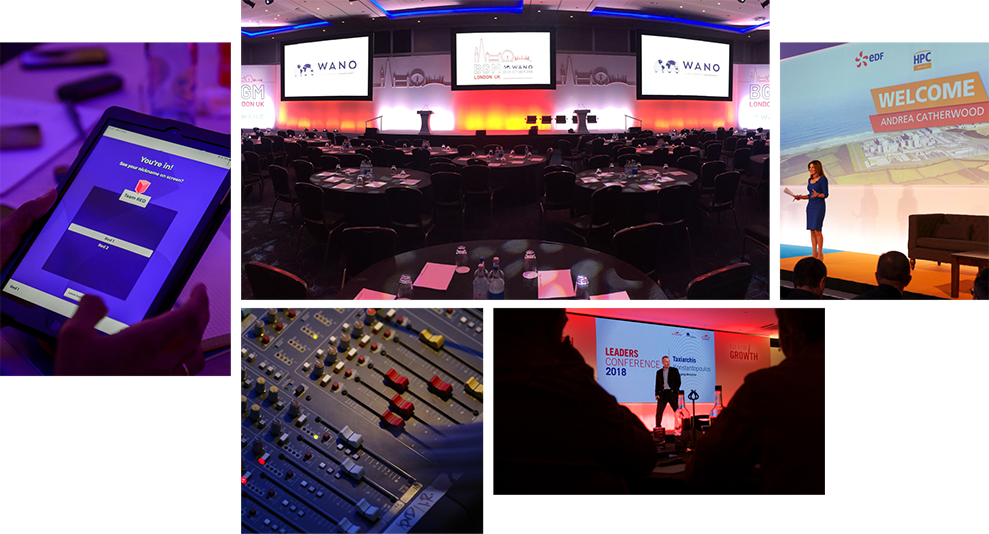
Let’s be honest, events can be complex beasts. From venue negotiations and safety protocols to that one specific lighting fixture you absolutely must have, there’s a lot to juggle.
…which is industry speak for: “A logistical nightmare that keeps you awake at 3 am.”
But not on our watch. Your dedicated project manager becomes your event ally, handling everything from initial concept to final teardown. That includes everything else that comes with it: nailing down the perfect theme, developing your comms strategy, producing your event collateral—you name it, they take care of it.
They know your vision inside and out, anticipate your needs before you even voice them and, most importantly, they’re just one call away.* Always.
*Just, please, don’t call at 3 am. We need our beauty sleep…
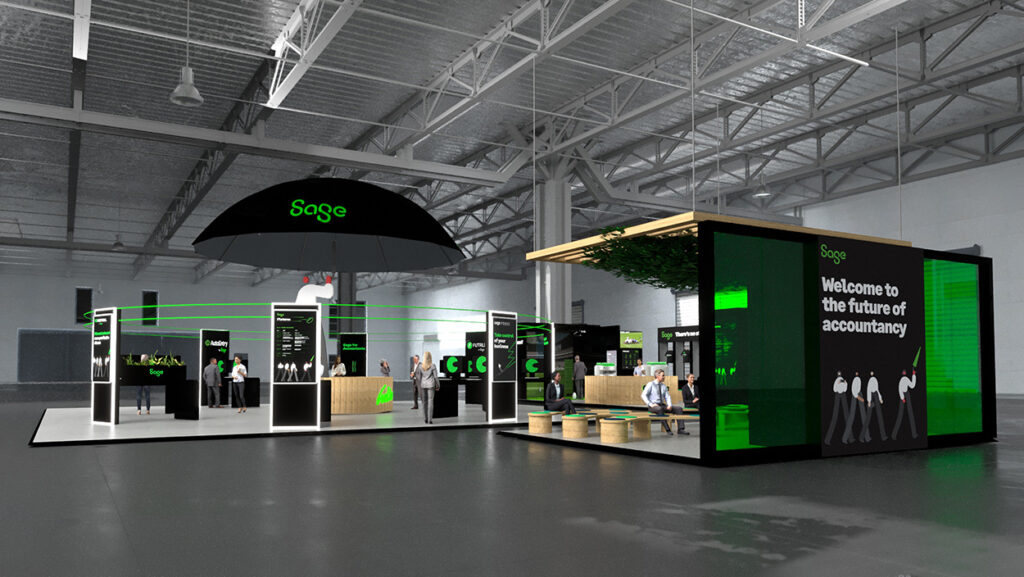
Remember when you had to explain your vision using hand gestures and hope for the best? Well, those days are gone. Our 3D wizardry, flythrough animations and AI-assisted toolkit mean we can bring your event experience to life before a single piece of equipment arrives on site.
It’s not just pretty pictures; it’s practical magic.
Spot issues, make tweaks and perfect your vision, all before spending a penny on setup. We’ll show you exactly what to expect, so there are no on-the-day surprises. And, what’s more, we’re fully maximising AI’s potential to make your stands and visuals better, quicker and cheaper. Just look at what our Joint MD had to say.
Great events need great content, but who has time to coordinate designers, animators and tech teams while managing everything else?
Psst… the answer’s us. We do.
The team orchestrates everything from creating template files to lay solid foundations, through to handling formatting inconsistencies and last-minute changes, making sure that your content performs flawlessly when the spotlight hits.
Our producers rehearse transitions, test every video and create backup plans for your backup plans. Because in live events, “it should work” just isn’t good enough.
Events aren’t just about what happens on the day—they’re about the story you tell before, during and after.
This is where our Creative team really shines. We take the time to understand your objectives, your audience and what makes them tick. Then, we craft messaging that connects. Sometimes it’s a surprising statistic that changes perspective; other times it’s a personal story that tugs at heartstrings. Often, it’s an interactive element that turns passive listeners into active participants.
Whatever approach we take, the result is the same: an unforgettable message that stays with your audience long after the event ends.
The world has changed and so have events. Whether you’re going fully virtual or creating a hybrid experience, we’ve got you covered.
We’ve all been to virtual events where technical issues, poor production values or clunky interfaces created more barriers than bridges. We do things differently. Our technical know-how makes remote attendees feel like they’re in the front row.
But technology is just the beginning. We also reimagine how content is delivered for digital audiences, incorporating interactive elements, shorter segments and engagement tools that keep remote attendees just as invested as those in the room.
So, there you go. Our comprehensive, collaborative and remarkably easy approach to events. Got one on the horizon? Drop us a line and let’s chat about how we can make your next event the easiest—and most impactful—you’ve ever produced.