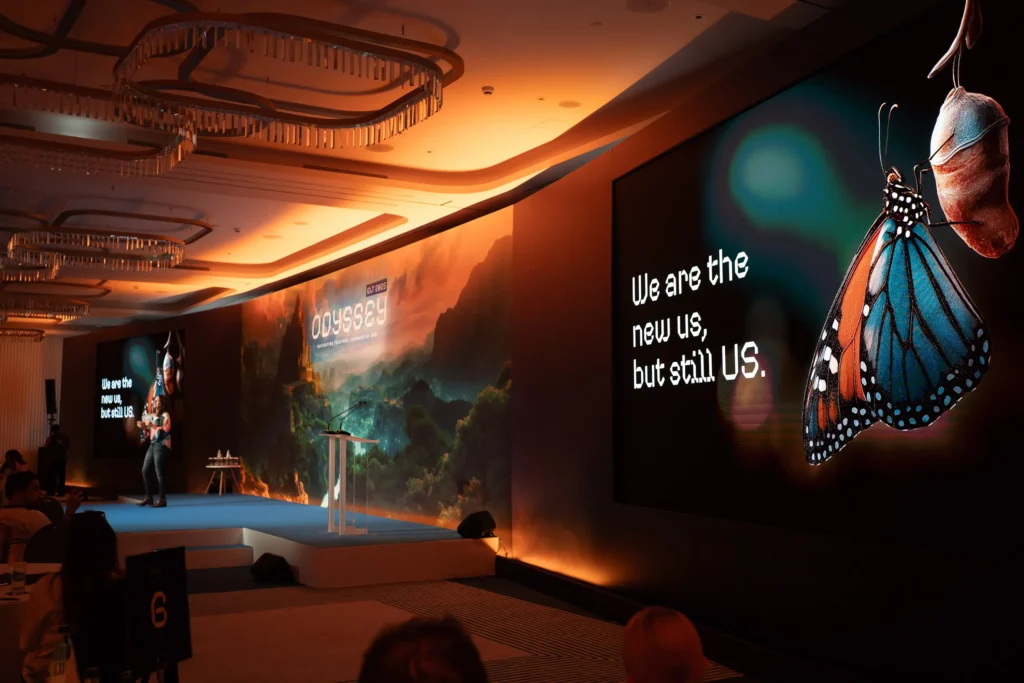
A presentation coach I once spoke to told me about two clients he saw in the same week. One arrived having memorised a 16-minute speech and the other came in with a handful of clear points and the confidence to speak around them.
By the end of the session, there was a clear difference. One was focused on getting through it. The other was focused on the room (and the people that matter). Can you guess which was which?
Of course you can.
That’s exactly the difference most PowerPoints miss. They’re built to support the speaker, not the audience.
By the time a deck lands on your desk to “tidy up”, it’s already been built the same way. It’s never that the slides look bad, it’s that the deck is trying to do six jobs at once—inform, reassure, document, prompt, cover the speaker’s nerves and survive multiple rounds of feedback—and somewhere along the way it stopped being a presentation.
Earlier in my career as an events designer, I was the guy on site the night before, working alongside clients and speakers that knew something wasn’t right but couldn’t name it. In those situations you learn fast that what’s needed isn’t a tidy-up. It’s a rethink.
The slides are doing the speaker’s job
Most speakers use PowerPoint as a safety net, which is understandable. Nobody (and I mean nobody) wants to forget a key point in front of senior stakeholders. But once that happens, the slides become the script. Every reassurance the speaker needs is now sitting on screen in nine-point font, asking the audience to squint and listen at the same time.
As a marcomms professional, you’re being given a deck built for one person’s confidence and being asked to make it work for a whole room. Usually without enough time, alongside everything else. The deck is one job among twenty, and it’s the one that’s most visible if it goes wrong.
So the task is to work out what belongs on the slides and what belongs in the speaker’s mouth.
Words do more work than slides
It’s easy to assume good presentation design is about making slides look pretty. It isn’t.
Copy carries more weight than it gets credit for—as our creative copywriter and proofreader reviewing this article will no doubt agree (hi Becky and Josie). The strongest decks have clear, purposeful statements running through them. Not headings that label a topic, but lines that tell the audience the point straight away. A strong opening statement can frame a slide in seconds, which means people aren’t picking through the detail trying to work out what matters.
That’s where the real improvements start. Not making everything shorter for the sake of it, but being more deliberate. Say the right thing clearly and give the audience a way in.
The same goes for imagery. Used well, it sharpens a message or sets the pace. Used badly, it becomes filler.
Complex doesn’t have to mean cluttered
You’ll get pushback on this, especially in regulated sectors—”it needs to all be there”. And often, it does.
A lot of the decks crossing your desk are complex for good reason: real data, detailed graphs and technical nuance that really matters. In healthcare, medtech and similar spaces, that detail is often the point.
The work is in how you shape it:
That’s a better conversation to have with stakeholders than “we need to make it look better”. It’s also often easier and more cost-effective. Win-win.
The decks that work are collaborative
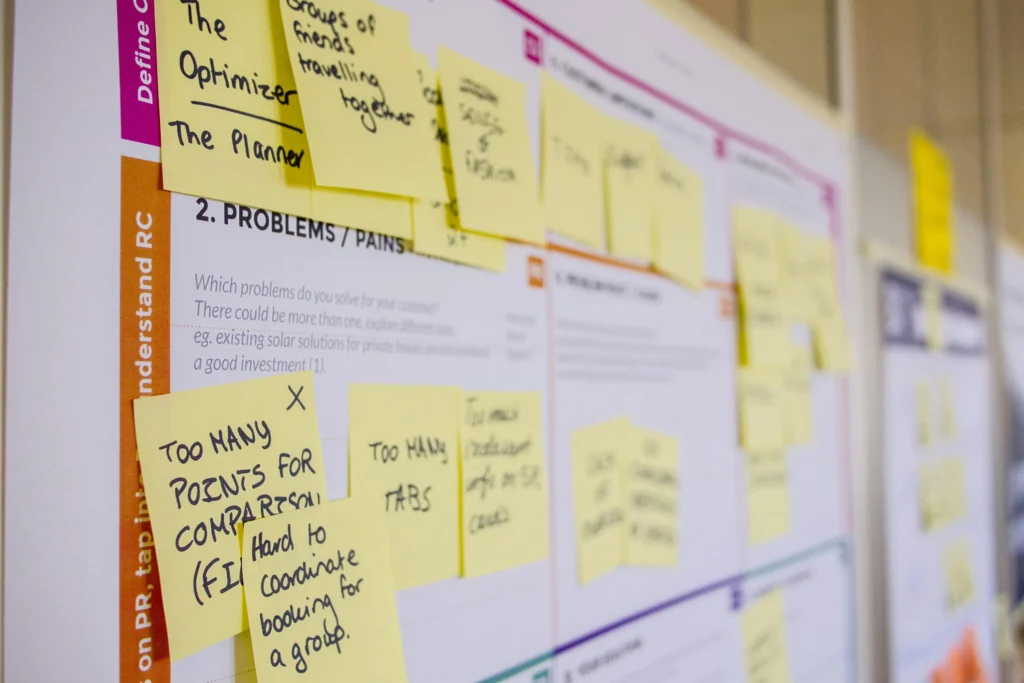
The presentations that get it right are almost always the ones built together. Not the ones tidied up at the last minute, but the ones where there’s space for a real conversation.
If you’re the person managing this from the comms side, that conversation is yours to push for. The speakers who lean into it get more out of the process. And so do their audiences.
Once that’s sorted, designers can work their magic and creatives can carve the copy so the deck comes to life and nothing gets missed.
With that in place, the audience will remember what you said.
Which is the whole point of doing this in the first place.
Reading this and thinking “I need someone who can actually do all of this”? Good news, you’ve found them. Get in touch.
For twenty years, a global medtech leader has trusted us with their highest-profile events.
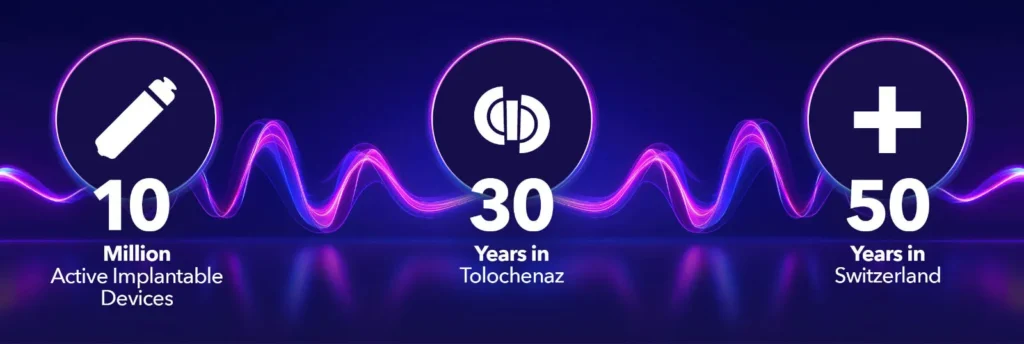
So when they approached us to help launch their 2026 milestone celebrations, we knew that it would be a standout project. The year marks three major milestones, each representing decades of innovation, growth and impact in healthcare:
To bring those moments together, we looked to create an identity for a two-day celebration involving more than 800 employees alongside senior and executive leadership. The original brief sounded simple: one visual for one event. But as we explored the project, it became clear that this was something far bigger. A milestone year that demanded an identity capable of carrying the story.
Finding the pulse
These anniversaries were about more than numbers. They needed to resonate with the people behind them. They were a powerful reminder that lives have been changed and clinicians and caregivers have been supported, all made possible by their employees’ hard work and innovation to shape the future of healthcare.
So with the stakes this high, the creative process had to start with the right question: what does this moment actually represent?
We came up with the idea: the Pulse of Progress.
A pulse is a simple but powerful signal of life, capturing movement and momentum. And progress, whether in healthcare, technology or patient outcomes, is rarely linear. The concept felt right immediately.
Collaborative creative
To bring it to life visually, the team developed a distinctive ‘wave’ identity. This took the form of a rhythmic pulse that could move across various formats, screens and spaces. This visual language that felt both dynamic and meaningful, as well as connected the client’s role at the heart of healthcare.
Projects like this only work when different disciplines work in harmony: creative direction, art direction, design, copywriting and moving image all came together holistically, ensuring every piece of the campaign told the same story.
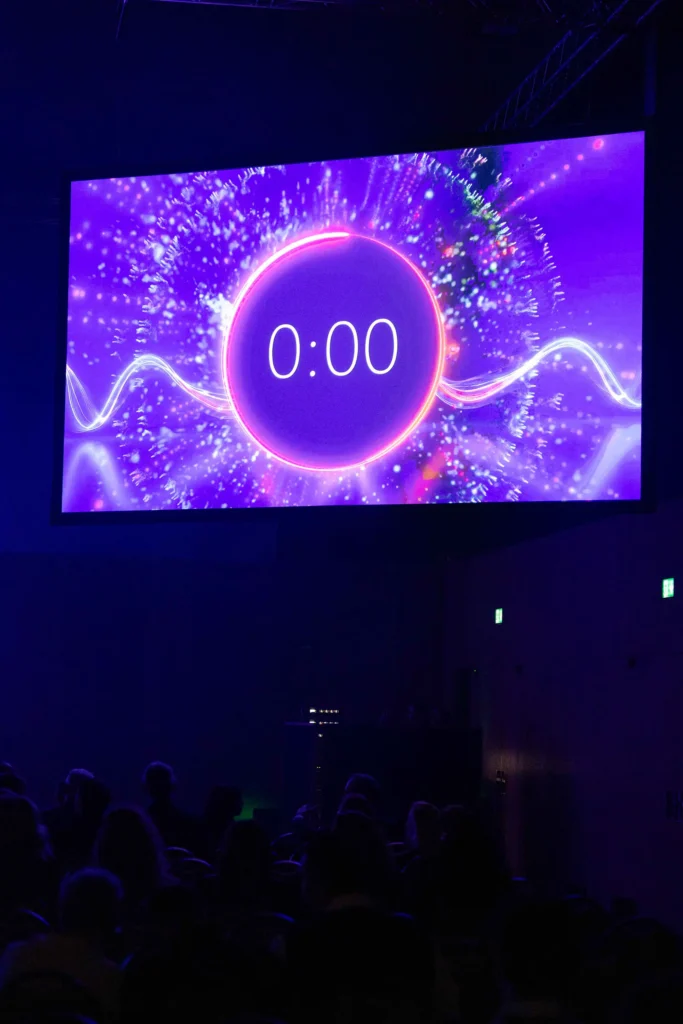
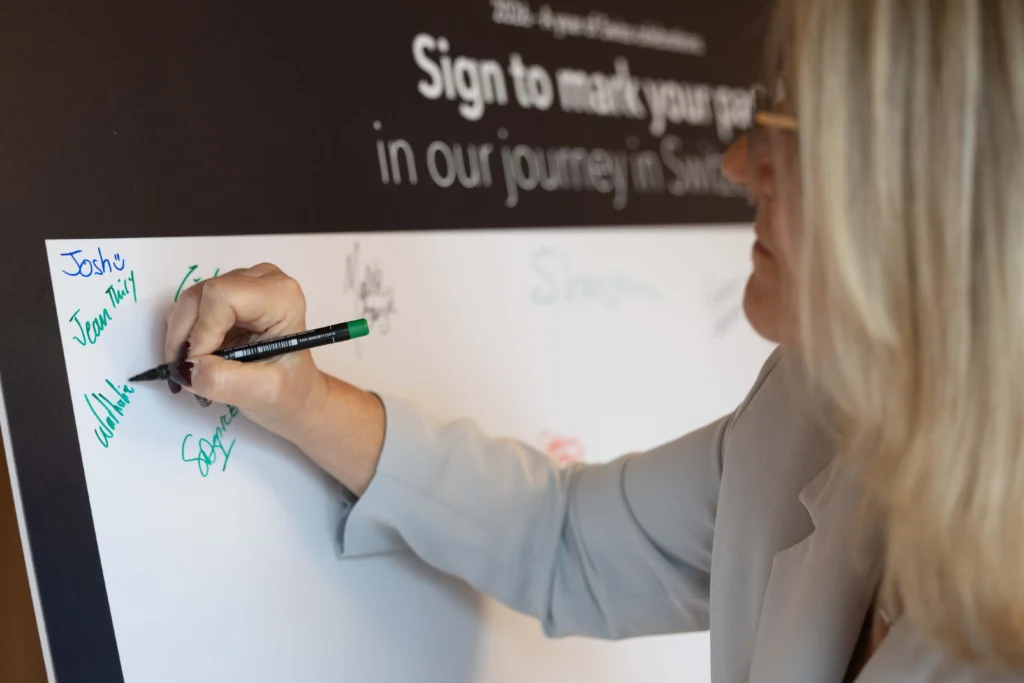
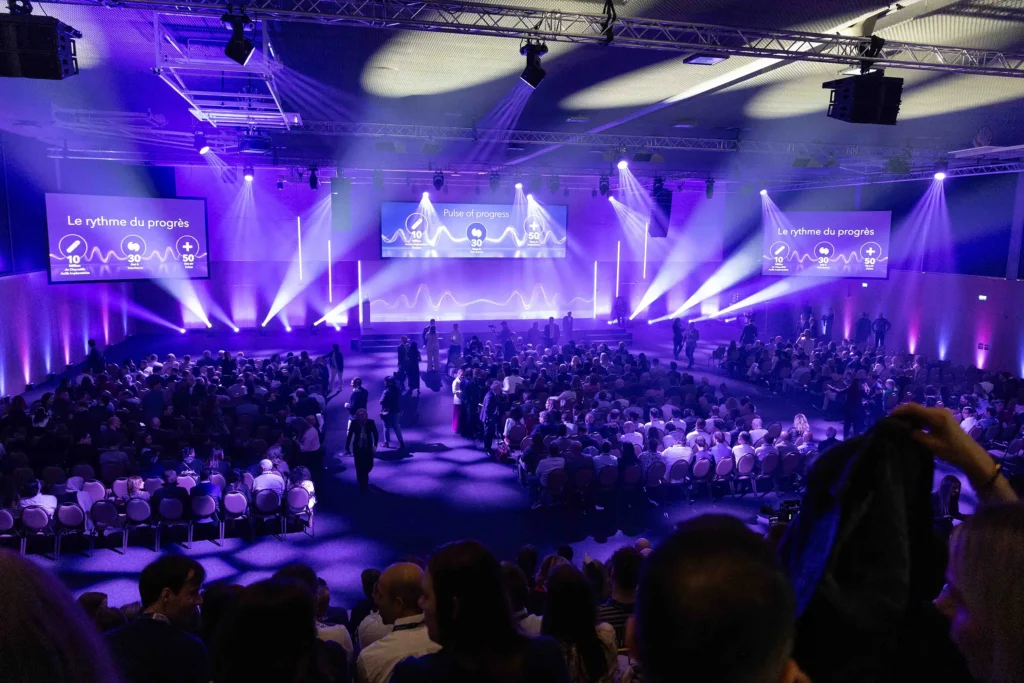
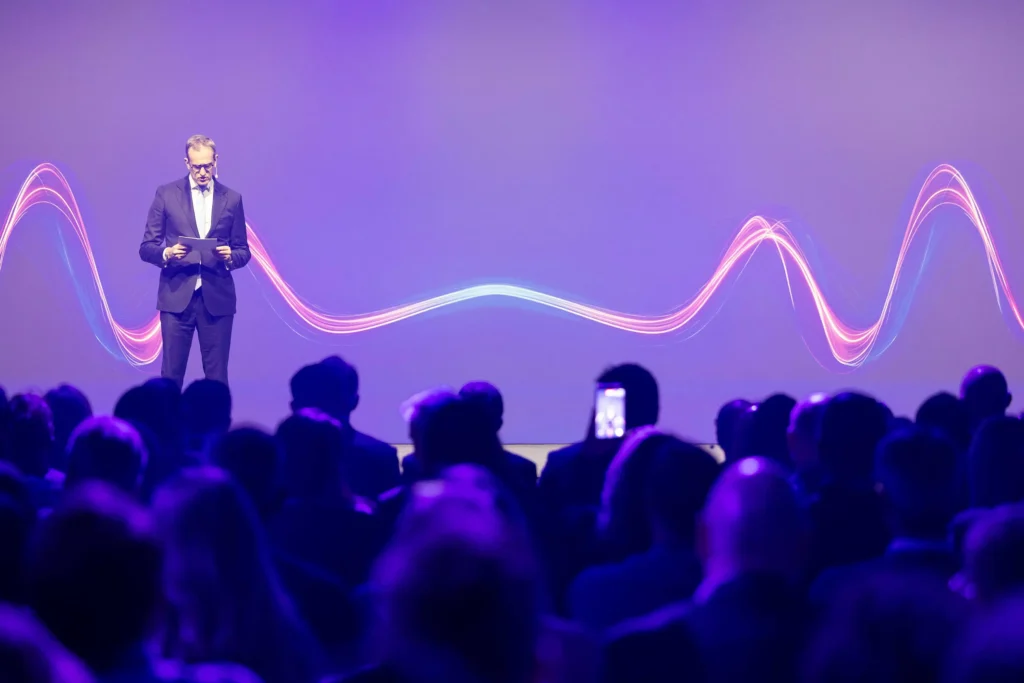
Bringing the story to life
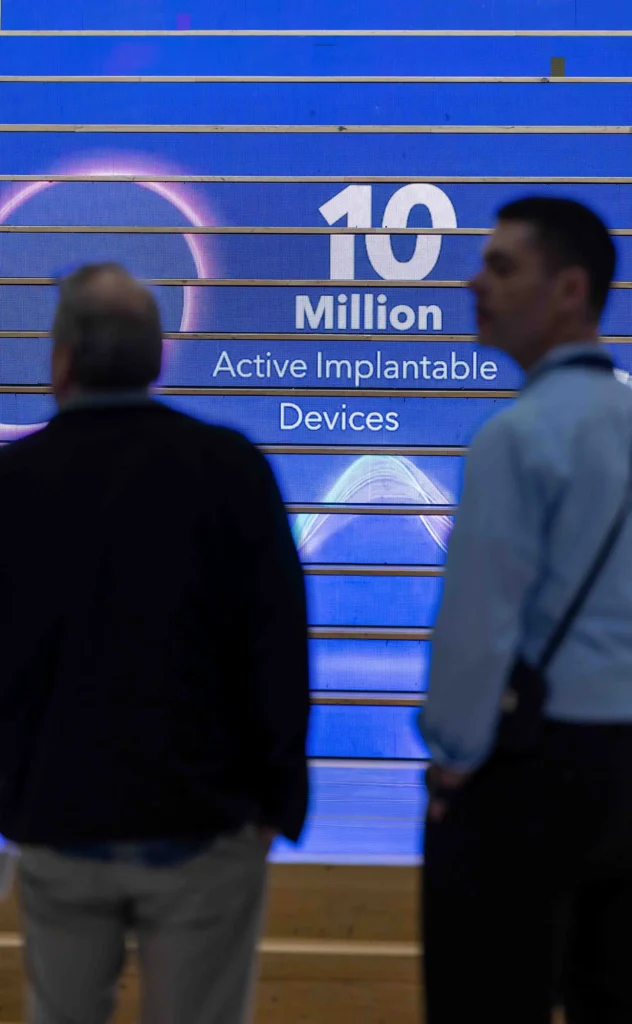
Once the identity was established, the campaign quickly expanded across multiple formats. The team designed and produced a wide range of materials, including presentations, event branding, environmental graphics and video content.
In the weeks leading up to the celebrations, our video team spent multiple filming days capturing additional content to support the narrative. One of the most powerful moments came in Bern, where our crew documented the implantation of a landmark implantable device at one of the country’s leading hospitals. A milestone that brought the scale of the achievement into sharp focus.
The two-day event itself marked just the beginning. Even weeks after the launch, internal teams continued to reference the work, and external audiences noticed its reach. Short-form social edits, long-form storytelling and internal communications all carried the Pulse of Progress identity forward. With more than 100 creative assets produced, including over 25 video outputs spanning internal and external channels, the campaign wasn’t just visually consistent, but genuinely connecting with people in a meaningful way.
“From concept to execution, the team delivered an identity that was as meaningful as it was scalable. Pulse of Progress united multiple milestones under a single, powerful story, carrying our message seamlessly across events, content and channels. It didn’t just celebrate our history; it brought our people together, reinforced the real impact our work has on lives, and became a shared language for what we’ve achieved and where we’re going.”
– Sr. Director, International Brand, Digital & Corporate Marketing
A partnership built over time
There’s another reason this project feels particularly special for us. 2026 also marks 20 years of collaboration between Outlook Creative and our client.
As our Co-Managing Director, John Lloyd puts it:
‘In the 12 and a half years I’ve personally worked with this client, we’ve delivered thousands of projects together. But this one stands out as one of the highest-profile pieces of work we’ve ever done. The level of content and engagement that came out of this project was incredible.’
Moments like this, where creativity, trust and shared purpose all come together, remind us why long-term partnerships matter. There’s real value in working with people who understand the story you’re trying to tell. And for this incredible milestone year, that story is only just getting started.
When an Executive Leadership team event stretches across three days, dozens of sessions and hundreds of touchpoints, the challenge isn’t necessarily volume. It’s coherence. You need everything to belong in the same world, especially when timelines are tight, expectations are high and most of the audience were there last year.
From the outside, this kind of project can look effortless: cinematic, confident and clean. Up close, however, it’s layered and deeply human. Which basically means a small group of very skilled people holding a lot of moving parts at once.
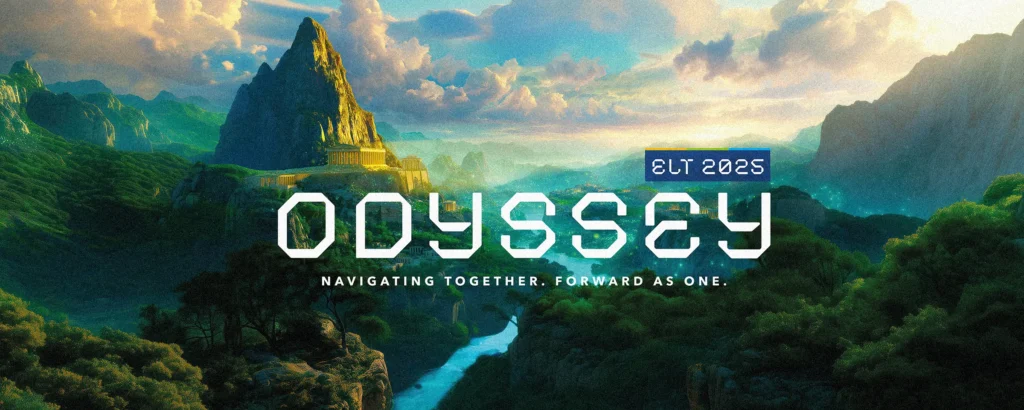
We saw this first-hand on a recent Odyssey-themed Executive Leadership event for a long-standing client of ours. This time, that coherence came from two inseparable forces: a strong, enabling theme, and the way we used AI to expand creative exploration and build at scale.
Granted, AI didn’t make Odyssey happen overnight, but it helped us explore faster, go further and keep the whole three-day experience feeling like one joined-up world.
Turning scale into story
The brief was to deliver a consistent experience across three days that felt intentional, connected and genuinely different for a returning audience. Less your typical conference, more stepping into another world.
Sure enough, world building emerged as a defining idea. Design soon moved beyond individual assets and began to imagine a complete, coherent world that unfolded over the three days. AI stepped up as a creative tool to support that narrative and scale.
That concept then evolved into a journey, or Odyssey, spanning three distinct environments. Early visual thinking drew loosely from fantasy world maps (think Lord of the Rings), where colour, terrain and geography signal progression. It established spatial storytelling from the start and clarified the three stages, helping the audience instinctively understand where they were in the story without over-explaining.

AI as a sketchbook, craft as the finish
When it came to mapping the narrative and distinct environments for each day, generative image exploration became our sketchbook. What started as vast landscapes, dramatic light and architecture emerging from rock progressed into a metaphorical acropolis for day one, dense green mountains for day two and an open water horizon for day three.
This is the bit that can sound magical when you summarise it. In reality, it’s iterative. You explore, refine, test… and then go again. Small prompts don’t always translate to small changes, so creative judgement is a must every step of the way.
Once we had strong direction, we shifted from exploration to build. That meant retouching, rebuilding, extending canvases, correcting light and adjusting perspective, sometimes merging multiple outputs to achieve a workable result. This is the unseen part that requires making the right call: do we regenerate or rebuild? Does that particular imperfection add character, or break the illusion?
An early stylistic decision shaped everything. Rather than aiming for photorealism, we leaned into a stylised, gamified aesthetic, closer to Avatar or a high-end video game world. That choice freed us from being hyper-real and made every design element feel intentional.

Continuity is where it counts
For Odyssey to feel truly immersive, each of our environments had to feel distinct yet undeniably part of the same universe. Otherwise, you don’t have a world; you have three separate backdrops.
The navigators were central to that consistency. As guides through the journey, they had to feel like they belonged inside it. Built as hybrids, we used real client imagery to anchor each character, while generative visuals pushed the world and wardrobe. Here, AI captured the Jumanji-esque vibe we were going for… just not the person. Turns out, ‘generic adventurer’ is easy; ‘recognisable speaker’ less so. Human design skills were very much key to rebuilding and refining each profile until the team was unmistakably themselves.
While AI supported scripting and visuals, the voiceover was intentionally human. A trusted voice actor anchored the story inside those otherworldly environments. Music was selected early with different tracks for each day, so the voiceover was recorded to music. That meant pacing and emotional rhythm were locked in from the outset.
Essentially, the tools helped us explore a bigger playground. The craft is what allowed us to piece it all together into a story with staying power.
So… does AI make it quicker and cheaper?
Onto the golden question: if you’re using AI, doesn’t that automatically mean faster and cheaper? Well, not necessarily.
On Odyssey, it became clear early on that AI wouldn’t reduce the work, but it could raise the ceiling of possibility. The real difference was how much we could build within the time we had, and how quickly we could test ambitious ideas before committing to a final route.
And that’s not to say that the process was seamless. Like any large-scale event, the journey to fruition was still intensive and iterative, with a constant need for creative judgement and control.
That’s the big win with AI. Not speed for its own sake, but what it unlocks: ideas you wouldn’t reach as quickly otherwise, and a broader creative horizon to explore. The output still depends on those talented humans you’ve always trusted making the calls.
If you’re looking for the people who can shape the work, keep it coherent at scale and bring the best ideas to life, let’s talk.
For nearly a decade, we’ve been helping CBRE make its mark at MAPIC, the annual global meeting place for retail and property players. Held each year in Cannes, the 2025 edition marked the event’s 30th anniversary, and it remains the place where big ideas, big deals and even bigger conversations happen.
For CBRE, it’s a real focal point of the retail calendar—an unmissable opportunity to connect with clients and prospects, and to showcase their world-leading expertise.
But what exactly does it take to nurture a partnership that’s spanned nine years (and counting)? Let’s rewind to 2016, when a simple PowerPoint deck turned out to be the spark for something much bigger.
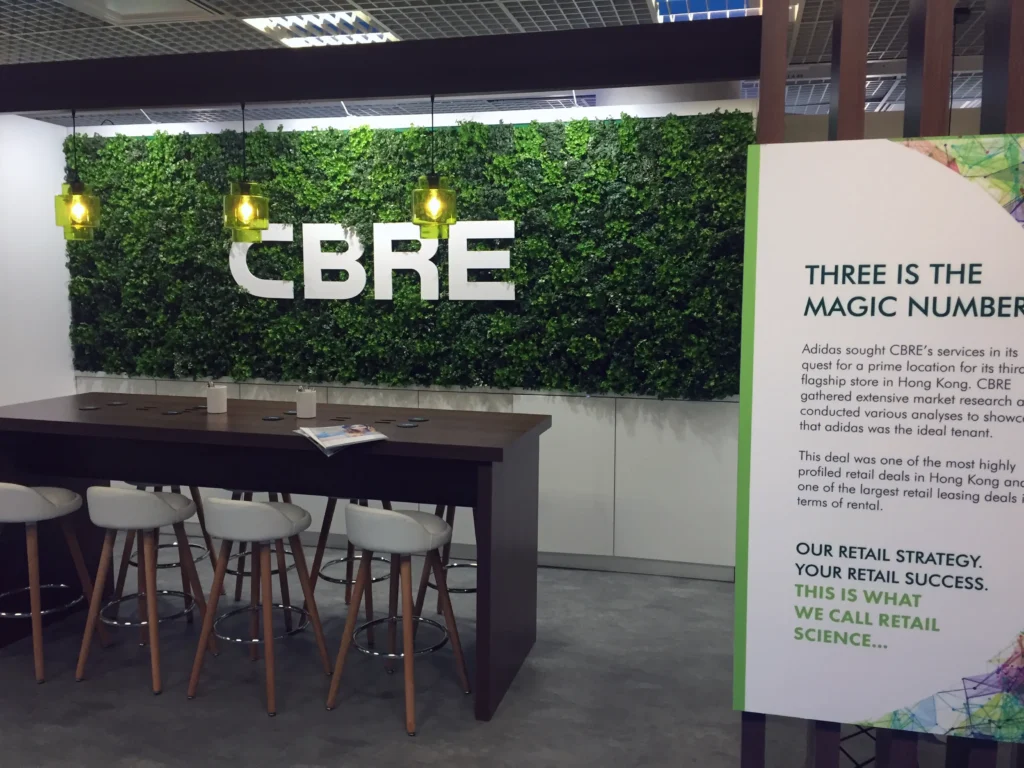
That first project might have been small, but it set something exciting in motion. CBRE saw in us a creative team with a lot more to offer; in particular, the potential to help bring their brand to life in new, imaginative ways.
And as luck would have it, MAPIC—that major event for CBRE—was just around the corner. The team needed a creative partner they could trust with all their exhibition needs, so up we stepped.
And the rest? Well, you know how the saying goes.
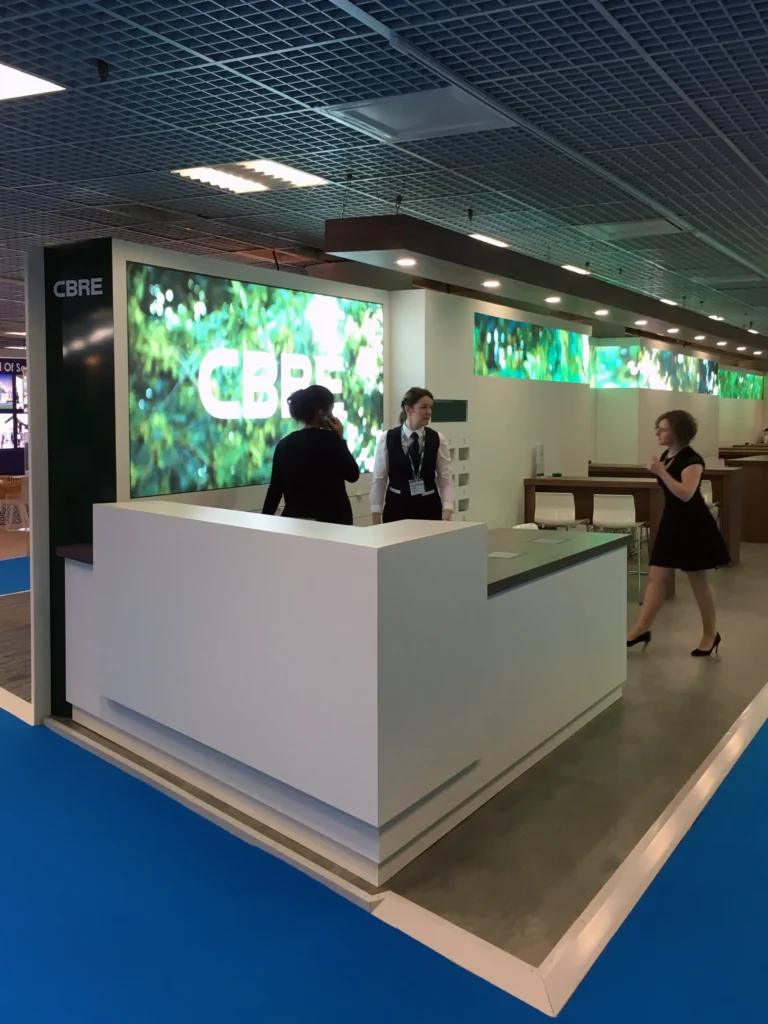
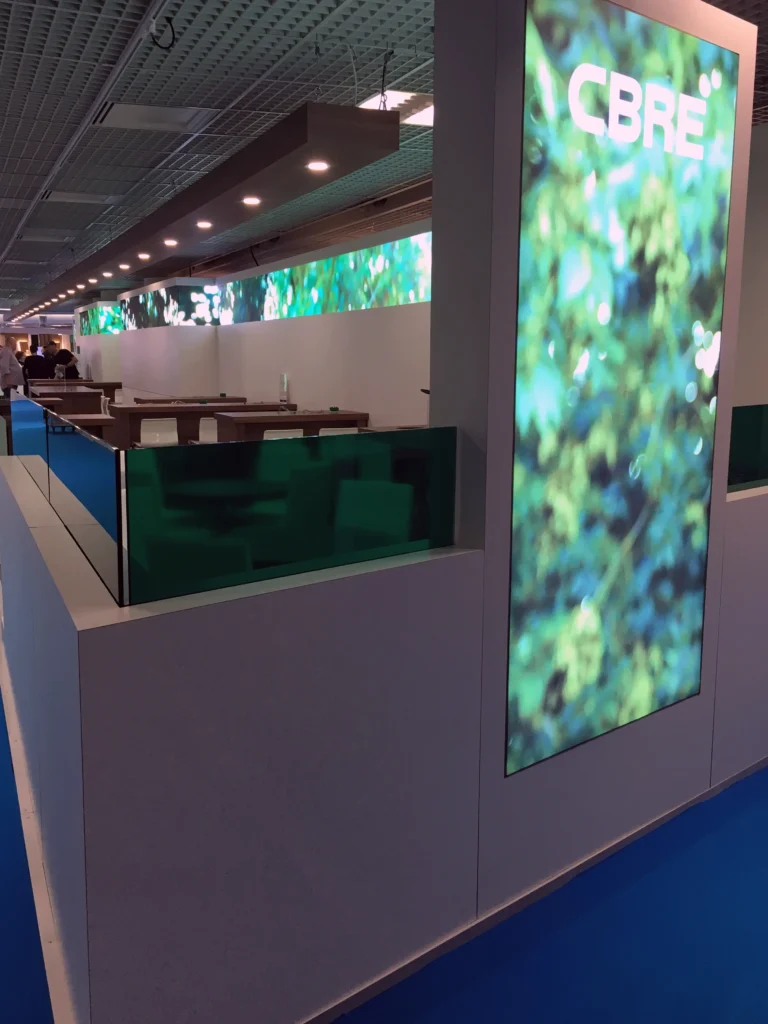
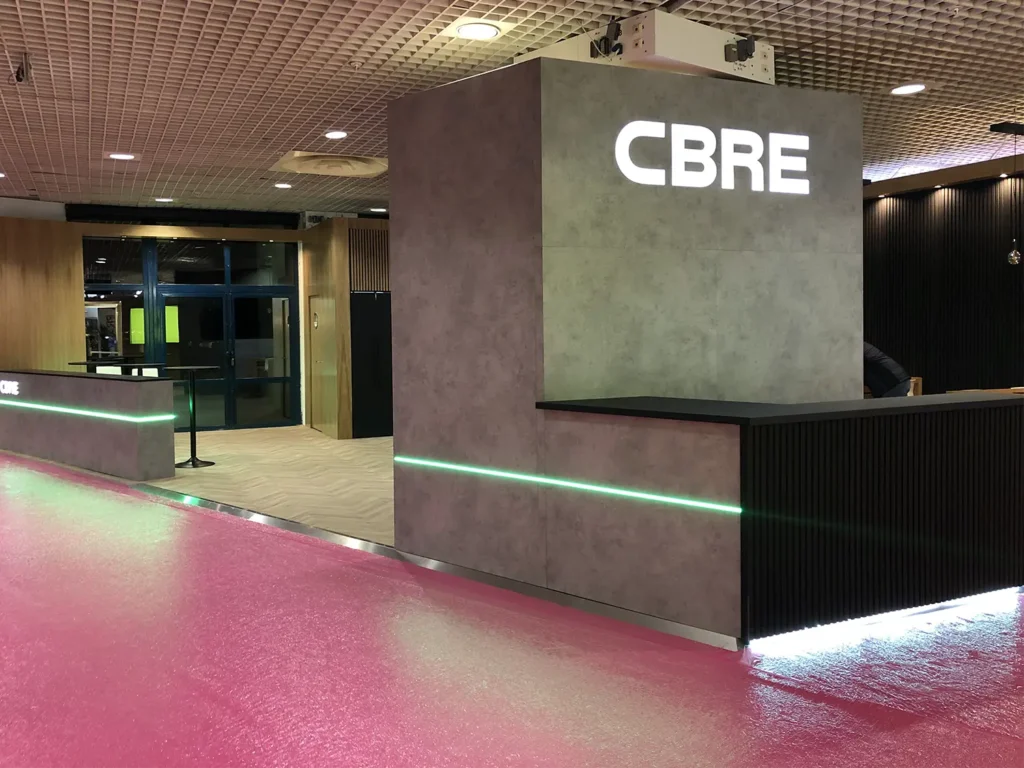
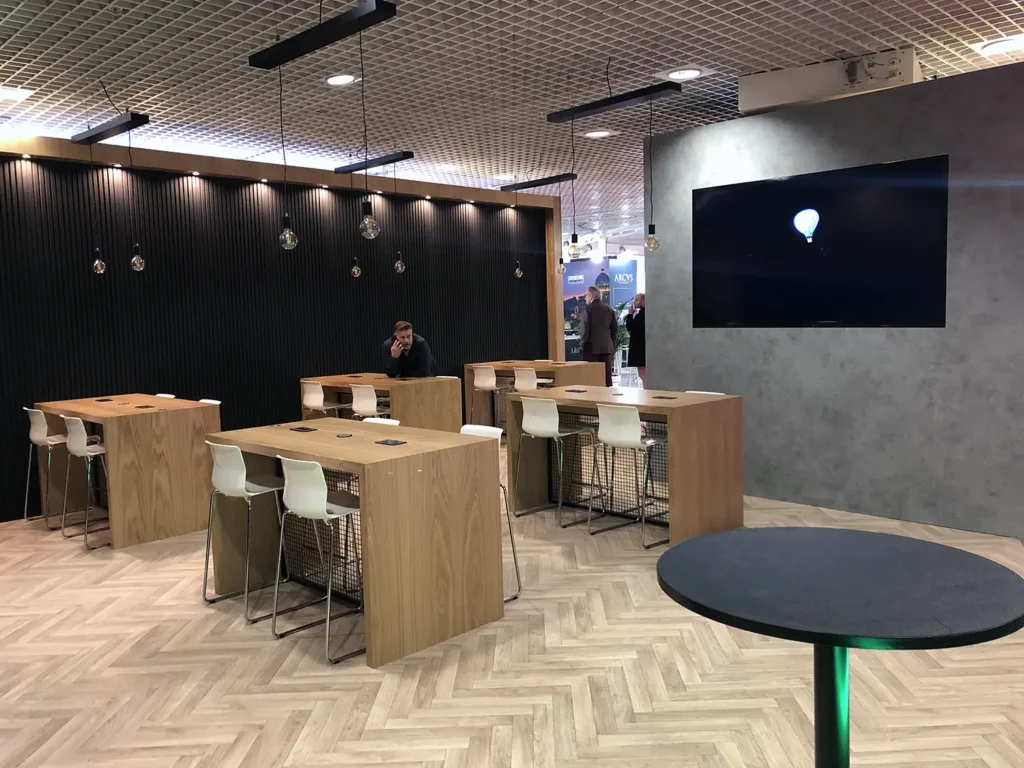
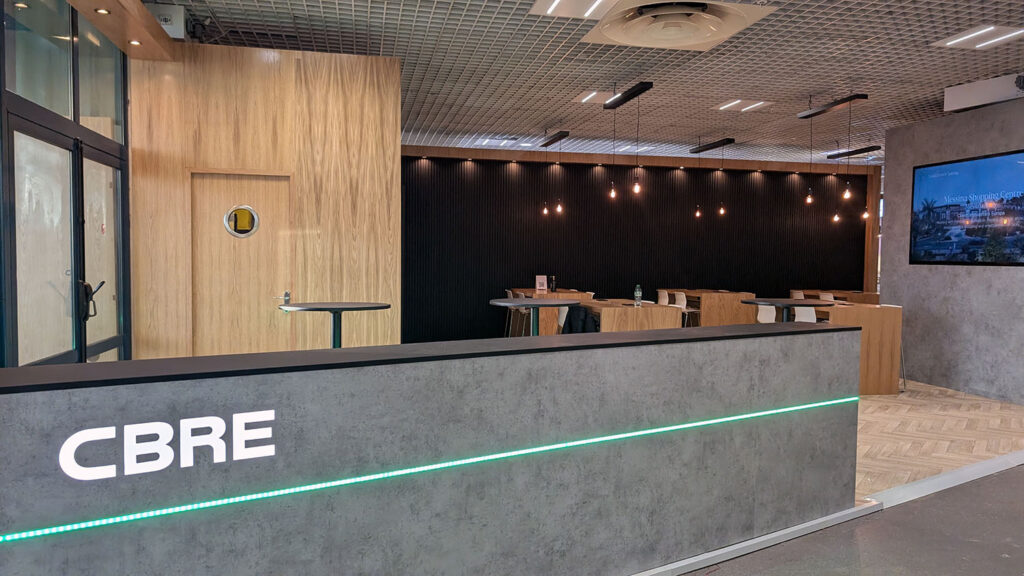
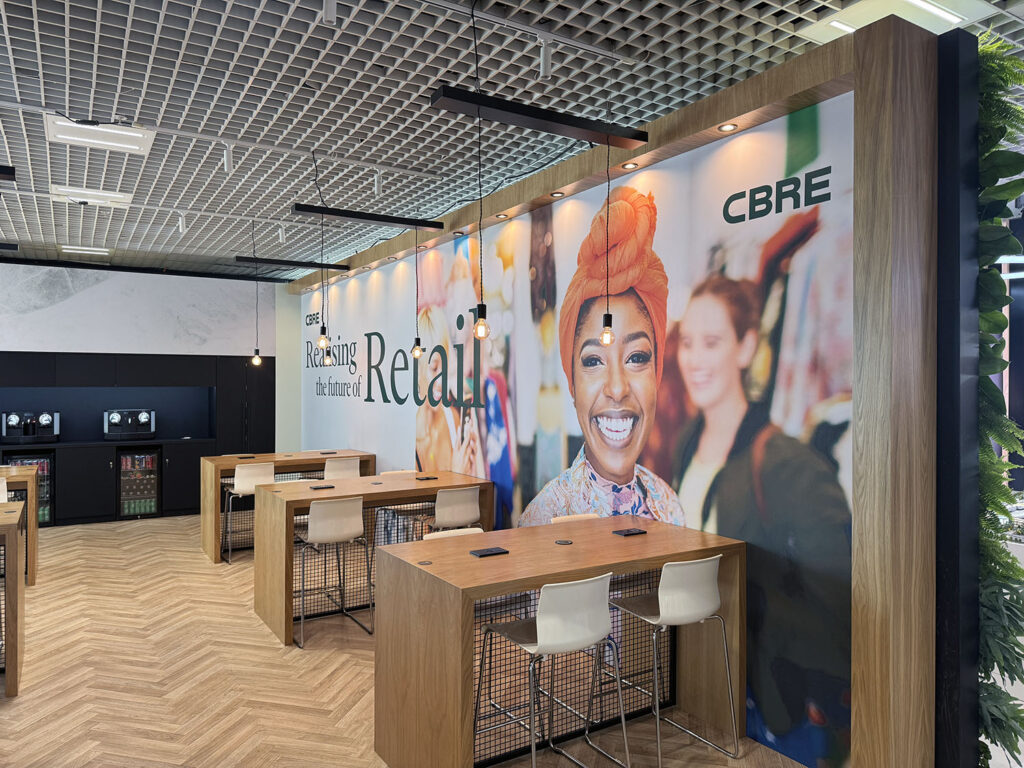
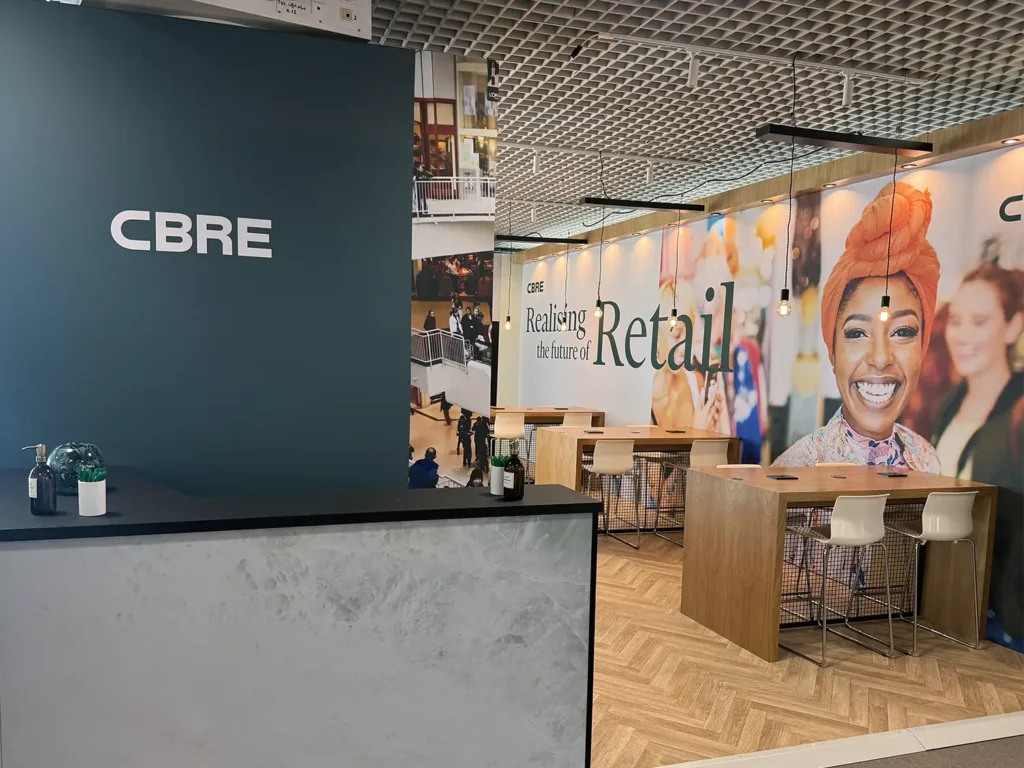
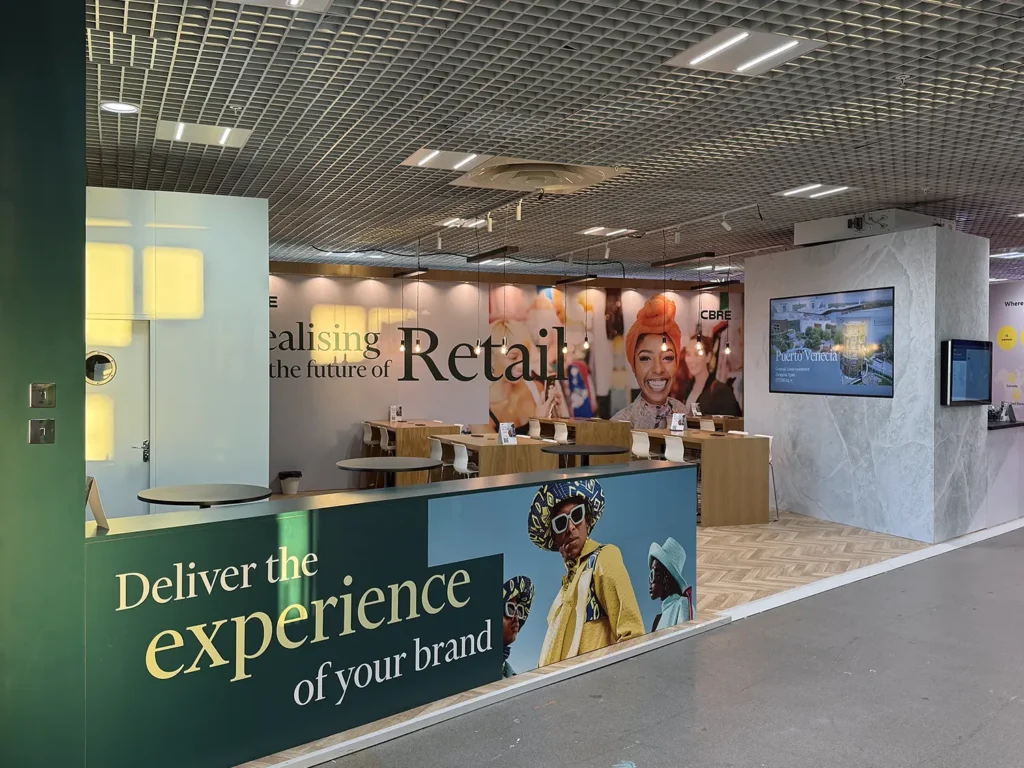
Since that first event, our role at MAPIC has grown and evolved year on year. The brief might stay the same (to design, build and deliver a stand that’s enticing, functional and unmistakably CBRE) but how we transform it into reality is always in motion.
Each year brings a new challenge: how do we make it even better than last time? It’s less about reinventing the wheel and more about evolving it with purpose.
That first year, it was all about striking artwork. The next, we introduced a natural world-inspired theme with lightboxes and LED strips to bring the outside in. Later designs embraced a sleeker, more minimalist look and feel.
As CBRE’s brand has developed, the stand has evolved right alongside it. Each new design captures the story of where the brand is at that moment, creating a space that looks great, feels inviting and, most importantly, functions as a dynamic meeting place.
Over the years, our relationship with CBRE has become about much more than design. We’re not just creating a stand; we’re delivering a complete event experience from start to finish. Each year, we take the brief and run with it, handling everything from initial sketches and specifications to build management and venue logistics.
We even have an event producer on site, working behind the scenes to keep everything running like clockwork. Need a quick fix or a lighting tweak? We’re already on it.
That kind of dependability builds real trust. CBRE know they can count on us to get things done, anticipating challenges before they arise and delivering the same high standard time after time.
Fast-forward to today, and we’ve just wrapped on MAPIC 2025. This year’s design built on everything we’ve created so far, adding a new layer of personality that reflects where the brand is heading.
After eight years (and soon to be nine) of collaboration, it’s more exciting than ever to see what’s next. Because for us, yes, MAPIC is an event, but it’s also proof of what long-term creative partnership can achieve.
So here’s to keeping things fresh, exploring new ideas and getting the job done—reliably, and with just the right amount of flair.
One event, endless content.
Exhibition podcasts. A ‘does what it says on the tin’ concept that means exactly what you think it does: a podcast recorded live at your exhibition stand.
It sounds simple—and that’s exactly why it works. Beneath the simplicity lies a surprisingly powerful opportunity for real-time brand storytelling, contagious audience engagement and long-term value that lasts long after your audience has gone home.
What’s not to love, right? If you’re not already googling podcast mics, here’s a stack of reasons why this slept-on format is both a no-brainer and a game-changer.
If you’re at an industry event, chances are your key opinion leaders and thought leaders are already on site. That means no travel arrangements, accommodation bookings or logistical spanners in the works to navigate.
All you need to do is create space for those conversations to happen. Hitting ‘record’ helps too.
If we’re being brutally honest, exhibition experiences can all blur into one for attendees. A live podcast setup changes that by creating a focal point.
Visitors linger longer when something interesting is happening. When people stick around, they’re more likely to engage in a meaningful way. And voilà: what would have been passive traffic becomes an active and invested audience.
When it comes to live events, momentum is everything (check out our thoughts on live edits for more on this). The experience itself is really just the start; for your message to truly stick, you need to make hay while the sun’s still shining.
The beauty of exhibition podcasts is that it’s easy to move quickly. We’re recording full conversations that need minimal editing—your content’s ready in hours, not weeks.
Never podcasted before? No problem. Our experienced crew knows how to capture crisp, studio-quality sound, even in noisy expo halls.
But we don’t stop at sound. Need branding? We’ve got you. Looking for a strategy? Give us an hour or two. A spot of host coaching to keep things sounding chatty and natural? Already handled. Point is, whatever it takes to get your series off the ground, we’ve got it covered.
That single session doesn’t just give you a podcast—one day of recording can give you a whole library of content.
From long-form episodes to snackable social cutdowns, highlights reels and campaign-ready assets, you get more reach, more mileage and more impact all from that one conversation. Sounds pretty good, doesn’t it?
So there you have it. You’re already investing in being there, and what you’ve got to say deserves to be heard. Let’s turn that into something people can keep listening to.
Why capturing your event (properly) might be better than the coffee.
Event day is here. Everything’s prepped and the buzz has begun. But we’ve got a harsh truth for you.
People forget most of what they hear at conferences. We’re talking 75–90%. After as little as an hour, retention can nosedive. And there’s only so much a coffee break can do to bring it back.
But there is a solution. One that might *even* be better than caffeine (yep, we said it).
When you record your event, you instantly create an on-demand library. Your guests can rewatch any session they choose, as many times as they want. Anyone who couldn’t make it on the day? They’re covered too. We’re talking some serious longevity—you’ve already done all the hard work; you might as well make it last!
We take live camera feeds and show content (think slides, videos, demos… whatever you’ve got) and turn them into a fully branded, broadcast-quality recording. All synced up. All ready to share the very next day.
A live edit means no waiting weeks for post-production. What your audience saw on the day is what they’ll see on playback—seamlessly edited and ready to go.
Time’s everything here. You’ve got to strike while the iron’s hot if you want to keep people engaged.
We’ll split your event recording into bite-sized sessions so your audience can dip back in when it suits them, plus we’ll pull out the best bits too. Want clips for social? No problem. Need a highlights reel to tease next year? Easy. Fancy something quick and sizzling to send to sponsors? Already sorted.
Everything’s packaged neatly before the last truck leaves.
Whether you want to boost accessibility, be more environmentally friendly or maximise your reach, we’ve got a full livestream production ready to go. We do this for events big and small, from product launches to full-scale conferences.
So yes, keep the coffee break on the day. But for lasting impact? Hit record too.
(And if you’re curious how easy this can be, check this out.)
It’s not what you say, but how you say it.
Let’s be honest, congresses, conferences and similar events are about so much more than “next slide please”. At heart, they’re about three things: sharing knowledge, building networks and creating a sense of community. Done right, these elements don’t just coexist—they work in synergy.
But here’s the catch: none of that good stuff happens if your audience has checked out before you’ve even got to the keynote. In an age where attention is a currency that’s increasingly hard to hold on to, how you deliver your content matters more than ever.
So, how do you make it land?
You get creative.
A strong, cohesive theme is the spine of your event. It gives structure and pulls everything together into one clear and memorable entity. Without it, you’re left with a series of disconnected sessions, each doing their own thing, jostling for attention and making the day feel disjointed.
You want your audience to connect with the bigger picture—each session should add a brushstroke to the same canvas, not feel like it belongs in a different painting.
Nobody enjoys being talked at; it’s way more fun to be part of the action. Plan your agenda around segments. The punchier, more varied and full of surprise they are, the better.
And don’t forget that narrative thread. People are far more likely to get stuck in when they understand the why behind what they’re being asked to do. Active participants > passive listeners. Create partnerships.
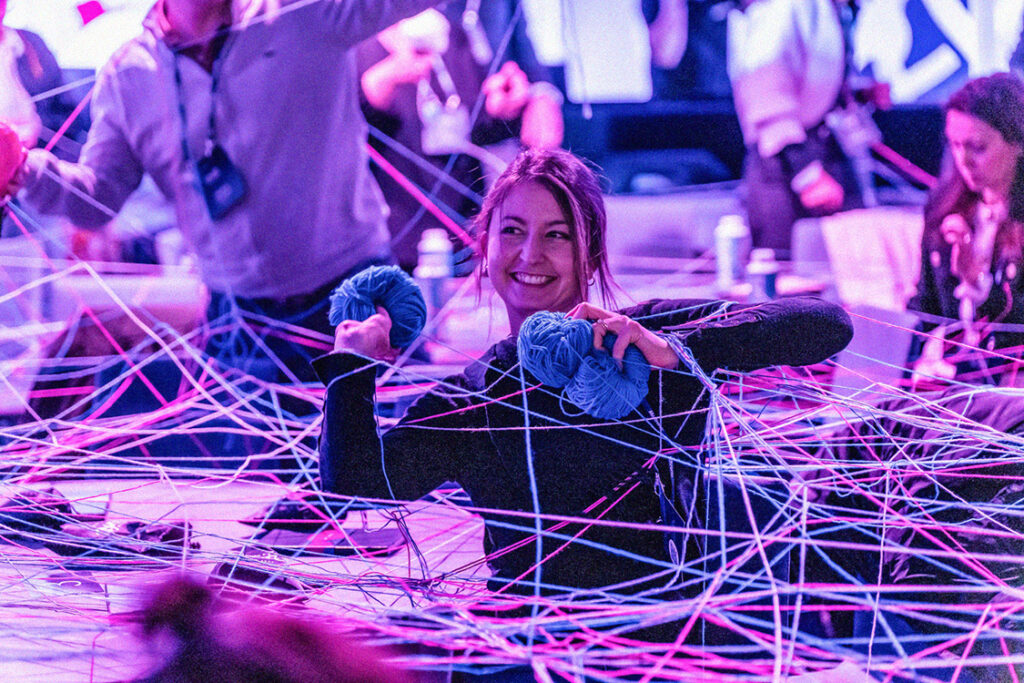
Brutal as it sounds, people forget most of what they hear at conferences. Information retention during passive formats is low—like, 10–25% of key messages from a full-day event low—and even then, that’s only if the ideas are clearly structured and reinforced.
Research also suggests that retention starts to nosedive after around 45–60 minutes of high-density content. So, strip it back! Focus on a few big ideas and find ways to reinforce them. Schedule breaks, let your audience get hands-on and watch their retention skyrocket.
Time for some science. Humour isn’t just about fleeting laughter—dopamine is proven to boost memory. A healthy dose of fun turbocharges our engagement with the content and increases the staying power of the message behind it.
It doesn’t have to be silly; it just has to be human. Whether it’s something witty or simply moment that makes people smile, it all works. Make your audience feel something. Ideally, joy.
Congresses bring together all sorts. Different people turn up looking for different things, which is yet another reason why how you deliver your message matters as much as what you say.
Shared cultural formats are a great way of connecting with a broad and varied crowd. Could your message be worked into a fun and relatable format, like a gameshow or chat show? Make it bite-sized and impossible to skip past—when the delivery feels fresh and exciting, people are more likely to tune in.
The crux of it is: you can’t expect people to listen if you’re not speaking in an interesting way. Your audience’s experience has to be top of the bill, even if it means having to rethink your delivery.
You can’t rely on just getting attention; you have to go out of your way to earn it. That means not doing the same old stuff that everyone else is. Instead of just presenting your message, give it production value. That way, your audience will still be thinking about it months down the line.
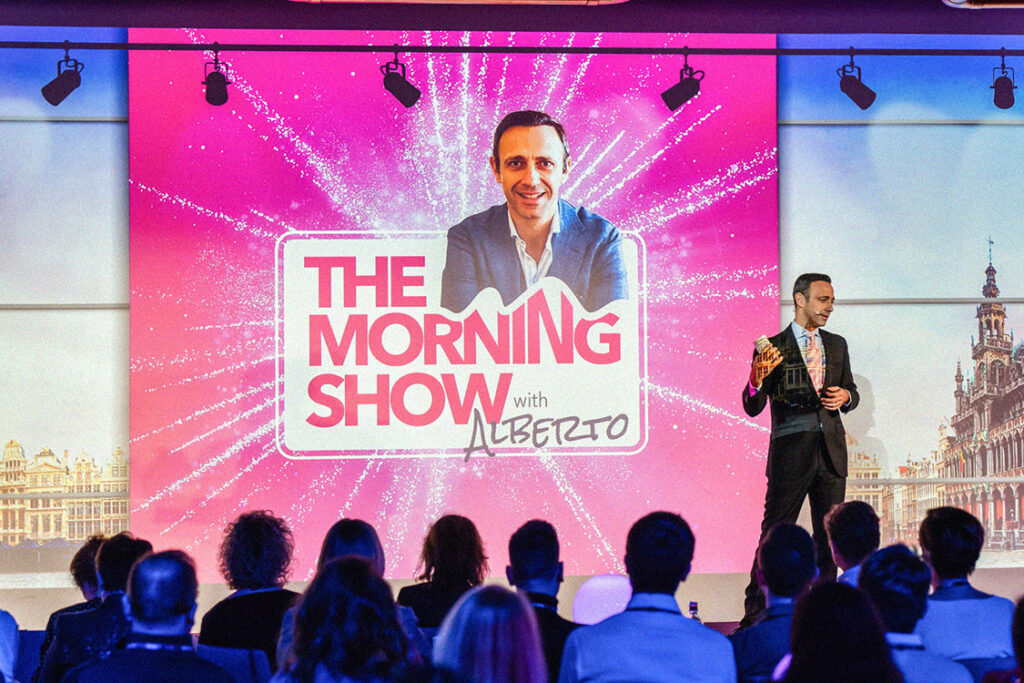
When a client asked us to dial up the energy and bring a sense of cohesion to their section of a wider meeting, we knew we had to give them something out of the ordinary.
Inspired by daytime TV, we created The Morning Show—a peppy and entertaining format complete with its own branding, credits, theme music and stings. We even had our ‘stage manager’ hype up the studio audience to get them fully on board with the concept before the cameras started rolling.
Instead of sessions, we ran segments which our live host pulled together into one dynamic package. Each segment, while unmistakably on theme, delivered something different:
The result? Rave reviews, enthusiastic engagement and a client who’s already thinking about The Morning Show episode 2.
Ready to make your next conference unmissable? Let’s chat engagement.
We won’t name names, but a trusted colleague of ours once said, “Success lies in making the complex seem effortless.” Stick it on a plaque.
For us, that idea of making the complicated look easy is more than an aspiration; we treat it as a commitment. It’s something that drives every project we turn our hand to, especially when it comes to events.
Whether it’s 15 delegates in a boardroom or thousands of attendees at an exhibition, we thrive on managing the behind-the-scenes stuff that makes most people sweat. Think last-minute changes, technical complexities, multiple moving parts, all handled seamlessly to deliver an event experience that’s memorable for all the right reasons.
But rather than us blowing our own trumpet, let’s get into the specifics. When we say “We make events easy”, here’s what that really means—and how it makes a difference for our clients.
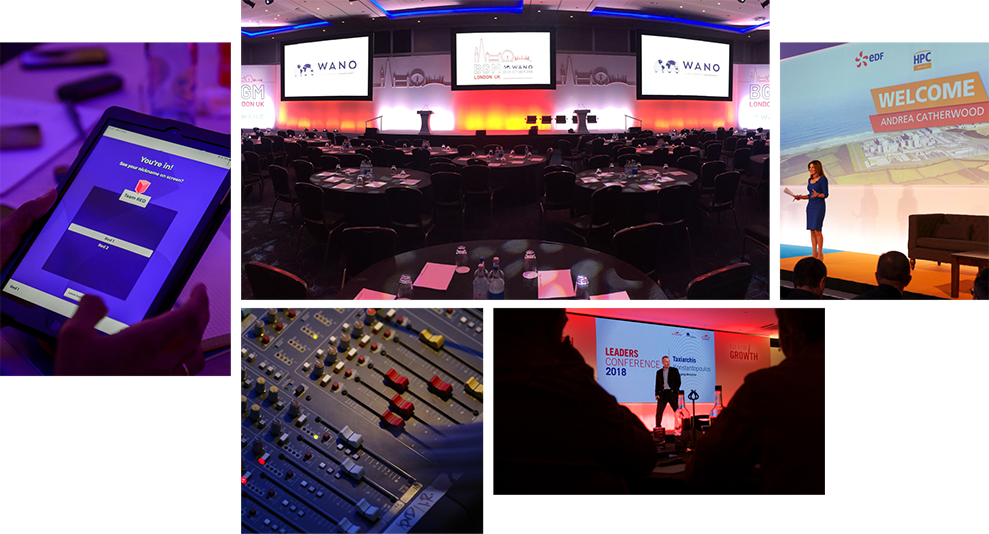
Let’s be honest, events can be complex beasts. From venue negotiations and safety protocols to that one specific lighting fixture you absolutely must have, there’s a lot to juggle.
…which is industry speak for: “A logistical nightmare that keeps you awake at 3 am.”
But not on our watch. Your dedicated project manager becomes your event ally, handling everything from initial concept to final teardown. That includes everything else that comes with it: nailing down the perfect theme, developing your comms strategy, producing your event collateral—you name it, they take care of it.
They know your vision inside and out, anticipate your needs before you even voice them and, most importantly, they’re just one call away.* Always.
*Just, please, don’t call at 3 am. We need our beauty sleep…
Remember when you had to explain your vision using hand gestures and hope for the best? Well, those days are gone. Our 3D wizardry, flythrough animations and AI-assisted toolkit mean we can bring your event experience to life before a single piece of equipment arrives on site.
It’s not just pretty pictures; it’s practical magic.
Spot issues, make tweaks and perfect your vision, all before spending a penny on setup. We’ll show you exactly what to expect, so there are no on-the-day surprises. And, what’s more, we’re fully maximising AI’s potential to make your stands and visuals better, quicker and cheaper. Just look at what our Joint MD had to say.
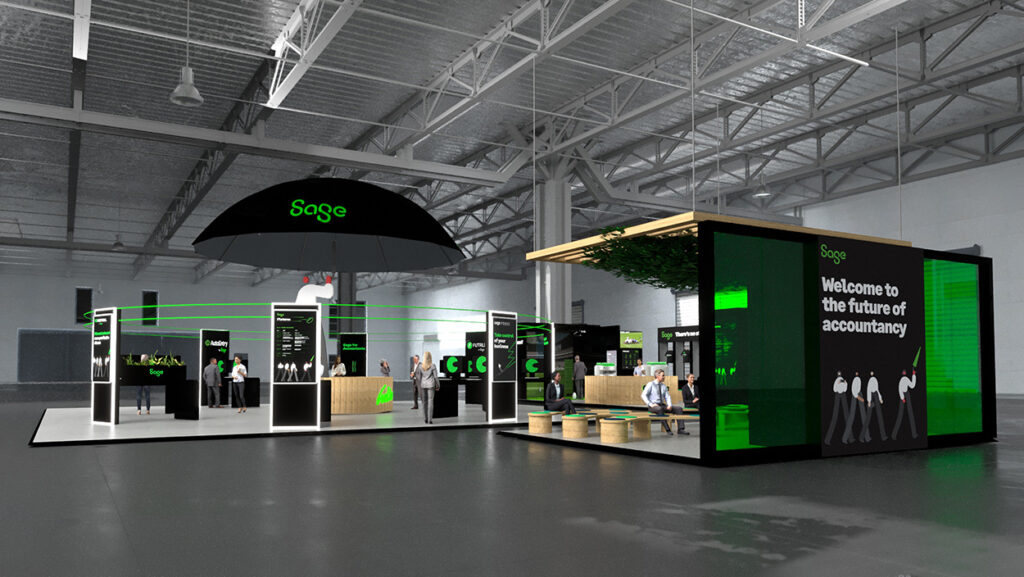
Great events need great content, but who has time to coordinate designers, animators and tech teams while managing everything else?
Psst… the answer’s us. We do.
The team orchestrates everything from creating template files to lay solid foundations, through to handling formatting inconsistencies and last-minute changes, making sure that your content performs flawlessly when the spotlight hits.
Our producers rehearse transitions, test every video and create backup plans for your backup plans. Because in live events, “it should work” just isn’t good enough.
Events aren’t just about what happens on the day—they’re about the story you tell before, during and after.
This is where our Creative team really shines. We take the time to understand your objectives, your audience and what makes them tick. Then, we craft messaging that connects. Sometimes it’s a surprising statistic that changes perspective; other times it’s a personal story that tugs at heartstrings. Often, it’s an interactive element that turns passive listeners into active participants.
Whatever approach we take, the result is the same: an unforgettable message that stays with your audience long after the event ends.
The world has changed and so have events. Whether you’re going fully virtual or creating a hybrid experience, we’ve got you covered.
We’ve all been to virtual events where technical issues, poor production values or clunky interfaces created more barriers than bridges. We do things differently. Our technical know-how makes remote attendees feel like they’re in the front row.
But technology is just the beginning. We also reimagine how content is delivered for digital audiences, incorporating interactive elements, shorter segments and engagement tools that keep remote attendees just as invested as those in the room.
So, there you go. Our comprehensive, collaborative and remarkably easy approach to events. Got one on the horizon? Drop us a line and let’s chat about how we can make your next event the easiest—and most impactful—you’ve ever produced.