Live events are a high-pressure environment.
You’ve invested months in planning the stand, aligning the messaging, getting the team there, building something you’re proud of. Then the doors open… and suddenly everything is happening at once: overlapping conversations, competitors playing who can shout the loudest—all whilst attention is short and everything’s moving on fast forward.
And in that reality, the brands that come out on top aren’t always the ones with the biggest presence; they’re the ones that can respond in real time. Those that can capture what’s happening and share it while it’s still fresh.
The real advantage here isn’t size, it’s agility—on-site congress content that’s filmed, edited and live before the day is even done.
The problem: great stands can still get missed
Even the best exhibition experience can get swallowed up if it isn’t captured and shared as it’s actually happening.
Your team might be delivering brilliant demos, hosting meaningful discussions, running symposia… but if nobody outside that immediate moment sees it, the impact is always going to be limited.
And nope, it’s not enough to post a polished recap two weeks later. By then, the moment has passed.
Congress content needs to work both on the floor and off it. It needs to be built for speed, quality and brand control in a live setting.
Quick-turnaround content drives footfall while the event is underway
One of the biggest missed opportunities at congress is waiting too long to communicate what’s happening on your stand.
Fast, professionally edited on-site video captures activity as it unfolds, turning live moments into real-time invitations.
At EASD, for example, we created a same-day video for mylife Diabetes Care that invited delegates to experience their stand first-hand. Showcasing live demos, hands-on interaction and the energy around their evolving diabetes management solutions, it was posted while the congress was still in full swing, prompting attendees to come and see it for themselves!
Short-form video, optimised for platforms like LinkedIn, Instagram, X and TikTok, creates momentum and visibility while the event is still in motion.
Content that flexes
Live environments need modular content that can work across the event lifecycle.
That might look like:
Built as a system rather than a one-off, this approach keeps your message relevant from the first rig day to long after the stand is packed away.
Maximising the value of your exhibition investment
A congress is a serious investment, where all the different elements (not to mention the coffee!) really add up. So the question becomes: are you getting the full return?
On-site content transforms stand activity into marketing assets that continue working long after the event ends, extending the value of what you’ve already built.
Instead of one intense week of activity, you gain weeks or months of content supporting brand presence, follow-up campaigns, internal comms and future planning.
How do we know? At ESICM, we supported a global medtech leader with live congress content that brought their presence to life. Filmed and edited on-site, the videos showcased the expertise behind the brand and the diversity of the team delivering it, even engaging audiences in their native languages. Shared while the event was still underway, they extended the reach of their stand beyond the congress hall.
Built for the pace and pressure you’re under
We understand the pace organisations like yours work under. Live congress environments demand agility, consistency and creative that’s informed by what’s possible in the moment.
That’s why we create congress content designed for real-time impact—driving footfall, capturing authenticity and making your stand unmissable. Because at a congress, the brands that stand out aren’t just present. They’re impossible to ignore.
For nearly a decade, we’ve been helping CBRE make its mark at MAPIC, the annual global meeting place for retail and property players. Held each year in Cannes, the 2025 edition marked the event’s 30th anniversary, and it remains the place where big ideas, big deals and even bigger conversations happen.
For CBRE, it’s a real focal point of the retail calendar—an unmissable opportunity to connect with clients and prospects, and to showcase their world-leading expertise.
But what exactly does it take to nurture a partnership that’s spanned nine years (and counting)? Let’s rewind to 2016, when a simple PowerPoint deck turned out to be the spark for something much bigger.
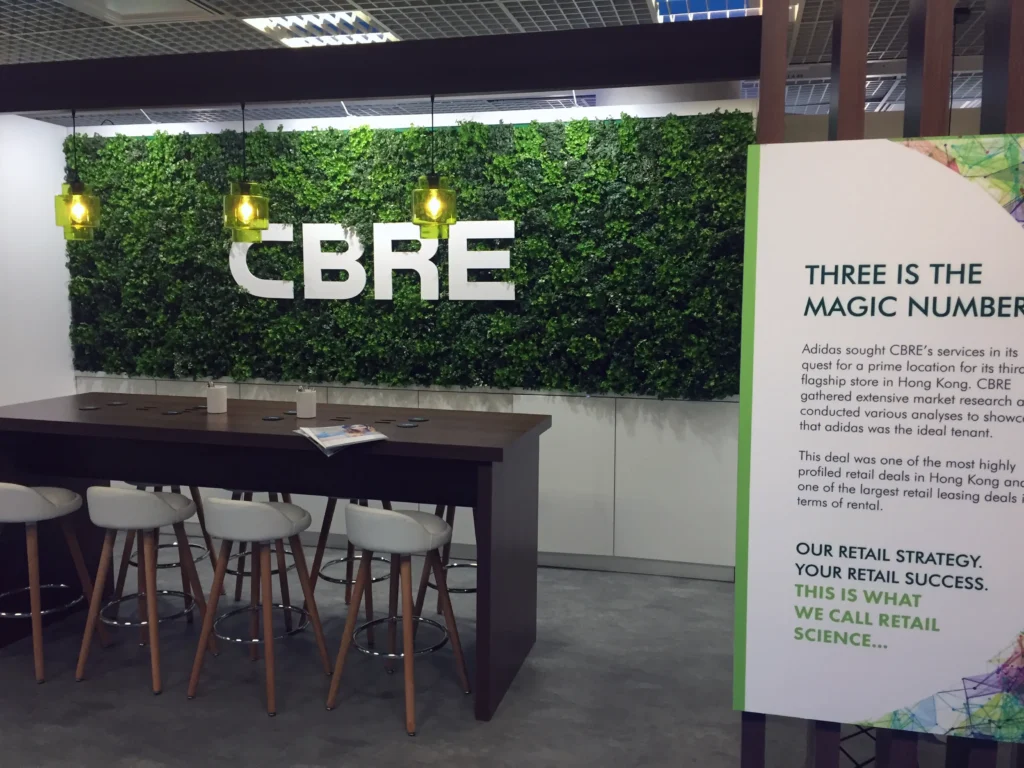
That first project might have been small, but it set something exciting in motion. CBRE saw in us a creative team with a lot more to offer; in particular, the potential to help bring their brand to life in new, imaginative ways.
And as luck would have it, MAPIC—that major event for CBRE—was just around the corner. The team needed a creative partner they could trust with all their exhibition needs, so up we stepped.
And the rest? Well, you know how the saying goes.
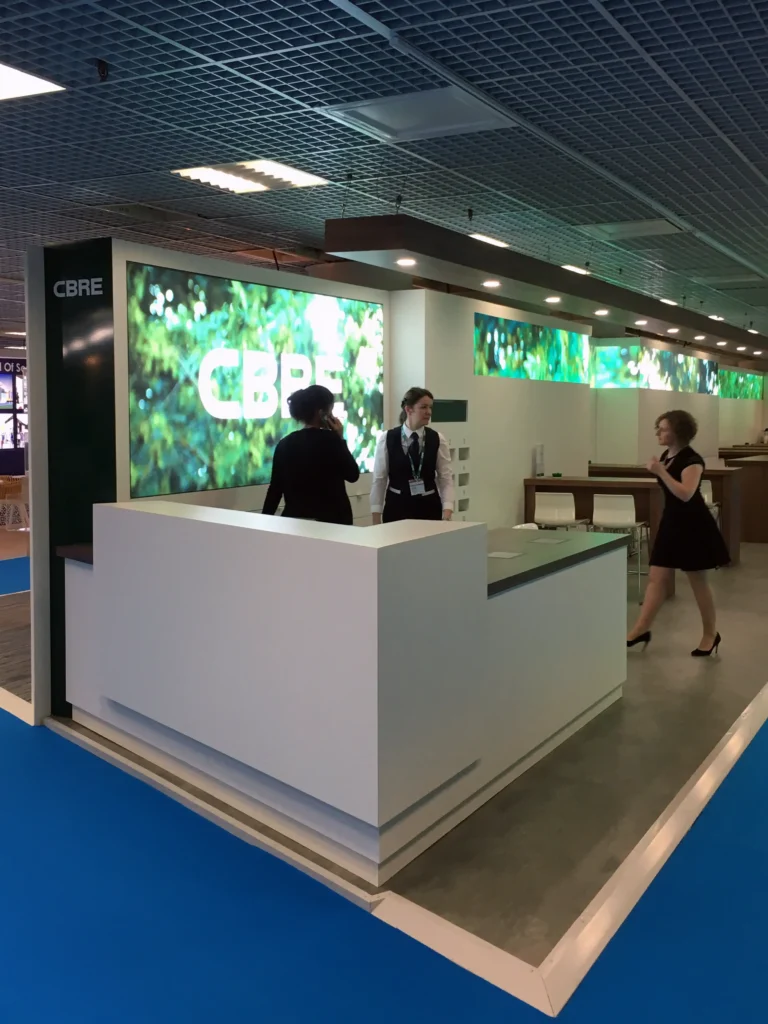
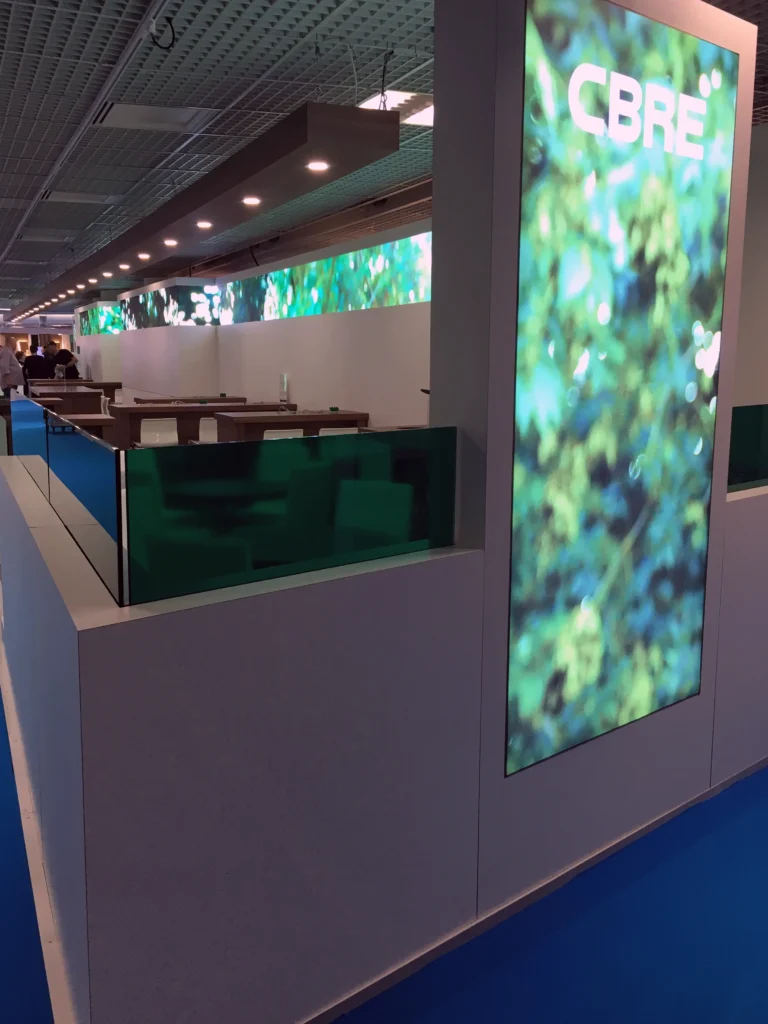
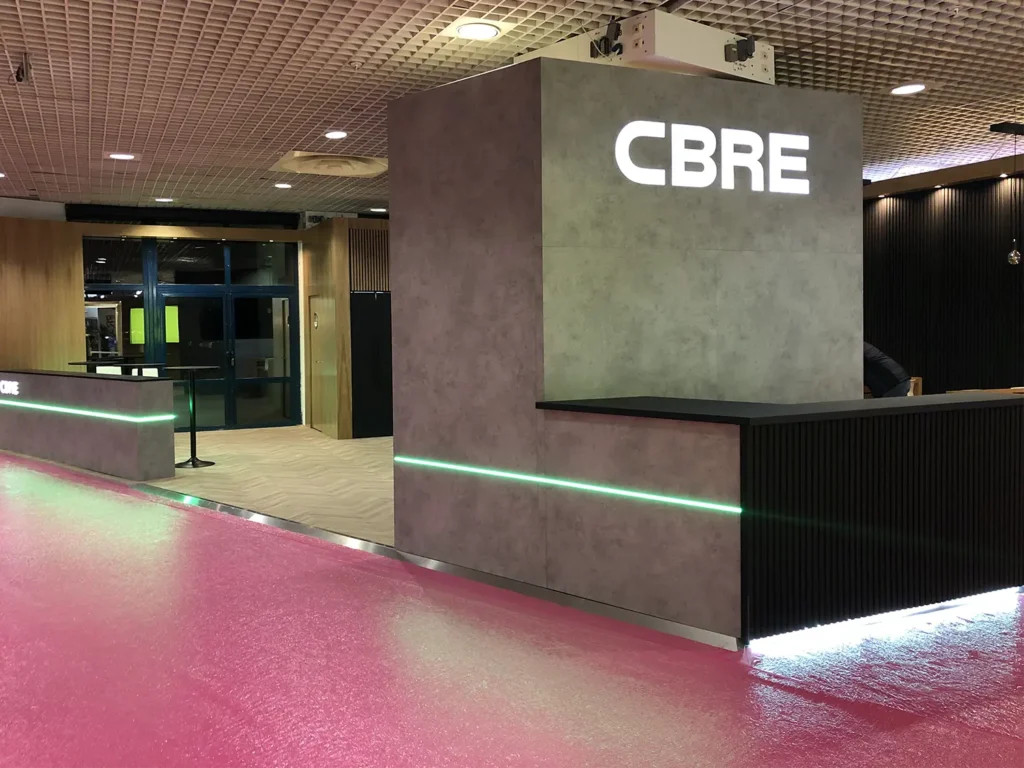
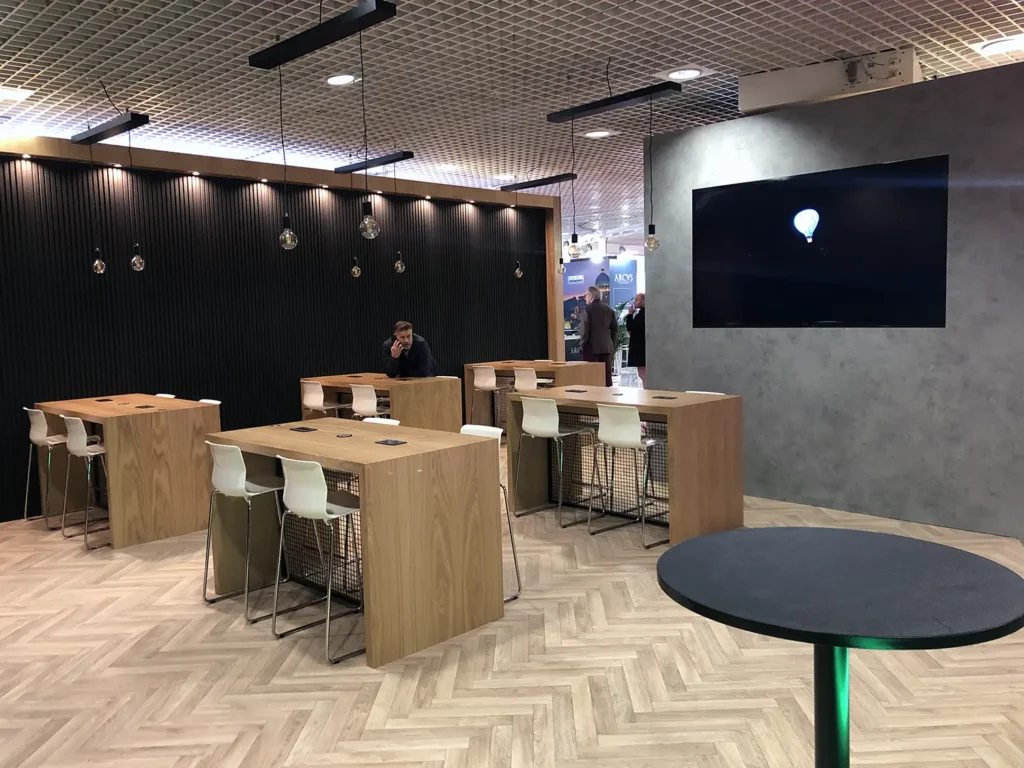
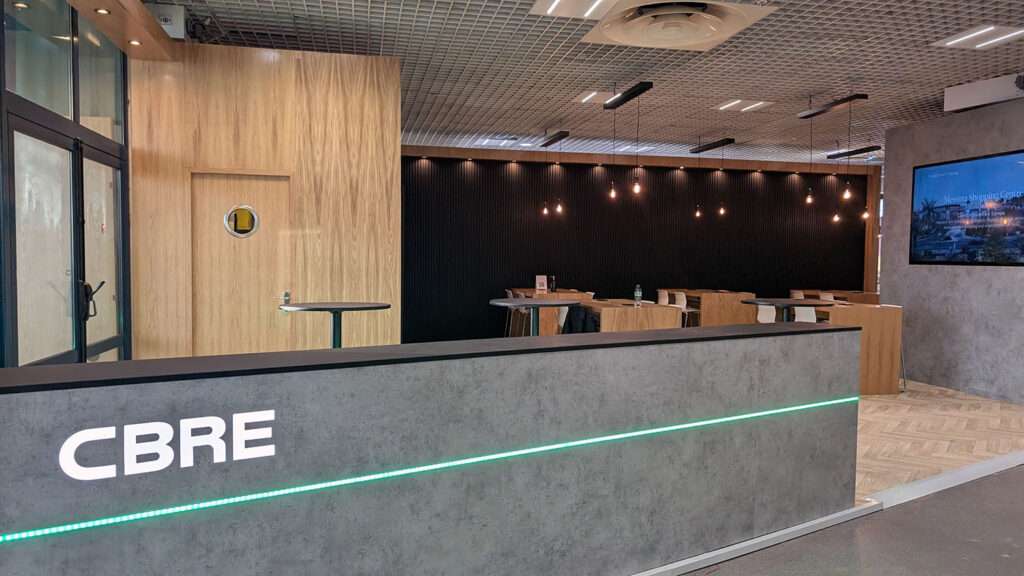
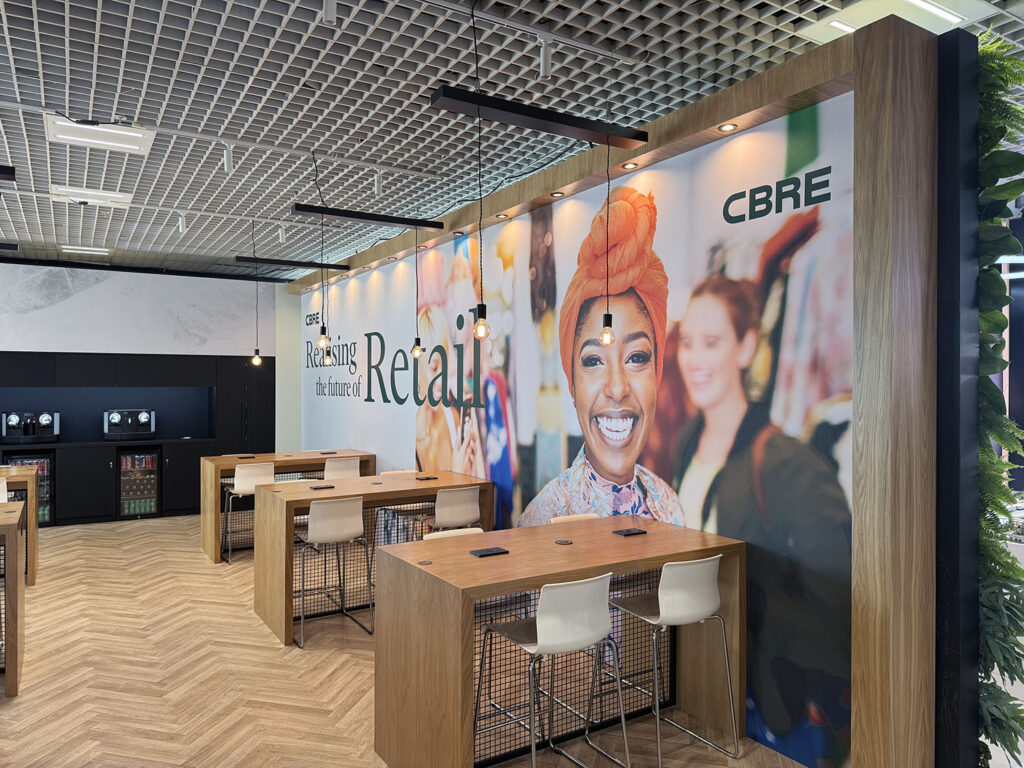
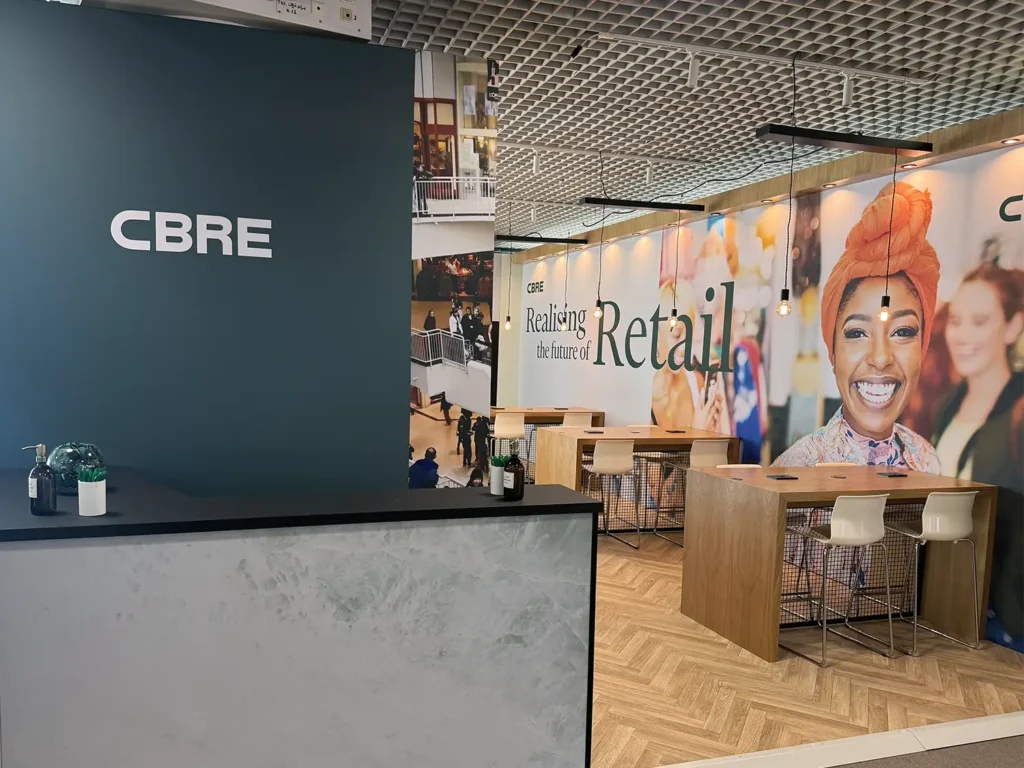
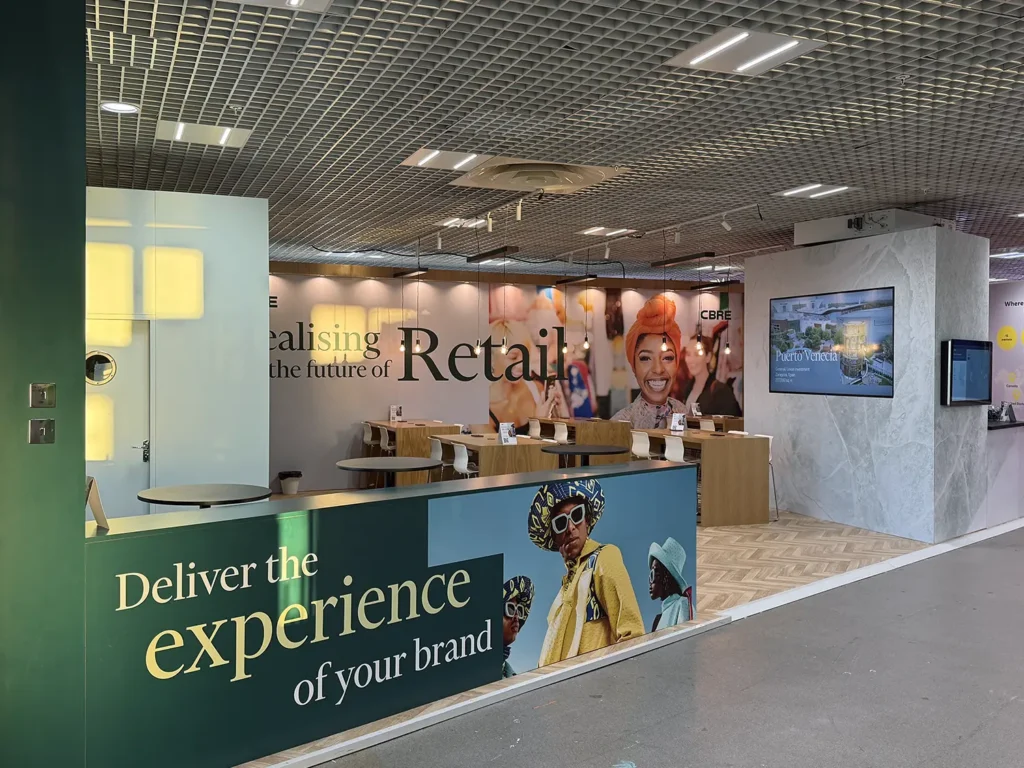
Since that first event, our role at MAPIC has grown and evolved year on year. The brief might stay the same (to design, build and deliver a stand that’s enticing, functional and unmistakably CBRE) but how we transform it into reality is always in motion.
Each year brings a new challenge: how do we make it even better than last time? It’s less about reinventing the wheel and more about evolving it with purpose.
That first year, it was all about striking artwork. The next, we introduced a natural world-inspired theme with lightboxes and LED strips to bring the outside in. Later designs embraced a sleeker, more minimalist look and feel.
As CBRE’s brand has developed, the stand has evolved right alongside it. Each new design captures the story of where the brand is at that moment, creating a space that looks great, feels inviting and, most importantly, functions as a dynamic meeting place.
Over the years, our relationship with CBRE has become about much more than design. We’re not just creating a stand; we’re delivering a complete event experience from start to finish. Each year, we take the brief and run with it, handling everything from initial sketches and specifications to build management and venue logistics.
We even have an event producer on site, working behind the scenes to keep everything running like clockwork. Need a quick fix or a lighting tweak? We’re already on it.
That kind of dependability builds real trust. CBRE know they can count on us to get things done, anticipating challenges before they arise and delivering the same high standard time after time.
Fast-forward to today, and we’ve just wrapped on MAPIC 2025. This year’s design built on everything we’ve created so far, adding a new layer of personality that reflects where the brand is heading.
After eight years (and soon to be nine) of collaboration, it’s more exciting than ever to see what’s next. Because for us, yes, MAPIC is an event, but it’s also proof of what long-term creative partnership can achieve.
So here’s to keeping things fresh, exploring new ideas and getting the job done—reliably, and with just the right amount of flair.
When our client, Vestergaard, came to us with an animation brief, we knew there was potential to do things a bit differently without compromising on production value or creativity.
The challenge was compelling from the get-go: bring to life the powerful impact long-lasting insecticide-treated nets have on the fight against malaria. It was immediately clear that the story needed to be told with impact—something rich in colour, texture and emotion to match the gravity of the message.
But the big question was: what was the best way to get there?
Creative challenges rarely come with just one solution. But by bringing AI on as a partner, we knew we’d be able to dramatically boost production value and creative quality. We’ve chatted before about how AI isn’t about replacing the human touch but rather giving you more choice—and our approach to this project was a case in point.
So we let our curiosity take the reins and ran a little test. Two versions, side by side: one made the traditional way, and another where we let AI lead the way. That way, the Vestergaard team had the freedom to decide which version best fitted their brief.
We started by testing the animation side of an AI platform, quickly finding that the results were inconsistent, mismatched and not up to scratch.
What they did do, though, was give us heaps of inspiration. While the animation was lacking, one of the early outputs sparked a strong visual direction. So we shifted focus, using the AI platform to generate imagery before handing it back to the humans to refine and animate with their irreplaceable flair.
The final workflow was roughly 80% handmade design and animation, with 20% AI input. This hybrid approach wasn’t about speed or budget, but flexibility. By using the best of both worlds, we could test ideas, iterate and respond to the Vestergaard team’s feedback without having to go back to square one each time.
Voiceover-wise, the team went with an AI-generated performance. Capturing an authentic accent, however, proved tricky, but we got there with a bit of finetuning, using voice changing which we then refined with AI. Once again, it came down to finding the right balance: AI kicked things off, and the human touch made it shine.
Many people think working with AI means clicking a button and getting a perfect output. In reality, it’s almost never that simple.
There’s also the idea that AI should automatically make things cheaper because it speeds everything up. While that can sometimes true, it’s not a given. Really, it boils down to cost versus value. AI doesn’t always bring down the price tag, but it can unlock value in ways traditional methods can’t.
It can also give us the chance to be even more creative (more on that here). AI is especially helpful in the early stages of the creative process, giving us more space to explore illustration styles, colour palettes and the like. In this case, it gave us chance to layer in more depth, texture and colour, and move through creative iterations far more quickly than if we’d ploughed on without. And the Vestergaard team thought so too.
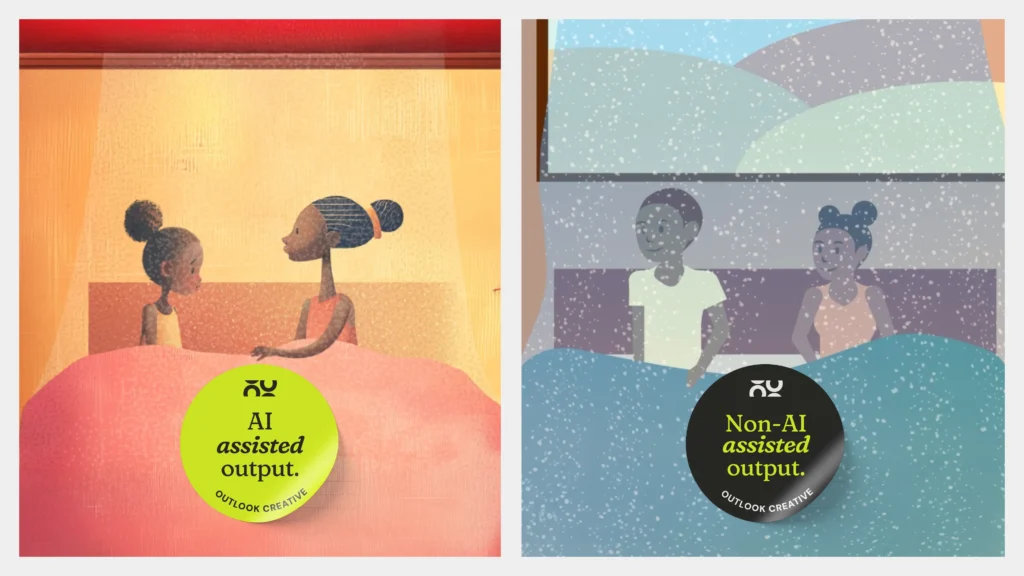
When we presented both versions—one produced traditionally, the other enhanced with AI— Vestergaard chose the latter, and were genuinely delighted with the quality of the finished animation.
But the thing is, there’s no such thing as a one-size-fits-all approach. No two projects are ever the same, and with AI evolving so quickly, every workflow ends up looking a little different too. That’s all part of the fun—tweaking and adjusting until we reach the best solution for each brief.
For us, AI isn’t a shortcut. It’s about balance. We’re still learning, and always will be. But one thing’s certain: the real magic still lies in the balance between human creativity and smart technology.
That’s what makes the work worth watching.
One event, endless content.
Exhibition podcasts. A ‘does what it says on the tin’ concept that means exactly what you think it does: a podcast recorded live at your exhibition stand.
It sounds simple—and that’s exactly why it works. Beneath the simplicity lies a surprisingly powerful opportunity for real-time brand storytelling, contagious audience engagement and long-term value that lasts long after your audience has gone home.
What’s not to love, right? If you’re not already googling podcast mics, here’s a stack of reasons why this slept-on format is both a no-brainer and a game-changer.
If you’re at an industry event, chances are your key opinion leaders and thought leaders are already on site. That means no travel arrangements, accommodation bookings or logistical spanners in the works to navigate.
All you need to do is create space for those conversations to happen. Hitting ‘record’ helps too.
If we’re being brutally honest, exhibition experiences can all blur into one for attendees. A live podcast setup changes that by creating a focal point.
Visitors linger longer when something interesting is happening. When people stick around, they’re more likely to engage in a meaningful way. And voilà: what would have been passive traffic becomes an active and invested audience.
When it comes to live events, momentum is everything (check out our thoughts on live edits for more on this). The experience itself is really just the start; for your message to truly stick, you need to make hay while the sun’s still shining.
The beauty of exhibition podcasts is that it’s easy to move quickly. We’re recording full conversations that need minimal editing—your content’s ready in hours, not weeks.
Never podcasted before? No problem. Our experienced crew knows how to capture crisp, studio-quality sound, even in noisy expo halls.
But we don’t stop at sound. Need branding? We’ve got you. Looking for a strategy? Give us an hour or two. A spot of host coaching to keep things sounding chatty and natural? Already handled. Point is, whatever it takes to get your series off the ground, we’ve got it covered.
That single session doesn’t just give you a podcast—one day of recording can give you a whole library of content.
From long-form episodes to snackable social cutdowns, highlights reels and campaign-ready assets, you get more reach, more mileage and more impact all from that one conversation. Sounds pretty good, doesn’t it?
So there you have it. You’re already investing in being there, and what you’ve got to say deserves to be heard. Let’s turn that into something people can keep listening to.
Why capturing your event (properly) might be better than the coffee.
Event day is here. Everything’s prepped and the buzz has begun. But we’ve got a harsh truth for you.
People forget most of what they hear at conferences. We’re talking 75–90%. After as little as an hour, retention can nosedive. And there’s only so much a coffee break can do to bring it back.
But there is a solution. One that might *even* be better than caffeine (yep, we said it).
When you record your event, you instantly create an on-demand library. Your guests can rewatch any session they choose, as many times as they want. Anyone who couldn’t make it on the day? They’re covered too. We’re talking some serious longevity—you’ve already done all the hard work; you might as well make it last!
We take live camera feeds and show content (think slides, videos, demos… whatever you’ve got) and turn them into a fully branded, broadcast-quality recording. All synced up. All ready to share the very next day.
A live edit means no waiting weeks for post-production. What your audience saw on the day is what they’ll see on playback—seamlessly edited and ready to go.
Time’s everything here. You’ve got to strike while the iron’s hot if you want to keep people engaged.
We’ll split your event recording into bite-sized sessions so your audience can dip back in when it suits them, plus we’ll pull out the best bits too. Want clips for social? No problem. Need a highlights reel to tease next year? Easy. Fancy something quick and sizzling to send to sponsors? Already sorted.
Everything’s packaged neatly before the last truck leaves.
Whether you want to boost accessibility, be more environmentally friendly or maximise your reach, we’ve got a full livestream production ready to go. We do this for events big and small, from product launches to full-scale conferences.
So yes, keep the coffee break on the day. But for lasting impact? Hit record too.
(And if you’re curious how easy this can be, check this out.)
It’s not what you say, but how you say it.
Let’s be honest, congresses, conferences and similar events are about so much more than “next slide please”. At heart, they’re about three things: sharing knowledge, building networks and creating a sense of community. Done right, these elements don’t just coexist—they work in synergy.
But here’s the catch: none of that good stuff happens if your audience has checked out before you’ve even got to the keynote. In an age where attention is a currency that’s increasingly hard to hold on to, how you deliver your content matters more than ever.
So, how do you make it land?
You get creative.
A strong, cohesive theme is the spine of your event. It gives structure and pulls everything together into one clear and memorable entity. Without it, you’re left with a series of disconnected sessions, each doing their own thing, jostling for attention and making the day feel disjointed.
You want your audience to connect with the bigger picture—each session should add a brushstroke to the same canvas, not feel like it belongs in a different painting.
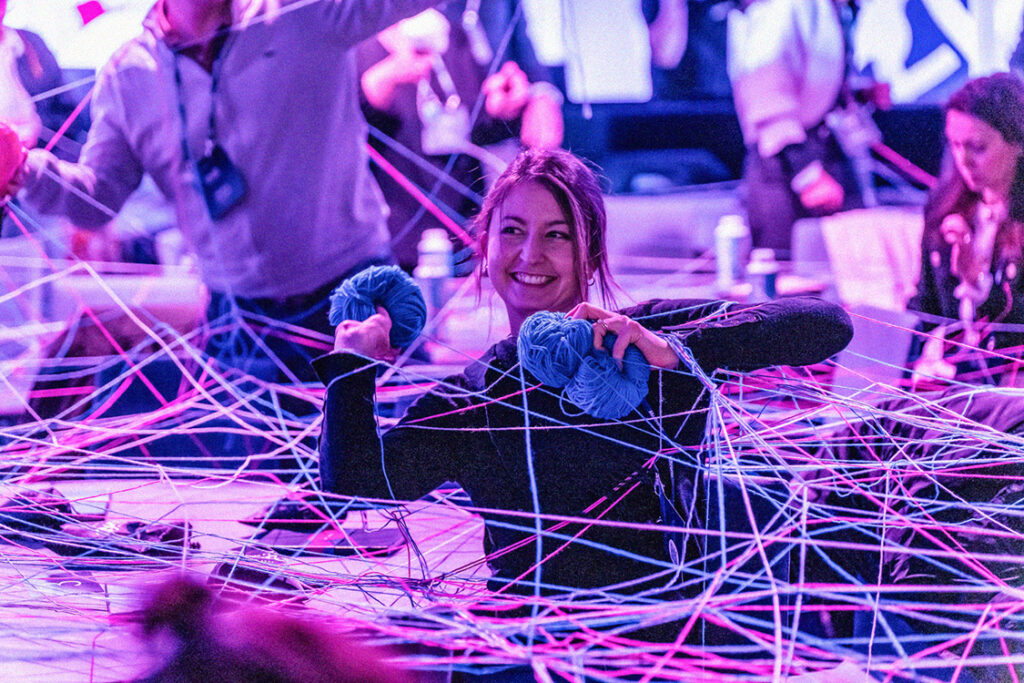
Nobody enjoys being talked at; it’s way more fun to be part of the action. Plan your agenda around segments. The punchier, more varied and full of surprise they are, the better.
And don’t forget that narrative thread. People are far more likely to get stuck in when they understand the why behind what they’re being asked to do. Active participants > passive listeners. Create partnerships.
Brutal as it sounds, people forget most of what they hear at conferences. Information retention during passive formats is low—like, 10–25% of key messages from a full-day event low—and even then, that’s only if the ideas are clearly structured and reinforced.
Research also suggests that retention starts to nosedive after around 45–60 minutes of high-density content. So, strip it back! Focus on a few big ideas and find ways to reinforce them. Schedule breaks, let your audience get hands-on and watch their retention skyrocket.
Time for some science. Humour isn’t just about fleeting laughter—dopamine is proven to boost memory. A healthy dose of fun turbocharges our engagement with the content and increases the staying power of the message behind it.
It doesn’t have to be silly; it just has to be human. Whether it’s something witty or simply moment that makes people smile, it all works. Make your audience feel something. Ideally, joy.
Congresses bring together all sorts. Different people turn up looking for different things, which is yet another reason why how you deliver your message matters as much as what you say.
Shared cultural formats are a great way of connecting with a broad and varied crowd. Could your message be worked into a fun and relatable format, like a gameshow or chat show? Make it bite-sized and impossible to skip past—when the delivery feels fresh and exciting, people are more likely to tune in.
The crux of it is: you can’t expect people to listen if you’re not speaking in an interesting way. Your audience’s experience has to be top of the bill, even if it means having to rethink your delivery.
You can’t rely on just getting attention; you have to go out of your way to earn it. That means not doing the same old stuff that everyone else is. Instead of just presenting your message, give it production value. That way, your audience will still be thinking about it months down the line.
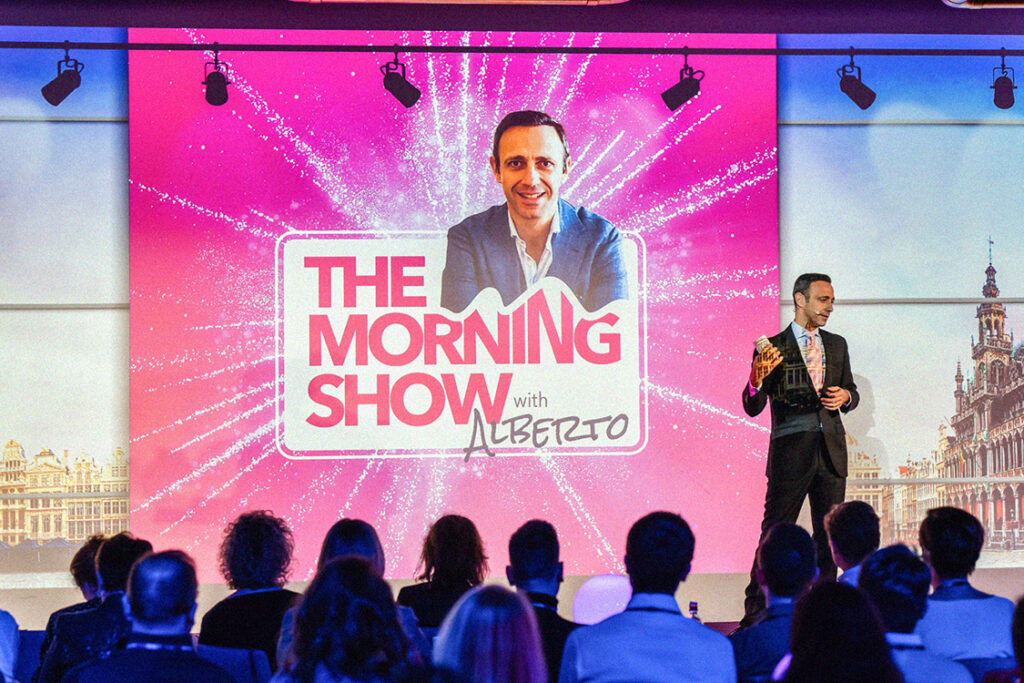
When a client asked us to dial up the energy and bring a sense of cohesion to their section of a wider meeting, we knew we had to give them something out of the ordinary.
Inspired by daytime TV, we created The Morning Show—a peppy and entertaining format complete with its own branding, credits, theme music and stings. We even had our ‘stage manager’ hype up the studio audience to get them fully on board with the concept before the cameras started rolling.
Instead of sessions, we ran segments which our live host pulled together into one dynamic package. Each segment, while unmistakably on theme, delivered something different:
The result? Rave reviews, enthusiastic engagement and a client who’s already thinking about The Morning Show episode 2.
Ready to make your next conference unmissable? Let’s chat engagement.
The European Accessibility Act (EAA) will become law in all EU member states on 28 June 2025. This landmark piece of legislation aims to ensure equal access to digital products and services across all 27 countries in the European Union.
The EAA also applies to any organisation that trades with the EU—which includes us here at Outlook Creative.
As a creative agency, we proudly work with a number of clients across Europe. We’re also an organisation that’s committed to inclusivity; we strongly believe that transforming creative into reality—the ‘thing’ we hang our hat on—is only successful if everyone can enjoy our solutions.
So let’s dig a little deeper into what the European Accessibility Act is, why it matters and what we’ve been doing at Outlook Creative to make sure we’re part of a more inclusive future.
The EAA is a directive of the European Union which was initially passed in April 2019. Its purpose is to improve the accessibility of products and services across all Member States by removing barriers created by divergent rules.
The legislation covers areas that have been identified as ‘most important’ to people with disabilities, including computers and operating systems, smartphones, audio-visual media, e-commerce, banking and more.
There are four core principles that underpin the EAA’s accessibility criteria, known as the POUR model (perceivable, operable, understandable and robust).
Organisations have until 28 June 2025 to audit their existing materials and fix any identified issues in order to become compliant.
Put simply, it’s about inclusion. In our increasingly digital world, access to information and services is not a luxury: it’s essential for being able to fully participate in society.
It’s soon to be a legal requirement, but it’s always been an ethical one. Accessible websites and digital tools help make sure that people with visual, auditory, motor or cognitive impairments can move through the world without added barriers.
It’s also about universality. Accessible design practices benefit everyone. Think about the last time you watched a video with subtitles, used a voice assistant or adjusted the font size to make something easier to read. Many of us rely on accessibility features on a daily basis—they make our lives easier. What the EAA does is make improved user experience for everyone a legal requirement. And that can only be a good thing.
Well, first and foremost, we’re not waiting until June. We’ve been busy behind the scenes reviewing, discussing and reviewing again to make sure we’re continuing to deliver accessible solutions for our clients.
Our preparations have taken three main tacks:
Internal training
Natalie from our UI team delivered a super-informative training session to our internal colleagues last autumn. We discussed the EAA, what it means for us at Outlook Creative and key things to look out for when creating accessible digital solutions.
Updates to systems & processes
To hold ourselves accountable, we’ve made an addition to our internal briefing tool. Now, any Seeker returning a piece of work must confirm that their designs comply with European accessibility standards.
Open conversations
Accessibility—digital or otherwise—is our shared responsibility. It’s also an ongoing process. By having conversations with our clients around inclusive design and making it an intrinsic part of how we measure the success of our work, we all contribute to making our world a fairer, more inclusive space.
Here’s to a future of digital design that can be enjoyed by everyone.
Need help getting your materials EAA-ready before June? We’re here to make sure your digital presence is compliant and inclusive. Get in touch and let’s chat.
We won’t name names, but a trusted colleague of ours once said, “Success lies in making the complex seem effortless.” Stick it on a plaque.
For us, that idea of making the complicated look easy is more than an aspiration; we treat it as a commitment. It’s something that drives every project we turn our hand to, especially when it comes to events.
Whether it’s 15 delegates in a boardroom or thousands of attendees at an exhibition, we thrive on managing the behind-the-scenes stuff that makes most people sweat. Think last-minute changes, technical complexities, multiple moving parts, all handled seamlessly to deliver an event experience that’s memorable for all the right reasons.
But rather than us blowing our own trumpet, let’s get into the specifics. When we say “We make events easy”, here’s what that really means—and how it makes a difference for our clients.
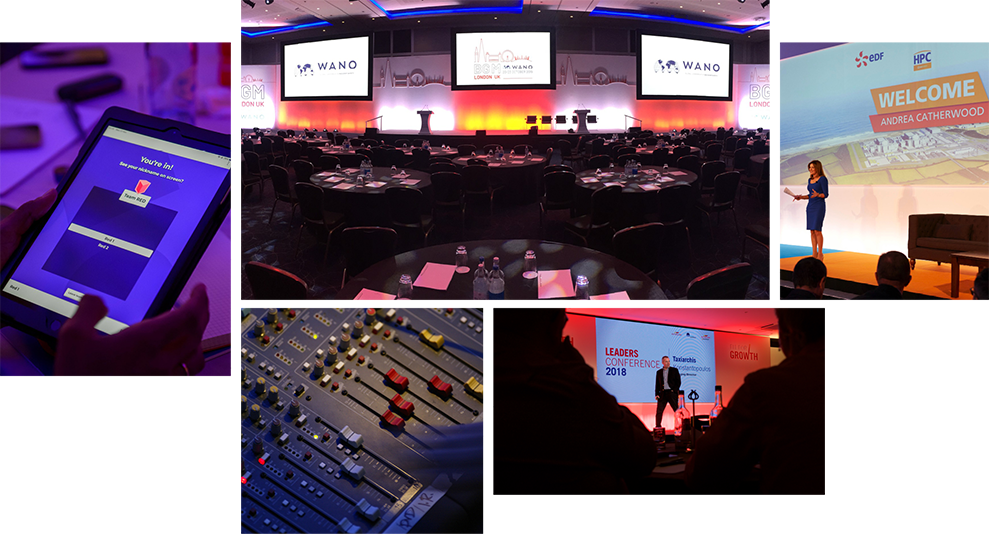
Let’s be honest, events can be complex beasts. From venue negotiations and safety protocols to that one specific lighting fixture you absolutely must have, there’s a lot to juggle.
…which is industry speak for: “A logistical nightmare that keeps you awake at 3 am.”
But not on our watch. Your dedicated project manager becomes your event ally, handling everything from initial concept to final teardown. That includes everything else that comes with it: nailing down the perfect theme, developing your comms strategy, producing your event collateral—you name it, they take care of it.
They know your vision inside and out, anticipate your needs before you even voice them and, most importantly, they’re just one call away.* Always.
*Just, please, don’t call at 3 am. We need our beauty sleep…
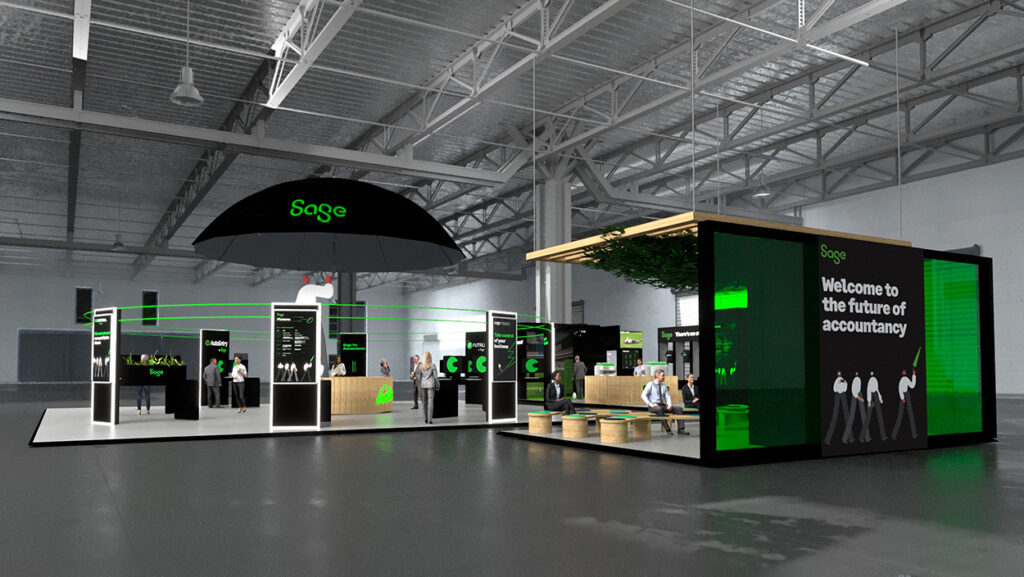
Remember when you had to explain your vision using hand gestures and hope for the best? Well, those days are gone. Our 3D wizardry, flythrough animations and AI-assisted toolkit mean we can bring your event experience to life before a single piece of equipment arrives on site.
It’s not just pretty pictures; it’s practical magic.
Spot issues, make tweaks and perfect your vision, all before spending a penny on setup. We’ll show you exactly what to expect, so there are no on-the-day surprises. And, what’s more, we’re fully maximising AI’s potential to make your stands and visuals better, quicker and cheaper. Just look at what our Joint MD had to say.
Great events need great content, but who has time to coordinate designers, animators and tech teams while managing everything else?
Psst… the answer’s us. We do.
The team orchestrates everything from creating template files to lay solid foundations, through to handling formatting inconsistencies and last-minute changes, making sure that your content performs flawlessly when the spotlight hits.
Our producers rehearse transitions, test every video and create backup plans for your backup plans. Because in live events, “it should work” just isn’t good enough.
Events aren’t just about what happens on the day—they’re about the story you tell before, during and after.
This is where our Creative team really shines. We take the time to understand your objectives, your audience and what makes them tick. Then, we craft messaging that connects. Sometimes it’s a surprising statistic that changes perspective; other times it’s a personal story that tugs at heartstrings. Often, it’s an interactive element that turns passive listeners into active participants.
Whatever approach we take, the result is the same: an unforgettable message that stays with your audience long after the event ends.
The world has changed and so have events. Whether you’re going fully virtual or creating a hybrid experience, we’ve got you covered.
We’ve all been to virtual events where technical issues, poor production values or clunky interfaces created more barriers than bridges. We do things differently. Our technical know-how makes remote attendees feel like they’re in the front row.
But technology is just the beginning. We also reimagine how content is delivered for digital audiences, incorporating interactive elements, shorter segments and engagement tools that keep remote attendees just as invested as those in the room.
So, there you go. Our comprehensive, collaborative and remarkably easy approach to events. Got one on the horizon? Drop us a line and let’s chat about how we can make your next event the easiest—and most impactful—you’ve ever produced.
Written by Andy Upton, Art Director
Recently, I had the incredible opportunity to visit Forward Festival Vienna, the final stop in their four-city tour across some of Europe’s most inspiring creative hubs.
This two-day event, held in the historic Gartenbaukino—Vienna’s oldest cinema—was a masterclass in innovation and artistry, featuring over 20 world-class creatives sharing insights, techniques, and jaw-dropping projects in design, animation, and film.
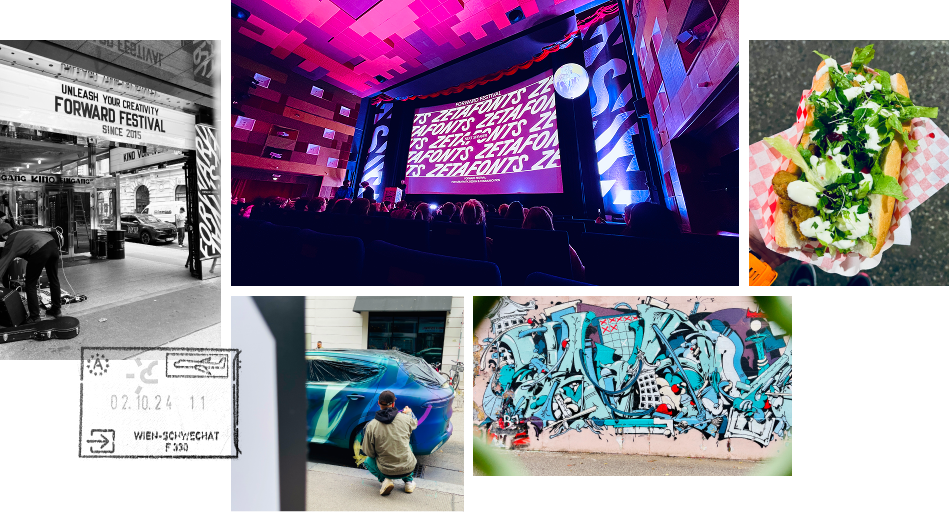
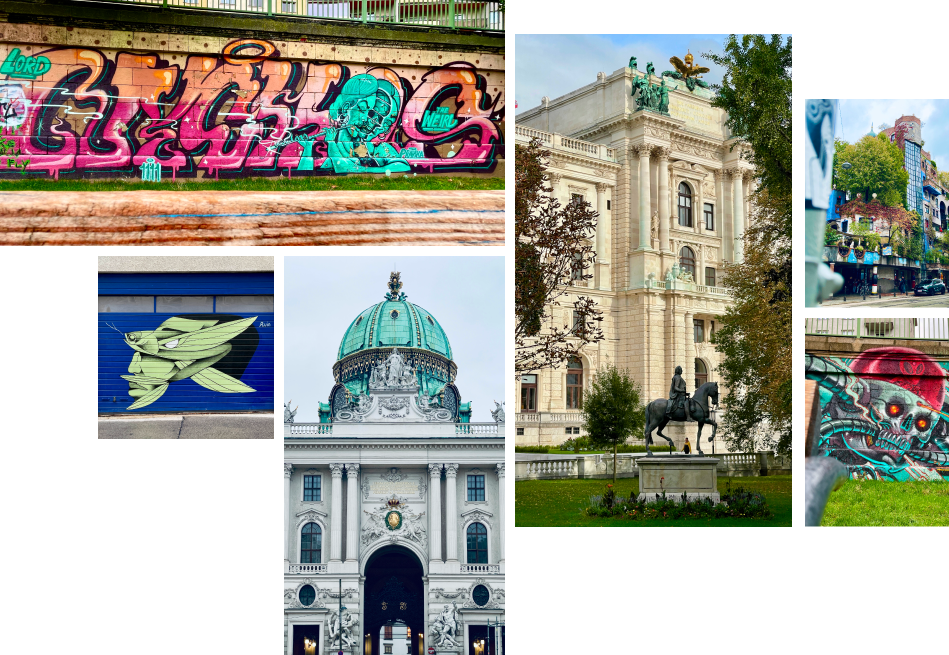
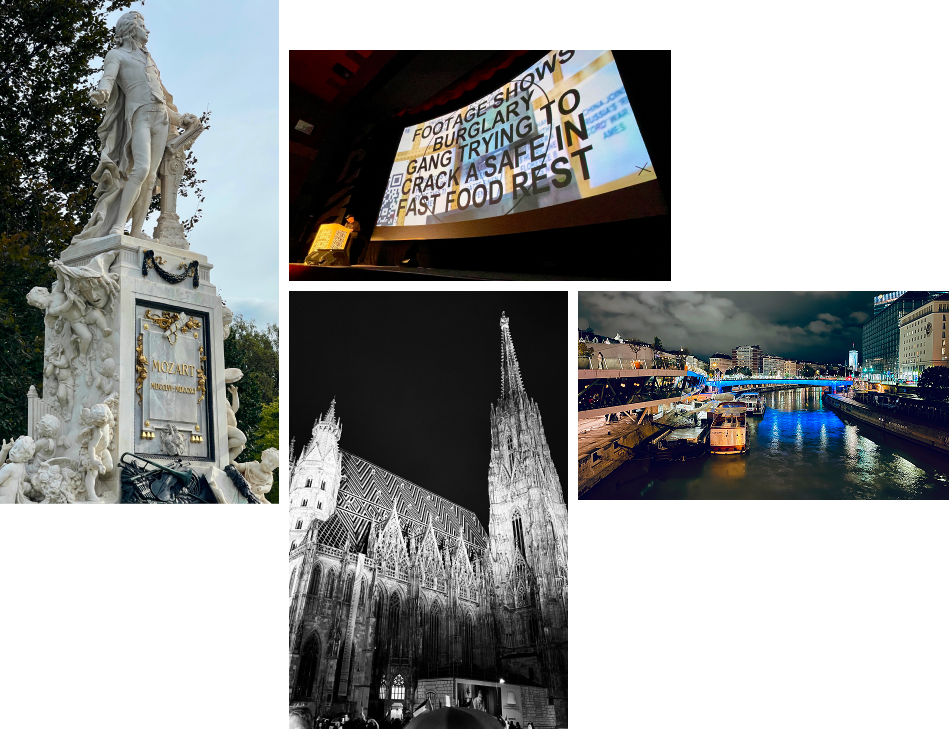
Vienna is a city that breathes art and history in equal measure. From the vibrant graffiti along the Danube Canal to the majestic palaces, cathedrals, and monuments scattered across the city, it’s a stunning blend of classical elegance and modern urban grit. I was lucky to have some time before the festival to explore, soaking in the visual feast the city offers. Everywhere you look, there’s inspiration—whether it’s the intricate details of Baroque architecture or the bold, expressive street art.
The speaker lineup was packed with talent, but a few stood out for me:
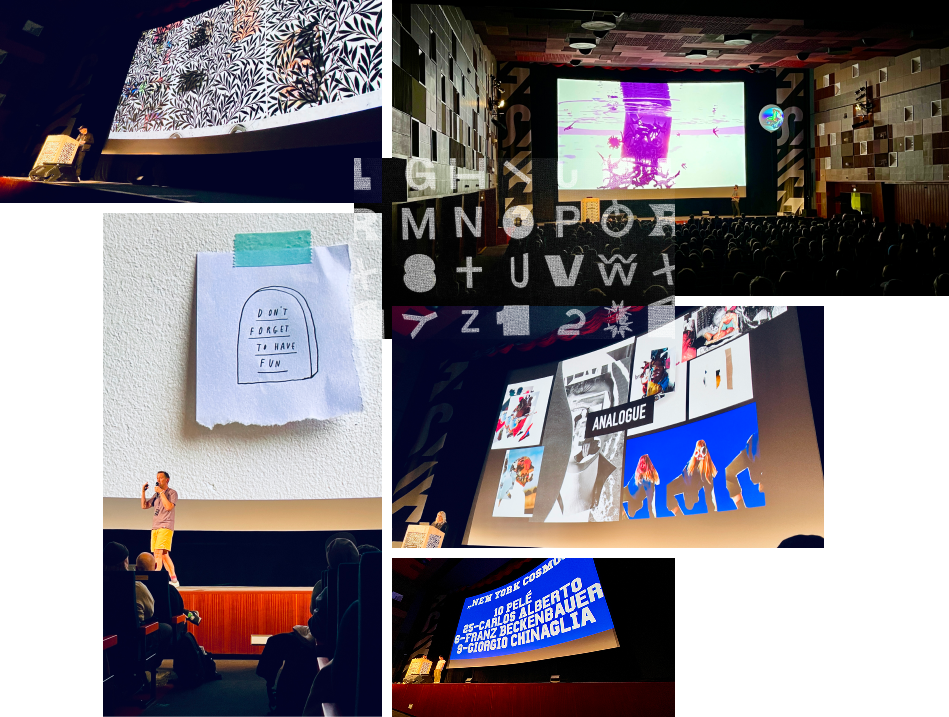
If there was one recurring theme throughout the conference, it was playfulness. Every speaker touched on the importance of embracing a playful mindset—not just as a means of crafting standout work but also as a way to make the creative process itself more enjoyable. Whether it’s experimenting with wild ideas or pushing boundaries, it’s clear that a sense of fun can be the secret ingredient to success.
Forward Festival Vienna wasn’t just an event; it was a celebration of creativity and a reminder to approach our work—and our lives—with curiosity, courage, and a little bit of mischief. Vienna’s charm and the festival’s energy left me inspired and ready to infuse more playfulness into my own projects.
Forward Festival Vienna got you inspired? Let’s bring bold creativity to your next project. Get in touch to see how we can collaborate.
When you type “What is testimonial marketing?” into ChatGPT, the answer it gives is: “a strategy where businesses use positive feedback from satisfied customers, clients, or influencers to promote their products or services.”
But that in itself feels like an undersell—a robotic-sounding response to what is fundamentally a very human thing. Which perhaps isn’t surprising, given that it’s come from an AI chatbot (more on that here).
There’s a school of thought that says there is no more B2B or B2C marketing. All marketing (done well) is now human-to-human, or H2H. People want to form connections, and that means finding commonality by stripping jargon from our language to create authentic, genuine conversations.
You’d be hard-pressed to find a better way of doing that than via a human story, communicated in a compelling way. That’s why testimonial marketing can be so effective—it gets to the heart of what makes H2H impactful: building trust, fostering empathy, and creating connection.
With a good chunk of our client base in the healthcare and MedTech space—where patient stories are essential for establishing confidence in a product or therapy—we’ve been fortunate enough to work on a host of powerful testimonial projects over the years.
We’ve delivered creative solutions telling the human stories behind innovative deep brain stimulation systems, produced videos highlighting the life-changing impact stoma care products have had on people’s lives, and set up interviews with inspiring individuals. We’ve even facilitated in-person testimonials, live on stage. The common thread linking every one of these projects is the power of the human-interest story.
It’s no coincidence, then, that these are some of our favourite and most rewarding jobs to work on. In fact, if you were to ask any of the Outlook Creative team about the projects that have stuck with them (cue campfire stories of gathering round an editing suite screen, shedding a tear at first cuts), we’d bet on their answers being variations on a testimonial theme.
A recent case in point is the story of Elliot Awin who, in December 2023, became the first person to row solo and unsupported across the Atlantic Ocean with a pacemaker. It was an honour to meet Elliot and help share the story of how his own experience of living with a heart arrhythmia has inspired him to support others.
“Elliot Awin is such an inspiration to all, especially those that are nervous about getting an implantable cardiac device. It was such a pleasure to work with him and Outlook Creative to create his patient testimonial.”
— Sr. Global Product Manager
So, yes, testimonial marketing is “a strategy where businesses use positive feedback from satisfied customers, clients, or influencers to promote their products or services.” But let’s rewrite that from an H2H perspective:
“Testimonial marketing leverages personal stories and real-life experiences to foster authenticity, trust, and emotional connection with a product or service.”
Because ultimately, when you block out all the noise, escape the buzzwords, and step away from the salesy lingo, the success of every campaign boils down to one thing: connecting with your audience.
And that’s where human stories will always win.
Keen to see how we can help shape your next patient testimonial? Got a patient story you want to share? Drop us a line: sales@outlook.co.uk